


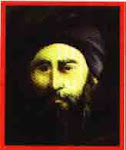


After studying the philosophy of Alfarabi, one comes to three conclusions; first, that Alfarabi brought about the first penetration of Arabism into Hellenism and of Hellenism into Arabism.
Second, that Alfarabi exerted a great influence on medieval thinkers. This is made clear by the fact that Albertus Magnus quotes Alfarabi, and evidently he could not quote him unless he had known his writings. Hence, the knowledge of the works of Alfarabi gave Albertus Magnus and his pupil, St. Thomas, an opportunity to do some sifting in the sense that they were enabled to throw out the theories that conflicted with Christian teaching and take in at the same time those that appeared to them as logically sound and reconcilable with Christianity.
Third, that Alfarabi improved many Aristotelian theories, solved many problems till then unsolved, and enriched Scholasticism with new philosophical terms, such as quiddity, a necessary being, a contingent being, the speculative and practical intellects, etc.
We have considered the philosophy of Alfarabi under a three-fold aspect: the philosophy of being (Metaphysics), the philosophy of thinking (Psychology), and the philosophy of acting (Ethics).
In the philosophy of being, Alfarabi taught that the most universal concept is being, which cannot be defined, nor re-solved into simpler concepts. Hence, the simplicity of being of the Latin Schoolmen.
The problem of universals which occupied the minds of medieval thinkers was solved by Alfarabi in the words: "Universale
p. 55
est unum de multis et in multis." Hence, the traditional definition of the universal, "Aptum praedicari de pluribus."
He also believed that the nature of reality is being in becoming, that is, potentiality and actuality, substance and accident, essence and existence, matter and form, cause and effect. Is all reality that way? Certainly not. For, there is a reality which is beyond all change, and this is God. In comparing the Theodicy of Alfarabi with that of St. Thomas, we found that the latter depends on the former for the first three arguments proving God's existence, and also for the way in which God's nature is known (Via remotionis et eminentiae. )
Furthermore, Alfarabi, three hundred years before St. Thomas, taught in clear and distinct words, that the essence and existence in created things differ as different entities, while they are identical in God. This means that the Saint who came out with the same theory three hundred years later, must certainly have borrowed it from Alfarabi.
In the philosophy of thinking, he describes the history of our speculative intellect. At first it is in potentiality to all things intelligible. It passes from potentiality to act through the action or illumination coming down from above, namely, the active intellect.
In the philosophy of acting, he shows how every human activity tends to happiness. Happiness is the cause that prompts man to live in society, thus creating the state. The model state is the universal state that puts the whole world under one political organization.
In conclusion, there is a unity of thought throughout the philosophy of Alfarabi, who spared no efforts to make the various parts of his philosophical vision converge towards one living God, on Whom the one and the many, being and becoming, are essentially dependent.
Showing posts with label Falsafah. Show all posts
Showing posts with label Falsafah. Show all posts
Friday, June 12, 2009

Part II. Theoretical Philosophy
-4-
METAPHYSICAL PSYCHOLOGY
In this part Alfarabi discusses the various problems concerning the human soul.
THE SOUL IS A BEING QUITE DISTINCT FROM THE BODY
Alfarabi holds that the human soul is essentially distinct from the body, simply because he accepts the Aristotelian definition of the soul as the entelechy or the substantial form of the body. By this he means that the soul is the principle of life in man, a principle by which he thinks, feels and wills, and by which his body is animated. 82 This is also borne out by the fact that
Man is composed of two principles, body and soul. The body is composed of parts, limited by space, measurable, divisible; while the soul is free from all bodily qualities. The former is a product of the created world, while the latter is simply the product of the last separate intellect of the supersensible world. 83
SPIRITUALITY OF THE HUMAN SOUL
The soul of man is not only simple and indivisible, but it is also spiritual. That is, it is in itself independent of matter and can subsist apart from the body. He says:
The spirituality of the soul is demonstrated by its specific operations, which are intellection and volition. The operation of a being is according to the nature of the being itself (Actio sequitur esse). Now, intellect and will may attain to the abstract and immaterial; therefore, the soul itself must also be independent of matter.
p. 35
In addition to this, he says:
Omne agens agit sibi simile, which means that the effect must resemble its cause, for the soul can give to its operations only what it has itself. Therefore, the spiritual operations of the soul give us true knowledge of the nature of the soul itself. 84
IMMORTALITY OF THE HUMAN SOUL
Alfarabi held that the human soul cannot exist before the body, as Plato had said. Nor can it migrate from one body to another, as taught by the author of Metempsychosis. 85 However, it is very doubtful whether Alfarabi believed in the immortality of the human soul. For, he wrote passages for and against immortality. Against immortality we find the following passages:
The only thing that survives the dissolution of the body is the active intellect, the dator formarum which is incorruptible. 86
And in his lost commentary on the Nicomachean Ethics, he is reported by Averroes to have said that
The supreme good of man is in this life, and anything meant to attain it in the life to come is but folly; it is an old wives' tale.
In fact, toward the end of his treatise on the Passive Intellect and its union with the Active, Averroes quotes Alfarabi as saying in the commentary mentioned above that
Man's supreme good in this life is to attain knowledge. But to say that man after death becomes a separate form is an old wives' tale; for whatever is born and dies is incapable of becoming immortal.
This statement of Alfarabi brought much reproof on him, and
p. 36
for it Immanuel Ben Solomon, in his Final Judgment, consigns him to the infernal regions. 87
However, in contrast with these passages, we find one in favor of immortality. "After death," he says, "the human soul will be happy or unhappy according to its merits or demerits." 88 In the face of these statements for and against the immortality of the soul, it is difficult indeed to tell whether or not Alfarabi believed in it. Most probably he did not.
Footnotes
9:23 Alfarabi, The Scope of Aristotle In The Book of Metaphysics, in Collection, op. cit. pp. 40-44.
10:24 Alfarabi, A Letter in Reply to Certain Questions, in Collection, op. cit. n. 14, pp. 95-96.
11:25 Id. op. cit. N. 10, p. 94.
12:26 Alfarabi, The Sources of Questions, in Collection, op. cit., n. 1-2, p. 65.
12:27 St. Thomas, Quest. disp., De Veritate, Q. I, a. 1.
12:28 St. Thomas, Opusculum XXXIX, De Natura Generis, cap. II.
13:29 Alfarabi, The Scope of Aristotle in the Book of Metaphysics, in Collection, op. cit. p. 42.
13:30 Alfarabi, The Sources of Questions, in Collection, op. cit. n. 3 p. 66.
13:31 Alfarabi, The Gems of Wisdom, in Collection, op. cit. p. 174.
14:32 Alfarabi, A Letter in Reply to Certain Questions, in Collection, op. cit. n. 22, p. 101.
14:33 Alfarabi, The Gems of Wisdom, in Collection, op. cit. pp. 115-125.
14:34 Alfarabi, The Gems of Wisdom, in Collection, op. cit. pp. 115-125.
15:35 "But every essence or quiddity can be understood without anything being known of its existence; for, I can understand what a man is, and yet not know whether it has existence in the natural order. Therefore, it is clear that existence is a different thing from essence or quiddity, unless perchance there be something whose essence is its very existence. And this thing must needs be one and the first." St. Thomas De Ente et Essentia, c. 4, tr. from the Latin by Clare C. Riedl, Chapter IV, p. 34.
15:36 Alfarabi, Political Regime, 1 Arabic ed. p. 26.
16:37 Alfarabi, The Gems of Wisdom, in Collection, op. cit. p. 164.
16:38 Alfarabi, The Gems of Wisdom, in Collection, op. cit. pp. 164-165.
18:39 Alfarabi, Political Regime, 1st Arabic ed. Cairo, Nile Press, pp. 12-13.
19:40 Alfarabi, The Gems of Wisdom, in Collection, op. cit. p. 173.
19:41 Alfarabi, The Gems of Wisdom, in Collection, op. cit. pp. 115-125.
19:42 Alfarabi, What Must Precede the Study of Philosophy, in Collection, op. cit. n. 4, p. 62.
20:43 Alfarabi, The Sources of Questions, in Collection, op. cit. n. 13, pp. 70-71.
20:44 St. Thomas, Summa Theologica, part I, Q. 2, Art. 3.
20:45 Alfarabi, The Gems of Wisdom, in Collection, op. cit. pp. 115-125.
20:46 St. Thomas, Ibid. op. cit.
20:47 Alfarabi, The Sources of Questions, in Collection, op. cit. n. 2, p. 65.
21:48 Alfarabi, The Sources of Questions, in Collection, op. cit. n. 3, p. 66.
21:49 St. Thomas, Ibid. op. cit.
23:50 Alfarabi, The Knowledge of God, in Traites inedits d’anciens philosophes arabes. Published by Malouf, Edde and Cheiko, 2nd Arabic ed., Beirut, 1911, pp. 21-22.
23:51 St. Thomas, Summa Contra Gentiles, first bk. Tr. by the English Dominican Fathers, chap. XIV, p. 33.
23:52 5t. Thomas, I Sent., III, quest. 1, a. 3.
24:53 Alfarabi, Political Regime. Second Arabic ed. Cairo, Nile Press, p. 2.
24:54 St. Thomas, Summa Contra Gentiles. First Bk., op. cit. Chap. XVIII, p. 39.
24:55 Alfarabi, The Gems of Wisdom, in Collection, op. cit. pp. 115-125.
24:56 St. Thomas, Summa Contra Gentiles, First Bk., Ch. XXII, p. 55.
25:57 Alfarabi, The Gems of Wisdom, in Collection, op. cit. p. 132.
25:58 St. Thomas, Summa Contra Gentiles. First Bk., Ch. XXV, p. 61.
25:59 Alfarabi, Political Regime. Second Arabic ed. Nile Press, p. 7.
25:60 St. Thomas, Summa Contra Gentiles. First Bk., Ch. XLIII, p. 96.
25:61 Alfarabi, Political Regime, op. cit. p. 7.
25:62 St. Thomas, Summa Theologica. Part I, Q. 9, Art. 1 ad 1, pp. 91-92.
26:63 Alfarabi, Political Regime, op. cit. pp. 3-5.
26:64 St. Thomas, Summa Contra Gentiles. First Bk., Ch. XLII, p. 90.
26:65 St. Thomas, Summa Theologica. Part I, Q. 11, Art. 3, pp. 116-117.
26:66 St. Thomas, Summa Theologica. Part I, Q. 4, Art. 2, p. 48.
26:67 Alfarabi, Id. op. cit. pp. 7-8.
26:68 St. Thomas, Summa Theologica. Part I, Q. 11, Art. 4, p. 118.
27:69 Alfarabi, Id., op. cit. p. 8.
27:70 St. Thomas, Summa Contra Gentiles. First Bk., Ch. XLIV, p. 100.
27:71 Alfarabi, Political Regime, p. 8-9.
27:72 St. Thomas, Summa Contra Gentiles. First Bk., Ch. XLVII, p. 105.
28:73 Alfarabi, The Gems of Wisdom, in Collection, op. cit., p. 170.
28:74 St. Thomas, Summa Theologica. Part I, Q. 14, Art. 5, p. 190.
28:75 Alfarabi, Political Regime, op. cit., pp. 10-11.
28:76 St. Thomas, Summa Contra Gentiles. First Bk., Ch. LXII, pp. 131-132.
28:77 Alfarabi, Political Regime, op. cit., p. 11.
28:78 St. Thomas, Summa Theologica. Part I, Q. 18, Art. 3, p. 255.
31:79 Alfarabi, The Sources of Questions, in Collection, op. cit. n. 6, pp. 67-75.
32:80 Alfarabi, The Sources of Questions, in Collection, op. cit. n. 6, pp. 67-68.
See also: Alfarabi, A Letter in Reply to Certain Questions, in Collection, op. cit. n. p. 93.
32:81 Alfarabi, The Sources of Questions in Collection, op. cit., n. 22, p. 75.
34:82 Alfarabi, A Letter in Reply to Certain Questions, in Collection, op. cit., n. 33, p. 108.
34:83 Alfarabi, The Gems of Wisdom, in Collection, op. cit., p. 145.
35:84 Alfarabi, The Gems of Wisdom, in Collection, op. cit., p. 145.
35:85 Alfarabi, The Sources of Questions, in Collection, op. cit., n. 22, p. 75.
35:86 Alfarabi, The Sources of Questions, in Collection, op. cit. n. 21, pp. 74-75.
36:87 Cf. Mahberot by Immanuel. Ch. XXVIII, Berlin. P. 251.
36:88 Alfarabi, The Sources of Questions, in Collection, op. cit., n. 22, p. 75.
METAPHYSICAL PSYCHOLOGY
In this part Alfarabi discusses the various problems concerning the human soul.
THE SOUL IS A BEING QUITE DISTINCT FROM THE BODY
Alfarabi holds that the human soul is essentially distinct from the body, simply because he accepts the Aristotelian definition of the soul as the entelechy or the substantial form of the body. By this he means that the soul is the principle of life in man, a principle by which he thinks, feels and wills, and by which his body is animated. 82 This is also borne out by the fact that
Man is composed of two principles, body and soul. The body is composed of parts, limited by space, measurable, divisible; while the soul is free from all bodily qualities. The former is a product of the created world, while the latter is simply the product of the last separate intellect of the supersensible world. 83
SPIRITUALITY OF THE HUMAN SOUL
The soul of man is not only simple and indivisible, but it is also spiritual. That is, it is in itself independent of matter and can subsist apart from the body. He says:
The spirituality of the soul is demonstrated by its specific operations, which are intellection and volition. The operation of a being is according to the nature of the being itself (Actio sequitur esse). Now, intellect and will may attain to the abstract and immaterial; therefore, the soul itself must also be independent of matter.
p. 35
In addition to this, he says:
Omne agens agit sibi simile, which means that the effect must resemble its cause, for the soul can give to its operations only what it has itself. Therefore, the spiritual operations of the soul give us true knowledge of the nature of the soul itself. 84
IMMORTALITY OF THE HUMAN SOUL
Alfarabi held that the human soul cannot exist before the body, as Plato had said. Nor can it migrate from one body to another, as taught by the author of Metempsychosis. 85 However, it is very doubtful whether Alfarabi believed in the immortality of the human soul. For, he wrote passages for and against immortality. Against immortality we find the following passages:
The only thing that survives the dissolution of the body is the active intellect, the dator formarum which is incorruptible. 86
And in his lost commentary on the Nicomachean Ethics, he is reported by Averroes to have said that
The supreme good of man is in this life, and anything meant to attain it in the life to come is but folly; it is an old wives' tale.
In fact, toward the end of his treatise on the Passive Intellect and its union with the Active, Averroes quotes Alfarabi as saying in the commentary mentioned above that
Man's supreme good in this life is to attain knowledge. But to say that man after death becomes a separate form is an old wives' tale; for whatever is born and dies is incapable of becoming immortal.
This statement of Alfarabi brought much reproof on him, and
p. 36
for it Immanuel Ben Solomon, in his Final Judgment, consigns him to the infernal regions. 87
However, in contrast with these passages, we find one in favor of immortality. "After death," he says, "the human soul will be happy or unhappy according to its merits or demerits." 88 In the face of these statements for and against the immortality of the soul, it is difficult indeed to tell whether or not Alfarabi believed in it. Most probably he did not.
Footnotes
9:23 Alfarabi, The Scope of Aristotle In The Book of Metaphysics, in Collection, op. cit. pp. 40-44.
10:24 Alfarabi, A Letter in Reply to Certain Questions, in Collection, op. cit. n. 14, pp. 95-96.
11:25 Id. op. cit. N. 10, p. 94.
12:26 Alfarabi, The Sources of Questions, in Collection, op. cit., n. 1-2, p. 65.
12:27 St. Thomas, Quest. disp., De Veritate, Q. I, a. 1.
12:28 St. Thomas, Opusculum XXXIX, De Natura Generis, cap. II.
13:29 Alfarabi, The Scope of Aristotle in the Book of Metaphysics, in Collection, op. cit. p. 42.
13:30 Alfarabi, The Sources of Questions, in Collection, op. cit. n. 3 p. 66.
13:31 Alfarabi, The Gems of Wisdom, in Collection, op. cit. p. 174.
14:32 Alfarabi, A Letter in Reply to Certain Questions, in Collection, op. cit. n. 22, p. 101.
14:33 Alfarabi, The Gems of Wisdom, in Collection, op. cit. pp. 115-125.
14:34 Alfarabi, The Gems of Wisdom, in Collection, op. cit. pp. 115-125.
15:35 "But every essence or quiddity can be understood without anything being known of its existence; for, I can understand what a man is, and yet not know whether it has existence in the natural order. Therefore, it is clear that existence is a different thing from essence or quiddity, unless perchance there be something whose essence is its very existence. And this thing must needs be one and the first." St. Thomas De Ente et Essentia, c. 4, tr. from the Latin by Clare C. Riedl, Chapter IV, p. 34.
15:36 Alfarabi, Political Regime, 1 Arabic ed. p. 26.
16:37 Alfarabi, The Gems of Wisdom, in Collection, op. cit. p. 164.
16:38 Alfarabi, The Gems of Wisdom, in Collection, op. cit. pp. 164-165.
18:39 Alfarabi, Political Regime, 1st Arabic ed. Cairo, Nile Press, pp. 12-13.
19:40 Alfarabi, The Gems of Wisdom, in Collection, op. cit. p. 173.
19:41 Alfarabi, The Gems of Wisdom, in Collection, op. cit. pp. 115-125.
19:42 Alfarabi, What Must Precede the Study of Philosophy, in Collection, op. cit. n. 4, p. 62.
20:43 Alfarabi, The Sources of Questions, in Collection, op. cit. n. 13, pp. 70-71.
20:44 St. Thomas, Summa Theologica, part I, Q. 2, Art. 3.
20:45 Alfarabi, The Gems of Wisdom, in Collection, op. cit. pp. 115-125.
20:46 St. Thomas, Ibid. op. cit.
20:47 Alfarabi, The Sources of Questions, in Collection, op. cit. n. 2, p. 65.
21:48 Alfarabi, The Sources of Questions, in Collection, op. cit. n. 3, p. 66.
21:49 St. Thomas, Ibid. op. cit.
23:50 Alfarabi, The Knowledge of God, in Traites inedits d’anciens philosophes arabes. Published by Malouf, Edde and Cheiko, 2nd Arabic ed., Beirut, 1911, pp. 21-22.
23:51 St. Thomas, Summa Contra Gentiles, first bk. Tr. by the English Dominican Fathers, chap. XIV, p. 33.
23:52 5t. Thomas, I Sent., III, quest. 1, a. 3.
24:53 Alfarabi, Political Regime. Second Arabic ed. Cairo, Nile Press, p. 2.
24:54 St. Thomas, Summa Contra Gentiles. First Bk., op. cit. Chap. XVIII, p. 39.
24:55 Alfarabi, The Gems of Wisdom, in Collection, op. cit. pp. 115-125.
24:56 St. Thomas, Summa Contra Gentiles, First Bk., Ch. XXII, p. 55.
25:57 Alfarabi, The Gems of Wisdom, in Collection, op. cit. p. 132.
25:58 St. Thomas, Summa Contra Gentiles. First Bk., Ch. XXV, p. 61.
25:59 Alfarabi, Political Regime. Second Arabic ed. Nile Press, p. 7.
25:60 St. Thomas, Summa Contra Gentiles. First Bk., Ch. XLIII, p. 96.
25:61 Alfarabi, Political Regime, op. cit. p. 7.
25:62 St. Thomas, Summa Theologica. Part I, Q. 9, Art. 1 ad 1, pp. 91-92.
26:63 Alfarabi, Political Regime, op. cit. pp. 3-5.
26:64 St. Thomas, Summa Contra Gentiles. First Bk., Ch. XLII, p. 90.
26:65 St. Thomas, Summa Theologica. Part I, Q. 11, Art. 3, pp. 116-117.
26:66 St. Thomas, Summa Theologica. Part I, Q. 4, Art. 2, p. 48.
26:67 Alfarabi, Id. op. cit. pp. 7-8.
26:68 St. Thomas, Summa Theologica. Part I, Q. 11, Art. 4, p. 118.
27:69 Alfarabi, Id., op. cit. p. 8.
27:70 St. Thomas, Summa Contra Gentiles. First Bk., Ch. XLIV, p. 100.
27:71 Alfarabi, Political Regime, p. 8-9.
27:72 St. Thomas, Summa Contra Gentiles. First Bk., Ch. XLVII, p. 105.
28:73 Alfarabi, The Gems of Wisdom, in Collection, op. cit., p. 170.
28:74 St. Thomas, Summa Theologica. Part I, Q. 14, Art. 5, p. 190.
28:75 Alfarabi, Political Regime, op. cit., pp. 10-11.
28:76 St. Thomas, Summa Contra Gentiles. First Bk., Ch. LXII, pp. 131-132.
28:77 Alfarabi, Political Regime, op. cit., p. 11.
28:78 St. Thomas, Summa Theologica. Part I, Q. 18, Art. 3, p. 255.
31:79 Alfarabi, The Sources of Questions, in Collection, op. cit. n. 6, pp. 67-75.
32:80 Alfarabi, The Sources of Questions, in Collection, op. cit. n. 6, pp. 67-68.
See also: Alfarabi, A Letter in Reply to Certain Questions, in Collection, op. cit. n. p. 93.
32:81 Alfarabi, The Sources of Questions in Collection, op. cit., n. 22, p. 75.
34:82 Alfarabi, A Letter in Reply to Certain Questions, in Collection, op. cit., n. 33, p. 108.
34:83 Alfarabi, The Gems of Wisdom, in Collection, op. cit., p. 145.
35:84 Alfarabi, The Gems of Wisdom, in Collection, op. cit., p. 145.
35:85 Alfarabi, The Sources of Questions, in Collection, op. cit., n. 22, p. 75.
35:86 Alfarabi, The Sources of Questions, in Collection, op. cit. n. 21, pp. 74-75.
36:87 Cf. Mahberot by Immanuel. Ch. XXVIII, Berlin. P. 251.
36:88 Alfarabi, The Sources of Questions, in Collection, op. cit., n. 22, p. 75.
Part II. Theoretical Philosophy
-3-
METAPHYSICAL COSMOLOGY
RELATION OF GOD TO THE WORLD
That God exists is a proven truth; that the world was made is another truth. The most arduous question, however, which man tries to solve is this: What relation is there between God and the world, the Infinite and the finite? What connection is there between God and matter? Is there a bridge thrust from one side to the other over which God might pass to give matter a determinate form? The dualism of spirit and matter, infinite and finite, constitutes the cosmological problem of Metaphysics. In an effort to explain the action of God on matter, Alfarabi placed the intellects of the Spheres between God and the world. Thus, he made the many proceed from the One by emanation. His theory is as follows:
From the First Being (the One) comes forth the first intellect called the First Caused. From the first intellect thinking of the First Being flows forth a second intellect and a sphere. From the second intellect proceeds a third intellect and a sphere. The process goes on in necessary succession down to the lowest sphere, that of the moon. From the moon flows forth a pure intellect, called active intellect. Here end the separate intellects, which are, by essence, intellects and intelligibles. Here is reached the lower end of the supersensible world (the world of ideas of Plato).
These ten intellects, together with the nine spheres, constitute the second principle of Being. The active intellect, which is a bridge between heaven and earth, is the third principle. Finally matter and form appear as the fifth and sixth principles, and with these is closed the series of spiritual existences.
p. 31
Only the first of these principles is unity, while the others represent plurality. The first three principles, God, the intellects of the spheres and the active intellect, remain spirit per se, namely, they are not bodies, nor are they in direct relation with bodies; neither are the last three (soul, form, matter) bodies by themselves, but they are only united to them.
There are six kinds of bodies: the celestial, the rational animal, the irrational animal, the vegetal, the mineral and the four elements (air, water, fire, earth). All of these principles and bodies taken together make up the universe. 79
The theory of separate intellects such as taught by Alfarabi and other Arabian philosophers is simply a mixture of Aristotelian theories on the motion of heavenly spheres (Met. XII, cap. 7 and 8) and of the neo-Platonic doctrine of emanation. The student of philosophy may be surprised to hear such a strange and ridiculous theory. But, should he delve into its origin, he would certainly find that the belief in the animation of stars is just a particular case of what men formerly believed, namely, the animation of nature.
ETERNITY OF MATTER AND ETERNITY OF THE WORLD
Alfarabi firmly believed that the world is the workmanship of an eternal, intelligent being; and thus God is the first principle or the efficient cause. He also believed that God, in order to make the world, must have had materials to work upon. From this he inferred that an eternal, uncreated matter must have been the material cause of the universe. But this matter, he believed,
p. 32
had no form, though it contained many forms in potentiality. This is what he says:
When people say that God created the world, they simply mean that God produced the world out of matter by clothing it with a determinate form. The world is certainly God's work, and though it comes after Him as a world-form, yet it is equal to Him in time or eternal, insofar as He could not begin to work on it in time. The reason for this is that God is to the world exactly what a cause is to its effect. Since the cause in this case is inseparable from the effect, it follows that He could not, in a given moment, start making it. For, if He could, that would simply imply imperfection on His part while He had been trying to achieve His goal. This, of course, is incompatible with the absolute perfection of God. 80
The eternity of the world and of matter as held by Alfarabi and Avicenna was rejected by Averroes and Maimonides, who taught the "creatio mundi ex nihilo." From the latter St. Thomas borrowed the proposition that the world was created from nothing.
DUALISM OF GOOD AND EVIL
According to neo-Platonists, the dualism of spirit and matter gives rise to the existence of two principles, the principle of good and the principle of evil. For them, evil is linked with matter. Fortunately, the neo-Platonic teaching on this problem did not have much influence on Alfarabi. For, he says:
God's providence is exercised over all things. Hence, whatever happens in the world is not to be attributed to chance. Evil is under divine control and is united to corruptible things. That evil exists in the world is good accidentally, because if it did not exist, a great deal of good in the world would never come about. 81
In conclusion, it should be noted that Alfarabi's Metaphysical
p. 33
[paragraph continues] Cosmology is not original at all, but rather it is a mixture of Aristotelian theories (motion of the spheres, eternity of matter) and of neo-Platonic emanation.
p. 34
METAPHYSICAL COSMOLOGY
RELATION OF GOD TO THE WORLD
That God exists is a proven truth; that the world was made is another truth. The most arduous question, however, which man tries to solve is this: What relation is there between God and the world, the Infinite and the finite? What connection is there between God and matter? Is there a bridge thrust from one side to the other over which God might pass to give matter a determinate form? The dualism of spirit and matter, infinite and finite, constitutes the cosmological problem of Metaphysics. In an effort to explain the action of God on matter, Alfarabi placed the intellects of the Spheres between God and the world. Thus, he made the many proceed from the One by emanation. His theory is as follows:
From the First Being (the One) comes forth the first intellect called the First Caused. From the first intellect thinking of the First Being flows forth a second intellect and a sphere. From the second intellect proceeds a third intellect and a sphere. The process goes on in necessary succession down to the lowest sphere, that of the moon. From the moon flows forth a pure intellect, called active intellect. Here end the separate intellects, which are, by essence, intellects and intelligibles. Here is reached the lower end of the supersensible world (the world of ideas of Plato).
These ten intellects, together with the nine spheres, constitute the second principle of Being. The active intellect, which is a bridge between heaven and earth, is the third principle. Finally matter and form appear as the fifth and sixth principles, and with these is closed the series of spiritual existences.
p. 31
Only the first of these principles is unity, while the others represent plurality. The first three principles, God, the intellects of the spheres and the active intellect, remain spirit per se, namely, they are not bodies, nor are they in direct relation with bodies; neither are the last three (soul, form, matter) bodies by themselves, but they are only united to them.
There are six kinds of bodies: the celestial, the rational animal, the irrational animal, the vegetal, the mineral and the four elements (air, water, fire, earth). All of these principles and bodies taken together make up the universe. 79
The theory of separate intellects such as taught by Alfarabi and other Arabian philosophers is simply a mixture of Aristotelian theories on the motion of heavenly spheres (Met. XII, cap. 7 and 8) and of the neo-Platonic doctrine of emanation. The student of philosophy may be surprised to hear such a strange and ridiculous theory. But, should he delve into its origin, he would certainly find that the belief in the animation of stars is just a particular case of what men formerly believed, namely, the animation of nature.
ETERNITY OF MATTER AND ETERNITY OF THE WORLD
Alfarabi firmly believed that the world is the workmanship of an eternal, intelligent being; and thus God is the first principle or the efficient cause. He also believed that God, in order to make the world, must have had materials to work upon. From this he inferred that an eternal, uncreated matter must have been the material cause of the universe. But this matter, he believed,
p. 32
had no form, though it contained many forms in potentiality. This is what he says:
When people say that God created the world, they simply mean that God produced the world out of matter by clothing it with a determinate form. The world is certainly God's work, and though it comes after Him as a world-form, yet it is equal to Him in time or eternal, insofar as He could not begin to work on it in time. The reason for this is that God is to the world exactly what a cause is to its effect. Since the cause in this case is inseparable from the effect, it follows that He could not, in a given moment, start making it. For, if He could, that would simply imply imperfection on His part while He had been trying to achieve His goal. This, of course, is incompatible with the absolute perfection of God. 80
The eternity of the world and of matter as held by Alfarabi and Avicenna was rejected by Averroes and Maimonides, who taught the "creatio mundi ex nihilo." From the latter St. Thomas borrowed the proposition that the world was created from nothing.
DUALISM OF GOOD AND EVIL
According to neo-Platonists, the dualism of spirit and matter gives rise to the existence of two principles, the principle of good and the principle of evil. For them, evil is linked with matter. Fortunately, the neo-Platonic teaching on this problem did not have much influence on Alfarabi. For, he says:
God's providence is exercised over all things. Hence, whatever happens in the world is not to be attributed to chance. Evil is under divine control and is united to corruptible things. That evil exists in the world is good accidentally, because if it did not exist, a great deal of good in the world would never come about. 81
In conclusion, it should be noted that Alfarabi's Metaphysical
p. 33
[paragraph continues] Cosmology is not original at all, but rather it is a mixture of Aristotelian theories (motion of the spheres, eternity of matter) and of neo-Platonic emanation.
p. 34
Part II. Theoretical Philosophy
-2-
METAPHYSICAL THEOLOGY
The Theodicy of Alfarabi, which considers God in Himself, does not differ much from the Christian both in the arguments proving God's existence, as well as in the exposition of the various attributes which constitute His nature. There are, undoubtedly, certain flaws here and there on some non-essential points, but as a whole I can say that one who reads his Theodicy gets the impression of reading an essay written by a Christian Father. In this section we shall deal at length, not only with the arguments by which Alfarabi proves God's existence, but also with each of the attributes of God as he considers them, in order to bring out the perfect similarity that exists between Christian Theodicy and the Theodicy of Alfarabi.
THE KNOWABILITY OF GOD
One of the preliminary questions which confronted Alfarabi was whether or not God is knowable. On this question he could not make up his mind, and consequently, he was hesitant to give a definite answer. Perhaps his hesitancy arose from his failure to distinguish between what is simply self-evident and that which is self-evident to us. In fact, he says:
It is very difficult to know what God is because of the limitation of our intellect and its union with matter. Just as light is the principle by which colors become visible, in like manner it would seem logical to say that a perfect light should produce a perfect vision. Instead, the very opposite occurs. A perfect light dazzles the vision. The same is true of God. The imperfect knowledge we have of God is due to the fact that He is infinitely perfect. That explains why His infinitely perfect being bewilders our mind. But if we could strip our nature of all that we call 'matter; then certainly our knowledge of His being would be quite perfect. 39
p. 19
In another place he says:
God is knowable and unknowable, evident and hidden, and the best knowledge of Him is to know that He is something the human mind cannot thoroughly understand. 40
A glance, however, into Alfarabi's later teaching leads us to the conclusion that he must have implicitly admitted the proposition, "God is", to be self-evident in itself, because he states repeatedly that God's essence is His existence, thus identifying the predicate with the subject. But since our mind is unable to understand the selfsame thing of both these terms, the implication is that Alfarabi must have come to the tacit conclusion that this proposition, "God is", is self-evident in itself, although not to us, and what is not evident to us can be demonstrated. 41 According to him, the knowledge of God is the object of philosophy, and the duty of man is to rise, as far as is humanly possible, up to the likeness of God. 42
PROOFS OF GOD'S EXISTENCE
The arguments brought forth by Alfarabi to prove that there is a God, are three. These will be placed side by side with those of St. Thomas in order to aid the reader in comparing them. He will thus see the great similarity between them.
PROOFS ADDUCED BY ALFARABI
1. The Proof of Motion.
In this world there are things which are moved. Now, every object which is moved receives its motion from a mover. If the mover is itself moved, there must be another mover moving it, and after that still another and so on. But it is impossible to go onto infinity in the series of movers
PROOFS ADDUCED BY ST. THOMAS
It is certain and evident to our senses that in the world some things are in motion. Now, what-ever is in motion is put in motion by another ... If that by which it is put in motion be itself put in motion, then this also must needs be put in motion by another, and that by another again. But this cannot go on to infinity. Therefore,
p. 20
and things moved. Therefore, there must be an immovable mover, and this is God. 43
it is necessary to arrive at a first mover, put in motion by no other; and this everyone understands to be God. 44
2. Proof of Efficient Cause.
In contemplating the changeable world, one sees that it is composed of beings which have a cause, and this cause, in turn, is the cause of another. Now, in the series of efficient causes it is not possible to proceed to infinity. For, if A were the cause of B, B of C, C of D, and so on, here A would be the cause of it-self, which is not admissible. Therefore, outside the series of efficient causes, there must be an uncaused efficient cause, and this is God. 45
In the world of sense we find there is an order of efficient causes. There is no case known (neither is possible) in which a thing is found to be the efficient cause of itself ... Now, in efficient causes it is not possible to go on to infinity Therefore, it is necessary to admit a first efficient cause, to which everyone gives the name of God. 46
Another form of the same proof:
Transition from not-being to being demands an actual cause. This cause either has its essence identical with its existence or not. If it does, then being is uncaused. If it does not, then existence must be from another, and that from another, and so on until we arrive at a First Cause, whose essence differs in no way from its existence. 47
3. Proof of Contingence.
The third proof is based on the principle that all change must
We find in nature things that are possible to be and not to
p. 21
have a cause. To this effect Alfarabi makes a distinction between a necessary being and a contingent being. "Contingent beings," he says, "have had a beginning. Now, that which begins to exist must owe its existence to the action of a cause. This cause, in turn, either is or is not contingent. If it is contingent, it also must have received its existence by the action of another cause, and so on. But a series of contingent beings which would produce one another cannot proceed to infinity or move in a circle. Therefore, the series of causes and effects must arrive at a cause that holds its existence from itself, and this is the first cause (ens primum)." 48
be ... But it is impossible for these always to exist ... Therefore, not all beings are merely possible, but there must exist something, the existence of which is necessary. But every necessary being either has its necessity caused by another or not. Now, it is impossible to go on to infinity in necessary things which have their necessity caused by another. Therefore, we can-not but postulate the existence of some being having of itself its own necessity, and not receiving it from another, but rather causing in others their necessity. This all men speak of as God. 49
The different arguments brought forth by Alfarabi to prove God's existence are really so many statements of one and the same argument which is commonly called the "cosmological" argument. This argument derives its validity from the principle of causality. And if the principle of causality is validly used by the scientists to explain the phenomena of physics, likewise it must be regarded as validly employed by the philosopher to explain the universe. Hence, the cosmological argument is valid because the principle of causality is valid.
The proof of an immovable mover by Aristotle, which leads to the conclusion that God is a designer and not a creator, was improved and corrected by Alfarabi nearly three hundred years before St. Thomas was born. Starting out from the Aristotelian idea of change, Alfarabi was able to arrive at an Ens Primum to whom that change is due, while He Himself does not change, because He is pure act.
The proofs of causality and contingence as given by St. Thomas are merely a repetition of Alfarabi's proofs. This is said,
p. 22
not because of any bias against St. Thomas, but rather because this is evident to anyone after studying the works of both Alfarabi and of St. Thomas.
The main idea running through all the proofs of Alfarabi is being. That which begins to exist implies a self-existent being. A finite and contingent being, that is, a being which has not given itself existence, implies a Being that holds its existence from itself. A being which begins to exist must have a cause for its existence.
An analysis of the proofs adduced by Alfarabi shows how he was able to arrive at their formulation. In each of his three proofs he starts out from a fact, applies a principle, and arrives at the conclusion. The fact is change, caused being and contingence. The principle is: that which is moved, is moved by another; the effect implies a cause; the contingent implies the necessary. The conclusion is that God exists.
HOW MAN ACQUIRES KNOWLEDGE OF GOD'S NATURE AND OF HIS ATTRIBUTES
Since man knows only what he finds out by his own senses and intelligence, it follows that he has no other way of knowing the divine nature except by observation. And observing the visible world, he perceives certain perfections and imperfections in it. To the first class belong such perfections as being, life, intelligence, truth, goodness and so on, which of themselves con-note perfection. To the second class belong all imperfections as non-being, non-living, non-intelligence, which necessarily con-note imperfection. While it cannot be said that God is non-living, non-intelligent, it can be said that He is infinitely good, intelligent and wise. While imperfections are removed from God, perfections can be attributed to Him eminently, namely, whatever positive being they express belongs to God as their cause in a much higher sense and in a more excellent way than to the creatures in which they exist. Another way of saying this is: given an infinite cause and finite effects, whatever pure perfection is discovered in the effects must first exist in the cause [Via Affirmationis], and at the same time whatever imperfection
p. 23
is discovered in the effects must be excluded from the cause [Via Remotions]. Alfarabi agrees with the foregoing explanation, saying that
We can have some knowledge of the nature of God by means of a two-fold process: first, by exclusion [Via Remotionis], by which we remove from God whatever implies defect, as limitation, dependence, mutability; and second, by pre-eminence [Via Eminentiae], by which we attribute to God in an infinite degree all perfections, such as goodness, wisdom, etc. 50
Concerning the method to be followed in determining God's nature, St. Thomas says exactly the same thing in the following words:
We have some knowledge thereof (divine essence) by knowing what it is not: and we shall approach all the nearer to the knowledge thereof according as we shall be enabled to remove by our intellect a greater number of things therefrom. 51
In another place St. Thomas says: "Quaelibet creatura potest in Deum venire tribus modis, scilicet, per causalitatem, remotionem, eminentiam." 52
The following are the attributes of God as considered by Alfarabi and St. Thomas.
(A) Process of Exclusion
ATTRIBUTES CONSIDERED BY ST. THOMAS
ATTRIBUTES CONSIDERED BY ALFARABI
SIMPLICITY OF GOD
God is simple because He is free from every kind of composition, physical or metaphysical.
There is no composition in God. For, in every composite thing there must needs be act and potentiality...
p. 24
[paragraph continues] Physical composition may be either substantial or accidental. It is substantial if the composite substance consists of body and soul, of matter and form. Now, an infinite being cannot be a substantial composite of matter and form, because this would mean that God results from the union of finite parts which would exist before Him in time, and therefore be the cause of His being. Nor can an accidental composition be attributed to the infinite, because this would imply a capacity for an increase in perfection, which the very notion of the infinite excludes. Therefore, there is not and cannot be any physical composition. 53
[paragraph continues] But in God there is no potentiality. Therefore, in Him there is no composition ... Every composite is subsequent to its components. Therefore, the first being, namely God, has no component parts. 54
Neither can there be that kind of composition known as metaphysical, which results from the union of two different concepts so referred to the same real thing that neither one by itself signifies the whole reality as meant by their union. Thus, every contingent being is a metaphysical composite of essence and existence. Essence, as such, in reference to a contingent being, implies its conceivableness or. possibility, and abstracts from actual existence; while existence, as such, must be added to essence before we can speak of the being as actual. But the composite of essence and existence in a contingent being can-not be applied to the self-existent or infinite being in whom essence and existence are one. Therefore, there is no composition of essence and existence in God. 55
Existence denotes a kind of actuality ... Now everything to which an act is becoming, and which is distinct from that act, is related thereto as potentiality to act ... Accordingly if the divine essence is distinct from its existence, it follows that His essence and existence are mutually related as potentiality and act. Now it has been proved that in God there is nothing of potentiality, and that He is pure act. Therefore God's essence is not distinct from His existence. 56
p. 25
Nor can the composition of genus and difference, implied in the definition of man as a rational animal, be attributed to Him. For, God cannot be classified or defined, as contingent beings can. The reason is because there is not a single aspect in which He is perfectly similar to the finite, and consequently no genus in which He can be included. 57
Wherefore it is likewise evident that God cannot be defined: since every definition is composed of genus and difference. 58
INFINITY OF GOD
ALFARABI
The uncaused being is infinite. For, if He were not, He would be limited, and therefore, caused, since the limit of a thing is the cause of it. But God is uncaused. Hence, it follows that the first being is infinite. 59
ST. THOMAS
Being itself, considered absolutely, is infinite ... Hence if we take a thing with finite being, this being must be limited by some other thing which is in some way the cause of that being. Now there can be no cause of God's being, since He is necessary of Himself. Therefore He has infinite being, and Himself is infinite. 60
IMMUTABILITY OF GOD
God as the first cause is pure act, without the admixture of any potentiality, and for this reason He is not subject to any change. 61
It is shown that God is altogether immutable. First, because it was shown above that there is some first being, whom we call God; and that this first being must be pure act, without the admixture of any potentiality, for the reason that, absolutely, potentiality is posterior to act. Now everything which is in any way changed, is in some way in potentiality. Hence it is evident that it is impossible for God to be in any way changeable. 62
p. 26
UNITY OF GOD
ALFARABI
God is only one. For, if there were two gods, they would have to be partly alike and partly different: in which case, however, the simplicity of each would be destroyed. In other words, if there were two gods, there would necessarily have to be some difference and some identity between them; the differential and the common element would constitute the parts of the essence of each one, and these parts, in turn, would be the cause of all; and then, not God, but His parts, would be the first being.
ST. THOMAS
If there be two things, both of which are of necessity, they must needs agree in the intention of the necessity of being. It follows, therefore, that they must be differentiated by something added either to one or to both of them; and consequently that either one is composite, or both. Now no composite exists necessarily per se. Therefore there cannot possibly be several things each of which exists necessarily; and consequently neither can there be several gods. 64
If there was anything equal to God, then He would cease to be the fullness of being, for fullness implies impossibility of finding anything of its kind. For instance, the fullness of power means inability of finding identical power anywhere else; the fullness of beauty means inability of finding identical beauty. Likewise if the first being possesses the fullness of being, this means that it is impossible to find anyone or anything identical with Him. Therefore, there is one infinite being, only one God. 63
God comprehends in Himself the whole perfection of being. If then many gods existed, they would necessarily differ from each other. Something therefore would belong to one, which did not belong to another ... So it is impossible for many gods to exist. 65
God is existence itself. Consequently He must contain within Himself the whole perfection of being ... It follows therefore that the perfection of no one thing is wanting to God. 66
God is one, because He is free from all quantitative divisions. One means undivided. He who is indivisible in substance is one in essence. 67
Since one is an undivided being, if anything is supremely one it must be supremely being, and supremely undivided. Now both of these belong to God. Hence it is manifest that God is one in the supreme degree. 68
p. 27
(B) Process of Pre-eminence
GOD IS INTELLIGENT
ALFARABI
God is intelligent. A thing is intelligent because it exists without matter. Now, God is absolutely immaterial. Therefore, He is intelligent. 69
ST. THOMAS
A thing is intelligent from the fact of its being without matter. Now it was shown above that God is absolutely immaterial. Therefore He is intelligent. 70
God knows Himself perfectly. If there is anything that would keep God from knowing Himself, that would certainly be matter. But God is absolutely immaterial. Hence it follows that He knows Himself fully, because His intellect is His essence.
That which by its nature is severed from matter and from material conditions, is by its very nature intelligible. Now every intelligible is understood according as it is actually one with the intelligent; and God is Himself intelligent, as we have proved. Therefore since He is altogether immaterial, and is absolutely one with Himself, He understands Himself most perfectly.
That which by its essence is intellect in act, is, too, by its very essence intelligible in act. Now, the divine intellect is always intellect in act, because if it were not so, then it would be in potentiality with respect to its object; and this is impossible. Just exactly the opposite occurs in man. The human intellect is not al-ways in act. Man knows himself in act after knowing himself potentially. The reason for this is that man's intellect is not his essence. Hence, what he knows does not belong to him by essence. 71
A thing is actually understood through the unification of the intellect in act and the intelligible in act. Now the divine intellect is always intellect in act ... Since the divine intellect and the divine essence are one, it is evident that God understands Himself perfectly: for God is both His own intellect and His own essence. 72
p. 28
GOD KNOWS ALL THINGS THROUGH KNOWLEDGE OF HIMSELF
ALFARABI
It must not be said that God derives His knowledge of things from the things themselves, but rather it must be said that He knows things through His essence. By looking at His essence, He sees everything. Hence, knowing His essence is the cause of His knowing other things. 73
ST. THOMAS
So we say that God sees Himself in Himself, because He sees Himself through His essence; and He sees other things, not in themselves, but in Himself; inasmuch as His essence contains the similitude of things other than Himself. 74
GOD IS TRUTH
Truth follows being, namely, truth and being coincide. But God is the supreme being. Therefore, He is the supreme truth. Truth is the conformity of the intellect and thing. But in God intellect and object of thought are one and the same. 75
Truth and being are mutually consequent upon one another; since the True is when that is said to be which is, and that not to be, which is not. Now God's being is first and most perfect. Therefore His truth is also first and supreme... Truth is in our intellect through the latter being equated to the thing understood. Now the cause of equality is unity. Since then in the divine intellect, intellect and thing understood are absolutely the same, His truth must be the first and supreme truth. 76
GOD IS LIFE
Just as we call ourselves living beings, because we have a nature capable of sensation or understanding, in like manner God, whose intellect is His essence, must have life in the most perfect degree. 77
Wherefore that being whose act of understanding is its very nature, must have life in the most perfect degree. 78
p. 29
The foregoing is but a summary of Alfarabi's teaching about God and His attributes. My conclusion is that his Theodicy shows a scholarly, closely reasoned work. For, he has given us a carefully worked out treatise on the question of God's existence and His attributes. On the question of God's existence, he improved the Aristotelian proof of the first mover, adding to it two other proofs, that of efficient causes and of contingence. On the other hand, the attributes of God are dealt with so perfectly from the Christian viewpoint that the whole topic seems to have been written by a Christian Father, rather than by a Mohammedan. That Alfarabi's Theodicy exerted a great influence on Medieval thinkers is evident, because, upon comparing the teachings of Alfarabi with those of St. Thomas, we see without doubt the influence of the former on the latter, but not vice versa.
p. 30
METAPHYSICAL THEOLOGY
The Theodicy of Alfarabi, which considers God in Himself, does not differ much from the Christian both in the arguments proving God's existence, as well as in the exposition of the various attributes which constitute His nature. There are, undoubtedly, certain flaws here and there on some non-essential points, but as a whole I can say that one who reads his Theodicy gets the impression of reading an essay written by a Christian Father. In this section we shall deal at length, not only with the arguments by which Alfarabi proves God's existence, but also with each of the attributes of God as he considers them, in order to bring out the perfect similarity that exists between Christian Theodicy and the Theodicy of Alfarabi.
THE KNOWABILITY OF GOD
One of the preliminary questions which confronted Alfarabi was whether or not God is knowable. On this question he could not make up his mind, and consequently, he was hesitant to give a definite answer. Perhaps his hesitancy arose from his failure to distinguish between what is simply self-evident and that which is self-evident to us. In fact, he says:
It is very difficult to know what God is because of the limitation of our intellect and its union with matter. Just as light is the principle by which colors become visible, in like manner it would seem logical to say that a perfect light should produce a perfect vision. Instead, the very opposite occurs. A perfect light dazzles the vision. The same is true of God. The imperfect knowledge we have of God is due to the fact that He is infinitely perfect. That explains why His infinitely perfect being bewilders our mind. But if we could strip our nature of all that we call 'matter; then certainly our knowledge of His being would be quite perfect. 39
p. 19
In another place he says:
God is knowable and unknowable, evident and hidden, and the best knowledge of Him is to know that He is something the human mind cannot thoroughly understand. 40
A glance, however, into Alfarabi's later teaching leads us to the conclusion that he must have implicitly admitted the proposition, "God is", to be self-evident in itself, because he states repeatedly that God's essence is His existence, thus identifying the predicate with the subject. But since our mind is unable to understand the selfsame thing of both these terms, the implication is that Alfarabi must have come to the tacit conclusion that this proposition, "God is", is self-evident in itself, although not to us, and what is not evident to us can be demonstrated. 41 According to him, the knowledge of God is the object of philosophy, and the duty of man is to rise, as far as is humanly possible, up to the likeness of God. 42
PROOFS OF GOD'S EXISTENCE
The arguments brought forth by Alfarabi to prove that there is a God, are three. These will be placed side by side with those of St. Thomas in order to aid the reader in comparing them. He will thus see the great similarity between them.
PROOFS ADDUCED BY ALFARABI
1. The Proof of Motion.
In this world there are things which are moved. Now, every object which is moved receives its motion from a mover. If the mover is itself moved, there must be another mover moving it, and after that still another and so on. But it is impossible to go onto infinity in the series of movers
PROOFS ADDUCED BY ST. THOMAS
It is certain and evident to our senses that in the world some things are in motion. Now, what-ever is in motion is put in motion by another ... If that by which it is put in motion be itself put in motion, then this also must needs be put in motion by another, and that by another again. But this cannot go on to infinity. Therefore,
p. 20
and things moved. Therefore, there must be an immovable mover, and this is God. 43
it is necessary to arrive at a first mover, put in motion by no other; and this everyone understands to be God. 44
2. Proof of Efficient Cause.
In contemplating the changeable world, one sees that it is composed of beings which have a cause, and this cause, in turn, is the cause of another. Now, in the series of efficient causes it is not possible to proceed to infinity. For, if A were the cause of B, B of C, C of D, and so on, here A would be the cause of it-self, which is not admissible. Therefore, outside the series of efficient causes, there must be an uncaused efficient cause, and this is God. 45
In the world of sense we find there is an order of efficient causes. There is no case known (neither is possible) in which a thing is found to be the efficient cause of itself ... Now, in efficient causes it is not possible to go on to infinity Therefore, it is necessary to admit a first efficient cause, to which everyone gives the name of God. 46
Another form of the same proof:
Transition from not-being to being demands an actual cause. This cause either has its essence identical with its existence or not. If it does, then being is uncaused. If it does not, then existence must be from another, and that from another, and so on until we arrive at a First Cause, whose essence differs in no way from its existence. 47
3. Proof of Contingence.
The third proof is based on the principle that all change must
We find in nature things that are possible to be and not to
p. 21
have a cause. To this effect Alfarabi makes a distinction between a necessary being and a contingent being. "Contingent beings," he says, "have had a beginning. Now, that which begins to exist must owe its existence to the action of a cause. This cause, in turn, either is or is not contingent. If it is contingent, it also must have received its existence by the action of another cause, and so on. But a series of contingent beings which would produce one another cannot proceed to infinity or move in a circle. Therefore, the series of causes and effects must arrive at a cause that holds its existence from itself, and this is the first cause (ens primum)." 48
be ... But it is impossible for these always to exist ... Therefore, not all beings are merely possible, but there must exist something, the existence of which is necessary. But every necessary being either has its necessity caused by another or not. Now, it is impossible to go on to infinity in necessary things which have their necessity caused by another. Therefore, we can-not but postulate the existence of some being having of itself its own necessity, and not receiving it from another, but rather causing in others their necessity. This all men speak of as God. 49
The different arguments brought forth by Alfarabi to prove God's existence are really so many statements of one and the same argument which is commonly called the "cosmological" argument. This argument derives its validity from the principle of causality. And if the principle of causality is validly used by the scientists to explain the phenomena of physics, likewise it must be regarded as validly employed by the philosopher to explain the universe. Hence, the cosmological argument is valid because the principle of causality is valid.
The proof of an immovable mover by Aristotle, which leads to the conclusion that God is a designer and not a creator, was improved and corrected by Alfarabi nearly three hundred years before St. Thomas was born. Starting out from the Aristotelian idea of change, Alfarabi was able to arrive at an Ens Primum to whom that change is due, while He Himself does not change, because He is pure act.
The proofs of causality and contingence as given by St. Thomas are merely a repetition of Alfarabi's proofs. This is said,
p. 22
not because of any bias against St. Thomas, but rather because this is evident to anyone after studying the works of both Alfarabi and of St. Thomas.
The main idea running through all the proofs of Alfarabi is being. That which begins to exist implies a self-existent being. A finite and contingent being, that is, a being which has not given itself existence, implies a Being that holds its existence from itself. A being which begins to exist must have a cause for its existence.
An analysis of the proofs adduced by Alfarabi shows how he was able to arrive at their formulation. In each of his three proofs he starts out from a fact, applies a principle, and arrives at the conclusion. The fact is change, caused being and contingence. The principle is: that which is moved, is moved by another; the effect implies a cause; the contingent implies the necessary. The conclusion is that God exists.
HOW MAN ACQUIRES KNOWLEDGE OF GOD'S NATURE AND OF HIS ATTRIBUTES
Since man knows only what he finds out by his own senses and intelligence, it follows that he has no other way of knowing the divine nature except by observation. And observing the visible world, he perceives certain perfections and imperfections in it. To the first class belong such perfections as being, life, intelligence, truth, goodness and so on, which of themselves con-note perfection. To the second class belong all imperfections as non-being, non-living, non-intelligence, which necessarily con-note imperfection. While it cannot be said that God is non-living, non-intelligent, it can be said that He is infinitely good, intelligent and wise. While imperfections are removed from God, perfections can be attributed to Him eminently, namely, whatever positive being they express belongs to God as their cause in a much higher sense and in a more excellent way than to the creatures in which they exist. Another way of saying this is: given an infinite cause and finite effects, whatever pure perfection is discovered in the effects must first exist in the cause [Via Affirmationis], and at the same time whatever imperfection
p. 23
is discovered in the effects must be excluded from the cause [Via Remotions]. Alfarabi agrees with the foregoing explanation, saying that
We can have some knowledge of the nature of God by means of a two-fold process: first, by exclusion [Via Remotionis], by which we remove from God whatever implies defect, as limitation, dependence, mutability; and second, by pre-eminence [Via Eminentiae], by which we attribute to God in an infinite degree all perfections, such as goodness, wisdom, etc. 50
Concerning the method to be followed in determining God's nature, St. Thomas says exactly the same thing in the following words:
We have some knowledge thereof (divine essence) by knowing what it is not: and we shall approach all the nearer to the knowledge thereof according as we shall be enabled to remove by our intellect a greater number of things therefrom. 51
In another place St. Thomas says: "Quaelibet creatura potest in Deum venire tribus modis, scilicet, per causalitatem, remotionem, eminentiam." 52
The following are the attributes of God as considered by Alfarabi and St. Thomas.
(A) Process of Exclusion
ATTRIBUTES CONSIDERED BY ST. THOMAS
ATTRIBUTES CONSIDERED BY ALFARABI
SIMPLICITY OF GOD
God is simple because He is free from every kind of composition, physical or metaphysical.
There is no composition in God. For, in every composite thing there must needs be act and potentiality...
p. 24
[paragraph continues] Physical composition may be either substantial or accidental. It is substantial if the composite substance consists of body and soul, of matter and form. Now, an infinite being cannot be a substantial composite of matter and form, because this would mean that God results from the union of finite parts which would exist before Him in time, and therefore be the cause of His being. Nor can an accidental composition be attributed to the infinite, because this would imply a capacity for an increase in perfection, which the very notion of the infinite excludes. Therefore, there is not and cannot be any physical composition. 53
[paragraph continues] But in God there is no potentiality. Therefore, in Him there is no composition ... Every composite is subsequent to its components. Therefore, the first being, namely God, has no component parts. 54
Neither can there be that kind of composition known as metaphysical, which results from the union of two different concepts so referred to the same real thing that neither one by itself signifies the whole reality as meant by their union. Thus, every contingent being is a metaphysical composite of essence and existence. Essence, as such, in reference to a contingent being, implies its conceivableness or. possibility, and abstracts from actual existence; while existence, as such, must be added to essence before we can speak of the being as actual. But the composite of essence and existence in a contingent being can-not be applied to the self-existent or infinite being in whom essence and existence are one. Therefore, there is no composition of essence and existence in God. 55
Existence denotes a kind of actuality ... Now everything to which an act is becoming, and which is distinct from that act, is related thereto as potentiality to act ... Accordingly if the divine essence is distinct from its existence, it follows that His essence and existence are mutually related as potentiality and act. Now it has been proved that in God there is nothing of potentiality, and that He is pure act. Therefore God's essence is not distinct from His existence. 56
p. 25
Nor can the composition of genus and difference, implied in the definition of man as a rational animal, be attributed to Him. For, God cannot be classified or defined, as contingent beings can. The reason is because there is not a single aspect in which He is perfectly similar to the finite, and consequently no genus in which He can be included. 57
Wherefore it is likewise evident that God cannot be defined: since every definition is composed of genus and difference. 58
INFINITY OF GOD
ALFARABI
The uncaused being is infinite. For, if He were not, He would be limited, and therefore, caused, since the limit of a thing is the cause of it. But God is uncaused. Hence, it follows that the first being is infinite. 59
ST. THOMAS
Being itself, considered absolutely, is infinite ... Hence if we take a thing with finite being, this being must be limited by some other thing which is in some way the cause of that being. Now there can be no cause of God's being, since He is necessary of Himself. Therefore He has infinite being, and Himself is infinite. 60
IMMUTABILITY OF GOD
God as the first cause is pure act, without the admixture of any potentiality, and for this reason He is not subject to any change. 61
It is shown that God is altogether immutable. First, because it was shown above that there is some first being, whom we call God; and that this first being must be pure act, without the admixture of any potentiality, for the reason that, absolutely, potentiality is posterior to act. Now everything which is in any way changed, is in some way in potentiality. Hence it is evident that it is impossible for God to be in any way changeable. 62
p. 26
UNITY OF GOD
ALFARABI
God is only one. For, if there were two gods, they would have to be partly alike and partly different: in which case, however, the simplicity of each would be destroyed. In other words, if there were two gods, there would necessarily have to be some difference and some identity between them; the differential and the common element would constitute the parts of the essence of each one, and these parts, in turn, would be the cause of all; and then, not God, but His parts, would be the first being.
ST. THOMAS
If there be two things, both of which are of necessity, they must needs agree in the intention of the necessity of being. It follows, therefore, that they must be differentiated by something added either to one or to both of them; and consequently that either one is composite, or both. Now no composite exists necessarily per se. Therefore there cannot possibly be several things each of which exists necessarily; and consequently neither can there be several gods. 64
If there was anything equal to God, then He would cease to be the fullness of being, for fullness implies impossibility of finding anything of its kind. For instance, the fullness of power means inability of finding identical power anywhere else; the fullness of beauty means inability of finding identical beauty. Likewise if the first being possesses the fullness of being, this means that it is impossible to find anyone or anything identical with Him. Therefore, there is one infinite being, only one God. 63
God comprehends in Himself the whole perfection of being. If then many gods existed, they would necessarily differ from each other. Something therefore would belong to one, which did not belong to another ... So it is impossible for many gods to exist. 65
God is existence itself. Consequently He must contain within Himself the whole perfection of being ... It follows therefore that the perfection of no one thing is wanting to God. 66
God is one, because He is free from all quantitative divisions. One means undivided. He who is indivisible in substance is one in essence. 67
Since one is an undivided being, if anything is supremely one it must be supremely being, and supremely undivided. Now both of these belong to God. Hence it is manifest that God is one in the supreme degree. 68
p. 27
(B) Process of Pre-eminence
GOD IS INTELLIGENT
ALFARABI
God is intelligent. A thing is intelligent because it exists without matter. Now, God is absolutely immaterial. Therefore, He is intelligent. 69
ST. THOMAS
A thing is intelligent from the fact of its being without matter. Now it was shown above that God is absolutely immaterial. Therefore He is intelligent. 70
God knows Himself perfectly. If there is anything that would keep God from knowing Himself, that would certainly be matter. But God is absolutely immaterial. Hence it follows that He knows Himself fully, because His intellect is His essence.
That which by its nature is severed from matter and from material conditions, is by its very nature intelligible. Now every intelligible is understood according as it is actually one with the intelligent; and God is Himself intelligent, as we have proved. Therefore since He is altogether immaterial, and is absolutely one with Himself, He understands Himself most perfectly.
That which by its essence is intellect in act, is, too, by its very essence intelligible in act. Now, the divine intellect is always intellect in act, because if it were not so, then it would be in potentiality with respect to its object; and this is impossible. Just exactly the opposite occurs in man. The human intellect is not al-ways in act. Man knows himself in act after knowing himself potentially. The reason for this is that man's intellect is not his essence. Hence, what he knows does not belong to him by essence. 71
A thing is actually understood through the unification of the intellect in act and the intelligible in act. Now the divine intellect is always intellect in act ... Since the divine intellect and the divine essence are one, it is evident that God understands Himself perfectly: for God is both His own intellect and His own essence. 72
p. 28
GOD KNOWS ALL THINGS THROUGH KNOWLEDGE OF HIMSELF
ALFARABI
It must not be said that God derives His knowledge of things from the things themselves, but rather it must be said that He knows things through His essence. By looking at His essence, He sees everything. Hence, knowing His essence is the cause of His knowing other things. 73
ST. THOMAS
So we say that God sees Himself in Himself, because He sees Himself through His essence; and He sees other things, not in themselves, but in Himself; inasmuch as His essence contains the similitude of things other than Himself. 74
GOD IS TRUTH
Truth follows being, namely, truth and being coincide. But God is the supreme being. Therefore, He is the supreme truth. Truth is the conformity of the intellect and thing. But in God intellect and object of thought are one and the same. 75
Truth and being are mutually consequent upon one another; since the True is when that is said to be which is, and that not to be, which is not. Now God's being is first and most perfect. Therefore His truth is also first and supreme... Truth is in our intellect through the latter being equated to the thing understood. Now the cause of equality is unity. Since then in the divine intellect, intellect and thing understood are absolutely the same, His truth must be the first and supreme truth. 76
GOD IS LIFE
Just as we call ourselves living beings, because we have a nature capable of sensation or understanding, in like manner God, whose intellect is His essence, must have life in the most perfect degree. 77
Wherefore that being whose act of understanding is its very nature, must have life in the most perfect degree. 78
p. 29
The foregoing is but a summary of Alfarabi's teaching about God and His attributes. My conclusion is that his Theodicy shows a scholarly, closely reasoned work. For, he has given us a carefully worked out treatise on the question of God's existence and His attributes. On the question of God's existence, he improved the Aristotelian proof of the first mover, adding to it two other proofs, that of efficient causes and of contingence. On the other hand, the attributes of God are dealt with so perfectly from the Christian viewpoint that the whole topic seems to have been written by a Christian Father, rather than by a Mohammedan. That Alfarabi's Theodicy exerted a great influence on Medieval thinkers is evident, because, upon comparing the teachings of Alfarabi with those of St. Thomas, we see without doubt the influence of the former on the latter, but not vice versa.
p. 30
Part II. Theoretical Philosophy
-1-
ONTOLOGY
UNIVERSALS
The mind, in all its operations, exerts the function of synthesizing the many in the one. In fact, we cannot understand the meaning of a scene presented to our senses unless we unite its parts into a perceived whole. Perception is an act of the mind which involves synthesizing. The act of imagination involves both analysis and synthesis in the sense that nothing can be imagined without synthesizing the many in the one. The act of judgment, whereby one thing is affirmed or denied of another, cannot be had except by synthesizing both terms, subject and predicate, in one act of comparison. Syllogism, too, is simply the synthesis of two judgments in a third one. Of all these operations of the mind, the concept, more than all others, represents the synthesizing function of the mind, for the concept is by definition the apprehension of the one in the many.
For Alfarabi the concept means exactly that and nothing more. "The concept," he says, "has a content signifying the synthetic, the universal, the one. The universal in reference to the particular is like the genus and species in reference to individuals. The individuals, called "First Substances," precede the universal, called "Second Substances." The former alone have substantial existence, and because of that, one is led to think that First Substances are more substances than the Second Substances. On the other hand, the universal, being permanent and subsistent, has more right to the name of substance than mortal individuals." 24
"How do universals exist?" asks Alfarabi. "The universals
p. 11
do not exist in act," he says, "that is, they are not things existing in themselves, but they exist only in individuals, and their existence is accidental in the sense that they are subject to the existence of individuals. That does not mean, however, that universals are accidents, but merely that their existence in act can take place only per accident."
As to the definition of universals, Alfarabi says that "The universal is unum de multis et in multis (the one found in many and affirmed of many). The inference is that the universal has no existence apart from the individual (non habet esse separatum a multis)." 25 Here we must recall that Albertus Magnus quotes the Alfarabian definition of the universal, a fact which proves beyond all doubt that both he and his pupil, St. Thomas, were acquainted with the writings of our philosopher. [See Albertus Magnus, De praed. II, 5]
Some may ask, "Is the opinion of Alfarabi on the nature of universals right or wrong?" I hold that it is right, because he believes that the universal exists really in the individuals, and not in the manner in which it is abstracted from individual characteristics. All Christian philosophers in the Middle Ages maintained the same solution on the question of the universals. In fact, St. Thomas writes: "Universalia non habent esse in rerum natura ut sint universalia, sed solum secundum quod sunt individuata." (De Anima, art. 1.) In another place he says: "Universalia non sunt res subsistentes, sed habent esse solum in singularibus." (Contra Gentiles, Lib. I, cap LXV).
I do not agree with Munk who thinks that all Arabian philosophers are Nominalists concerning the question of universals. Alfarabi, for example, is not a Nominalist, because he holds unequivocally that the universal is blended with the individual. That some Arabian thinkers, such as Moses Maimonides, are Nominalists, I admit: but that they all are so, I cannot grant. [See Munk, Melanges de philosophic juive et arabe, Paris, 1859, A. Franck, p. 327]
p. 12
DESCRIPTION OF BEING
"The most universal concept," says Alfarabi, "is Being and what is coextensive with Being itself (One, True, Good)." "Being cannot be defined," he says, "for it is self-evident, fixed in the mind, precedes all other concepts and is the simplest of all. It is the simplest, because to define a concept is to analyze its content, and Being, having the least content, resists all efforts to resolve it into simpler thought elements. To try to define it by words serves only to make our mind attentive and directed to it, and not to explain the concept which is clearer than the words by which it is defined." He goes on to say that "Just as in the demonstration of a proposition it is imperative that the judgments be coordinated in order to arrive at an ultimate judgment-principle, in like manner in the definition of a concept, it is necessary that the concept be resolved into other simpler concepts until one arrives at the simplest and most universal concept, which is Being." 26 Now, St. Thomas describes Being in much the same way. Not only does he unfold the same ideas as those of Alfarabi, but the suprising thing is that the ideas are couched in exactly the same words as those of Alfarabi. A glance at the writings of both Alfarabi and St. Thomas bears this out.
Here is what St. Thomas says about Being:
Illud autem quod primo intellectus concipit quasi notissimum, et in quo omnes conceptiones resolvit, est ens. 27
In another place he says:
Videlicet, ens, unum, verum, bonum; quae re idem sunt, sed ratione distinguuntur. Sicut enim in demonstrationibus resolvere oportet omnes propositiones usque ad principia ipsa, ad quae necesse est stare rationem, ita in apprehensione praedictorum oportet stare ad ens quod in quolibet cognito naturaliter cognoscitur, sicut et principium in omnibus propositionibus que sunt post principia. 28
p. 13
TRANSCENDENTAL PROPERTIES OF BEING
For Alfarabi ens, unum, verum et bonum convertuntur. By that he means that the concept of Being coincides with that of unity, truth and goodness, and that every being is one, true and good. 29
DIVISION OF BEING INTO NECESSARY AND CONTINGENT
According to Alfarabi, Necessary Being is that which exists in itself or that which cannot but exist. Contingent Being is that which receives its being from another, and whose non-existence is possible. 30
METAPHYSICAL PRINCIPLES OF BEING POTENTIALITY AND ACTUALITY
Potentiality is the capability to exist. Every created being, before it existed, had only a possibility to exist: it was in potentiality. Actuality is that which exists in reality. That which is in act is perfect, and that which is in potentiality is imperfect. Potentiality and actuality constitute the nature of reality, which means that reality is being in becoming. This theory of potentiality and actuality is the central point in Metaphysics, toward which substance and accident, essence and existence, matter and form converge, and upon which their own value depends.
A thing, though actual at any given moment, is in potentiality in respect to future modifications. Hence, substance and accident. Substance is that which exists in itself and is the foundation of certain accidents or accidental differences. Its fundamental characteristic is to exist in itself and not in another as its subject. 31 Accident is that which needs a subject in which
p. 14
and by which it may exist. For example, a coat is a substance, because it exists in itself; white or black are accidents, because they do not exist without a substance in which they may inhere. 32
In every created being there are two constituent principles, essence and existence, which are conceived as actuality and potentiality respectively. Essence is the reason why a thing is what it is. Existence is the actuality of essence. 33
To the question, "What is the nature of the distinction between essence and existence in created substances?" Alfarabi replies that "A real distinction occurs here and that existence is one thing and essence is another. If essence and existence were one thing, then we should be unable to conceive the one without conceiving the other. But, in fact, we are able to conceive essence in itself. If it is true that man has existence by essence, this would be like saying that to conceive man's essence is to imply his existence." He continues with the same idea saying that "If existence should enter into composition with the essence of man like one entering into the essence of two, this would mean that it is impossible to conceive perfectly the essence of man without his existence as a part of the essence. Just as the essence of two would be destroyed by taking away a unity from it, so would the essence of man be destroyed by taking away existence from it. But this is not true, because existence does not enter into composition with the essence of a thing, for it is possible to understand the essence of man, and not to know whether it exists in reality. On the other hand, if there was no distinction between essence and existence in created beings, then these could be said to exist by their essence. But there is one being alone whose essence is His very existence, and that is God. 34
p. 15
The distinction between essence and existence in. all created beings is brought in by Alfarabi to differentiate these substances from God, Who is absolutely simple and pure act. It reveals the true genius of Alfarabi, from whom St. Thomas drew the following:
Omnis autem essentia vel quidditas intelligere potest sine hoc, quod aliquid intelligatur de esse suo facto: possum enim intelligere quid est homo, et tamen ignorare an esse habeat in rerum natura. Ergo patet, quod esse est aliud ab essentia vel quidditate, nisi forte sit aliqua res, cujus quidditas sit suum esse, et haec res non potest esse nisi una et prima. 35
The finite, concrete thing is composed of two other principles, matter and form. Matter is nothing but a reality indeterminate as body. Because of its indetermination, it has only the aptitude to become, by virtue of the form, this or that body. Form is the principle that determines matter to be actually such a body. Neither matter can exist without form, nor form without matter. As long as the wood remains indifferent to being a cradle, it is a cradle in potentiality, and becomes a cradle in actuality the very moment it receives the form of a cradle. Furthermore, all finite beings are capable of receiving not only the form proper to them, but also the opposite. Matter and form are real elements or principles of being, and together they form a real and integral whole. If either were taken away, there would be no concrete thing at all. That is the reason why form is immanent in matter. 36
THE FIRST PRINCIPLES
Closely related with the concept of being are the laws of
p. 16
thought and reality. If the concept of being is true, likewise the first principles are true. If the concept of being is based on reality, so are the first principles, which are not only the laws of thought, but also of reality. In fact, every first principle implies the fundamental idea of being.
The principle of contradiction is: It is impossible for the same thing to be and not to be at the same time.
The principle of excluded middle is: A thing either is or is not.
The principle of causality is thus formulated by Alfarabi: "Whatever exists after having not existed, must be brought into being by a cause; nothing (not-being) cannot be the cause of being." 37 Alfarabi arrived at the principle of causality through the analysis of the idea of motion. Motion or change involves a transition from not-being into being, from potentiality into actuality. And since not-being of itself cannot rise to being, we legitimately infer a something which causes the change. Change, like limitation, implies a something beyond itself, something to which change is due. That explains precisely the axiom, "Quidquid movetur, ab alio movetur", namely, that change implies a real and objective cause, of which Alfarabi and the Schoolmen felt very certain.
It is to be noted that Alfarabi, after having formulated the principle of causality in a philosophical way, wound up in mystic tendencies. He says,
In the world of created things we do not find either produced impressions or free choice unless it is the result of a cause. Man cannot do a thing without relying on external causes, which are not of his choice, and these causes rely on the order, and the order on the decree, and the decree on the judgment, and the judgment comes from the commandment. And so everything is de-creed. 38
p. 17
[paragraph continues] It should be noted, however, that apart from these mystic tendencies, Alfarabi is quite Aristotelian and deserves much credit and praise for passing on to us the following ontological truths:
Being cannot be defined. All subsequent philosophers, both Arabian and Scholastic, accepted it and made it their own.
Reality is being in becoming, actuality in potentiality, unity in difference. Hence, the different concepts of substance and accident, essence and existence, matter and form, cause and effect.
Concepts are not merely symbols or names, but on the contrary, they have real significance, and their primary function is to synthesize the many in the one. For him, therefore, concepts stand for the universal and the one, applicable to many and found in many (unum de multis et in multis) .
Finally, every event must have a cause. This is a proposition that expresses the essential dependence of every effect on some cause. We can now see how the Ontology of Alfarabi treats of that which is, the nature of which is actuality in potentiality.
p. 18
ONTOLOGY
UNIVERSALS
The mind, in all its operations, exerts the function of synthesizing the many in the one. In fact, we cannot understand the meaning of a scene presented to our senses unless we unite its parts into a perceived whole. Perception is an act of the mind which involves synthesizing. The act of imagination involves both analysis and synthesis in the sense that nothing can be imagined without synthesizing the many in the one. The act of judgment, whereby one thing is affirmed or denied of another, cannot be had except by synthesizing both terms, subject and predicate, in one act of comparison. Syllogism, too, is simply the synthesis of two judgments in a third one. Of all these operations of the mind, the concept, more than all others, represents the synthesizing function of the mind, for the concept is by definition the apprehension of the one in the many.
For Alfarabi the concept means exactly that and nothing more. "The concept," he says, "has a content signifying the synthetic, the universal, the one. The universal in reference to the particular is like the genus and species in reference to individuals. The individuals, called "First Substances," precede the universal, called "Second Substances." The former alone have substantial existence, and because of that, one is led to think that First Substances are more substances than the Second Substances. On the other hand, the universal, being permanent and subsistent, has more right to the name of substance than mortal individuals." 24
"How do universals exist?" asks Alfarabi. "The universals
p. 11
do not exist in act," he says, "that is, they are not things existing in themselves, but they exist only in individuals, and their existence is accidental in the sense that they are subject to the existence of individuals. That does not mean, however, that universals are accidents, but merely that their existence in act can take place only per accident."
As to the definition of universals, Alfarabi says that "The universal is unum de multis et in multis (the one found in many and affirmed of many). The inference is that the universal has no existence apart from the individual (non habet esse separatum a multis)." 25 Here we must recall that Albertus Magnus quotes the Alfarabian definition of the universal, a fact which proves beyond all doubt that both he and his pupil, St. Thomas, were acquainted with the writings of our philosopher. [See Albertus Magnus, De praed. II, 5]
Some may ask, "Is the opinion of Alfarabi on the nature of universals right or wrong?" I hold that it is right, because he believes that the universal exists really in the individuals, and not in the manner in which it is abstracted from individual characteristics. All Christian philosophers in the Middle Ages maintained the same solution on the question of the universals. In fact, St. Thomas writes: "Universalia non habent esse in rerum natura ut sint universalia, sed solum secundum quod sunt individuata." (De Anima, art. 1.) In another place he says: "Universalia non sunt res subsistentes, sed habent esse solum in singularibus." (Contra Gentiles, Lib. I, cap LXV).
I do not agree with Munk who thinks that all Arabian philosophers are Nominalists concerning the question of universals. Alfarabi, for example, is not a Nominalist, because he holds unequivocally that the universal is blended with the individual. That some Arabian thinkers, such as Moses Maimonides, are Nominalists, I admit: but that they all are so, I cannot grant. [See Munk, Melanges de philosophic juive et arabe, Paris, 1859, A. Franck, p. 327]
p. 12
DESCRIPTION OF BEING
"The most universal concept," says Alfarabi, "is Being and what is coextensive with Being itself (One, True, Good)." "Being cannot be defined," he says, "for it is self-evident, fixed in the mind, precedes all other concepts and is the simplest of all. It is the simplest, because to define a concept is to analyze its content, and Being, having the least content, resists all efforts to resolve it into simpler thought elements. To try to define it by words serves only to make our mind attentive and directed to it, and not to explain the concept which is clearer than the words by which it is defined." He goes on to say that "Just as in the demonstration of a proposition it is imperative that the judgments be coordinated in order to arrive at an ultimate judgment-principle, in like manner in the definition of a concept, it is necessary that the concept be resolved into other simpler concepts until one arrives at the simplest and most universal concept, which is Being." 26 Now, St. Thomas describes Being in much the same way. Not only does he unfold the same ideas as those of Alfarabi, but the suprising thing is that the ideas are couched in exactly the same words as those of Alfarabi. A glance at the writings of both Alfarabi and St. Thomas bears this out.
Here is what St. Thomas says about Being:
Illud autem quod primo intellectus concipit quasi notissimum, et in quo omnes conceptiones resolvit, est ens. 27
In another place he says:
Videlicet, ens, unum, verum, bonum; quae re idem sunt, sed ratione distinguuntur. Sicut enim in demonstrationibus resolvere oportet omnes propositiones usque ad principia ipsa, ad quae necesse est stare rationem, ita in apprehensione praedictorum oportet stare ad ens quod in quolibet cognito naturaliter cognoscitur, sicut et principium in omnibus propositionibus que sunt post principia. 28
p. 13
TRANSCENDENTAL PROPERTIES OF BEING
For Alfarabi ens, unum, verum et bonum convertuntur. By that he means that the concept of Being coincides with that of unity, truth and goodness, and that every being is one, true and good. 29
DIVISION OF BEING INTO NECESSARY AND CONTINGENT
According to Alfarabi, Necessary Being is that which exists in itself or that which cannot but exist. Contingent Being is that which receives its being from another, and whose non-existence is possible. 30
METAPHYSICAL PRINCIPLES OF BEING POTENTIALITY AND ACTUALITY
Potentiality is the capability to exist. Every created being, before it existed, had only a possibility to exist: it was in potentiality. Actuality is that which exists in reality. That which is in act is perfect, and that which is in potentiality is imperfect. Potentiality and actuality constitute the nature of reality, which means that reality is being in becoming. This theory of potentiality and actuality is the central point in Metaphysics, toward which substance and accident, essence and existence, matter and form converge, and upon which their own value depends.
A thing, though actual at any given moment, is in potentiality in respect to future modifications. Hence, substance and accident. Substance is that which exists in itself and is the foundation of certain accidents or accidental differences. Its fundamental characteristic is to exist in itself and not in another as its subject. 31 Accident is that which needs a subject in which
p. 14
and by which it may exist. For example, a coat is a substance, because it exists in itself; white or black are accidents, because they do not exist without a substance in which they may inhere. 32
In every created being there are two constituent principles, essence and existence, which are conceived as actuality and potentiality respectively. Essence is the reason why a thing is what it is. Existence is the actuality of essence. 33
To the question, "What is the nature of the distinction between essence and existence in created substances?" Alfarabi replies that "A real distinction occurs here and that existence is one thing and essence is another. If essence and existence were one thing, then we should be unable to conceive the one without conceiving the other. But, in fact, we are able to conceive essence in itself. If it is true that man has existence by essence, this would be like saying that to conceive man's essence is to imply his existence." He continues with the same idea saying that "If existence should enter into composition with the essence of man like one entering into the essence of two, this would mean that it is impossible to conceive perfectly the essence of man without his existence as a part of the essence. Just as the essence of two would be destroyed by taking away a unity from it, so would the essence of man be destroyed by taking away existence from it. But this is not true, because existence does not enter into composition with the essence of a thing, for it is possible to understand the essence of man, and not to know whether it exists in reality. On the other hand, if there was no distinction between essence and existence in created beings, then these could be said to exist by their essence. But there is one being alone whose essence is His very existence, and that is God. 34
p. 15
The distinction between essence and existence in. all created beings is brought in by Alfarabi to differentiate these substances from God, Who is absolutely simple and pure act. It reveals the true genius of Alfarabi, from whom St. Thomas drew the following:
Omnis autem essentia vel quidditas intelligere potest sine hoc, quod aliquid intelligatur de esse suo facto: possum enim intelligere quid est homo, et tamen ignorare an esse habeat in rerum natura. Ergo patet, quod esse est aliud ab essentia vel quidditate, nisi forte sit aliqua res, cujus quidditas sit suum esse, et haec res non potest esse nisi una et prima. 35
The finite, concrete thing is composed of two other principles, matter and form. Matter is nothing but a reality indeterminate as body. Because of its indetermination, it has only the aptitude to become, by virtue of the form, this or that body. Form is the principle that determines matter to be actually such a body. Neither matter can exist without form, nor form without matter. As long as the wood remains indifferent to being a cradle, it is a cradle in potentiality, and becomes a cradle in actuality the very moment it receives the form of a cradle. Furthermore, all finite beings are capable of receiving not only the form proper to them, but also the opposite. Matter and form are real elements or principles of being, and together they form a real and integral whole. If either were taken away, there would be no concrete thing at all. That is the reason why form is immanent in matter. 36
THE FIRST PRINCIPLES
Closely related with the concept of being are the laws of
p. 16
thought and reality. If the concept of being is true, likewise the first principles are true. If the concept of being is based on reality, so are the first principles, which are not only the laws of thought, but also of reality. In fact, every first principle implies the fundamental idea of being.
The principle of contradiction is: It is impossible for the same thing to be and not to be at the same time.
The principle of excluded middle is: A thing either is or is not.
The principle of causality is thus formulated by Alfarabi: "Whatever exists after having not existed, must be brought into being by a cause; nothing (not-being) cannot be the cause of being." 37 Alfarabi arrived at the principle of causality through the analysis of the idea of motion. Motion or change involves a transition from not-being into being, from potentiality into actuality. And since not-being of itself cannot rise to being, we legitimately infer a something which causes the change. Change, like limitation, implies a something beyond itself, something to which change is due. That explains precisely the axiom, "Quidquid movetur, ab alio movetur", namely, that change implies a real and objective cause, of which Alfarabi and the Schoolmen felt very certain.
It is to be noted that Alfarabi, after having formulated the principle of causality in a philosophical way, wound up in mystic tendencies. He says,
In the world of created things we do not find either produced impressions or free choice unless it is the result of a cause. Man cannot do a thing without relying on external causes, which are not of his choice, and these causes rely on the order, and the order on the decree, and the decree on the judgment, and the judgment comes from the commandment. And so everything is de-creed. 38
p. 17
[paragraph continues] It should be noted, however, that apart from these mystic tendencies, Alfarabi is quite Aristotelian and deserves much credit and praise for passing on to us the following ontological truths:
Being cannot be defined. All subsequent philosophers, both Arabian and Scholastic, accepted it and made it their own.
Reality is being in becoming, actuality in potentiality, unity in difference. Hence, the different concepts of substance and accident, essence and existence, matter and form, cause and effect.
Concepts are not merely symbols or names, but on the contrary, they have real significance, and their primary function is to synthesize the many in the one. For him, therefore, concepts stand for the universal and the one, applicable to many and found in many (unum de multis et in multis) .
Finally, every event must have a cause. This is a proposition that expresses the essential dependence of every effect on some cause. We can now see how the Ontology of Alfarabi treats of that which is, the nature of which is actuality in potentiality.
p. 18
Part II. Theoretical Philosophy
Chapter II
METAPHYSICS
MEANING AND DIVISION
"Particular sciences," says Alfarabi, "restrict themselves to one or several departments of being. For instance, physics is the science of being as affected by physical properties. Mathematics is the science of being which deals with quantities and numbers. Medicine is the science of being insofar as it is healthy or sick. Metaphysics, however, knows no such restrictions. Its field is all reality, namely, Being. And it is all equally extensive with the concept of Being (One, True, Good.)" 23
Metaphysics, in the opinion of Alfarabi, treats of things which are separate from matter. In this connection he distinguishes two kinds of immaterial: the first, immaterial quoad esse or immaterial beings, such as God and the human soul, which exist without matter; and the second, immaterial quoad conceptum, or concepts, such as substance, accident, cause, quality, the content of which is free from all matter.
Metaphysics, insofar as it treats of immaterial concepts, of those general notions in which matter is not included, may be called General Metaphysics or Ontology, that is, the science of Being. And because it treats of immaterial beings, it may be called Special Metaphysics. It could then be divided into three parts: Metaphysical Theology, which deals with God and His attributes; Metaphysical Cosmology, which treats of the ultimate principles of the universe; and finally Metaphysical Psychology, which treats of the human soul.
Since Alfarabi holds that immaterial may be quoad esse and quoad conceptum, his whole metaphysical thought may be divided accordingly, that is, into Ontology, Metaphysical Theology, Metaphysical Cosmology and Metaphysical Psychology.
p. 10
METAPHYSICS
MEANING AND DIVISION
"Particular sciences," says Alfarabi, "restrict themselves to one or several departments of being. For instance, physics is the science of being as affected by physical properties. Mathematics is the science of being which deals with quantities and numbers. Medicine is the science of being insofar as it is healthy or sick. Metaphysics, however, knows no such restrictions. Its field is all reality, namely, Being. And it is all equally extensive with the concept of Being (One, True, Good.)" 23
Metaphysics, in the opinion of Alfarabi, treats of things which are separate from matter. In this connection he distinguishes two kinds of immaterial: the first, immaterial quoad esse or immaterial beings, such as God and the human soul, which exist without matter; and the second, immaterial quoad conceptum, or concepts, such as substance, accident, cause, quality, the content of which is free from all matter.
Metaphysics, insofar as it treats of immaterial concepts, of those general notions in which matter is not included, may be called General Metaphysics or Ontology, that is, the science of Being. And because it treats of immaterial beings, it may be called Special Metaphysics. It could then be divided into three parts: Metaphysical Theology, which deals with God and His attributes; Metaphysical Cosmology, which treats of the ultimate principles of the universe; and finally Metaphysical Psychology, which treats of the human soul.
Since Alfarabi holds that immaterial may be quoad esse and quoad conceptum, his whole metaphysical thought may be divided accordingly, that is, into Ontology, Metaphysical Theology, Metaphysical Cosmology and Metaphysical Psychology.
p. 10
PART I. LOGICAL
Chapter I
LOGIC
In Logic Alfarabi follows Aristotle. He has, however, his own original views. His Logic deals with concepts, judgments and reasoning.
MENTAL OPERATIONS
According to Alfarabi, a concept is an idea that represents the objective essence or the essential notes of a thing. It is the object of the first mental operation, called conception. "Concepts," says Alfarabi, "are determined by definition; definition declares what a thing is. Through definition concepts are so arranged and systematized that they imply one another until we arrive at the most universal ones, which do not presuppose others, such as Being, Necessary Being, Contingent Being. Such concepts are self-evident. A man's mind may be directed to them and his soul may be cognizant of them, but they cannot be demonstrated to him. Nor can they be explained by deriving them from what is known, since they are already clear in themselves, and that with the highest degree of certitude." 10
For Alfarabi, judgment is the combination of a particular entity with a universal idea. The synthesis of the particular with the universal is never evident of itself. That explains why we must seek a second universal with which the first universal and the particular agree. Once we find a second universal with which the two terms of the judgment agree, both of these will agree too, between themselves, according to the principle which is the supreme law of every syllogism, "Two things which are equal to the same thing, are equal to each other." Thus, for instance, the judgment, "The world is made" is not so clear as to permit the union of the particular "world" with the universal "made". There is a term of mediation for both, and this is the universal "Composed". 11
p. 2
In Alfarabi's opinion, the process of reasoning by which we start from what is known and well established and proceed to a knowledge of the unknown, is Logic strictly speaking. 12 Philosophy, therefore, is mediation, reasoning and demonstration. Is philosophy only that and nothing else? Certainly not. There is something that cannot be mediated or demonstrated, namely, the First Principles.
The First Principles are those of Contradiction, Causality and of Excluded Middle. Such principles are self-evident, be-cause they have in themselves their own demonstration.
THE CATEGORIES
All our concepts could be classified under ten headings, called categories. For, the categories are a complete enumeration of everything that can enter into judgment, either as a subject or predicate. Alfarabi, following Aristotle, enumerates ten: Sub-stance, Quantity, Quality, Relation, Place, Time, Action, Passion, Posture and Having. Such categories, in Alfarabi's view, have been empirically gathered by Aristotle. Observing the things which make the universe, Aristotle found that some of them exist in themselves and are basis of certain accidents or differences. The things existing in themselves he called "substances" and the differences he called "accidents."
Aristotle then asked, "How many kinds of accidents are there?" He noticed that substance is divisible and therefore capable of more or less; thus he named Quantity the first accident-category. Realizing that substance has capacity of acquiring certain characteristics, like, "Peter is good," Paul is a philosopher," Aristotle lost no time in selecting Quality as the second accident-category.
Because substances are inter-related in the sense that the concept of one implies the other, Aristotle lost no time in choosing
p. 3
[paragraph continues] Relation as the third accident-category. The relation between time and a thing in time led him to name Time in the fourth place. Because of the relation between different objects in space or the relation between place and the thing placed, Aristotle set aside Place as the fifth accident-category. The ability of substance to take various positions helped him select Posture as the sixth accident-category. The physical influence of substance on the production of another substance made him call Action as the seventh accident-category. Since substance is influenced by the efficient cause, he chose Passion as the eighth accident-category. Finally the relation of the thing having and the thing had made him pick Having as the ninth accident-category. 13
CERTAIN QUESTIONS ON THE CATEGORIES
In treating the Categories, Alfarabi gave the answer to certain questions that had worried the Logicians of his time. First of all, he believes that not all the ten Categories are absolutely simple. Each is simple when compared with those that are below it. But only four are absolutely simple, namely, Sub-stance, Quality, Quantity and Posture. Action and Passion come from substance and quality; time and place from substance and quantity; Having occurs between two substances; Relation between two of the ten categories. 14
There are degrees in the simplicity of the Categories. For instance, Quantity and Quality depend directly on substance, so much so that to exist both need only a substance. On the contrary, Relation needs several things, perhaps two substances, or a substance and an accident, or two accidents. 15
When asked whether Action and Passion, which are found together, should be classified in the category of Relation, Alfarabi
p. 4
answers in the negative. For "when we find one thing always with another," he says, "it does not follow that there is a dependence of relation between them." For example, we find respiration only with the lungs, the day only with sunrise, accident only with substance, the spoken word only with the tongue. Now all these things are not to be classified in the dependence of Relation, but rather in that of necessity. Necessity may be essential necessity, as that of the birth of the day upon the rising of the sun; and accidental necessity as that of the departure of Zeid upon the arrival of Amron. Furthermore, there is complete necessity when one thing exists by reason of the other, as father and son; while it is incomplete necessity when the dependence of relation is unilateral, as one and two, the two depends on the one, but the one does not depend on the two. 16
We ask whether the Equal and the Unequal are a property of Quantity, and the Similar and Dissimilar a property of Quality. According to Alfarabi, each of the two terms Equal and Unequal, taken separately, is a property of Quantity, while if both terms are taken together, they are descriptive of Quantity. The same is true of Similar and Dissimilar in reference to Quality. 17
In regard to the theory of Contraries, Alfarabi makes some very profound observations. "Is the contrary the absence (privation) of its contrary? Is white the absence of black?" asks Alfarabi. He answers saying, "It is not. For, white is something and not merely the absence of black. Since the absence of black is a fact in the existence of white, we are led to say that every contrary is the absence of its contrary." 18
People say that the science of the contraries is one. But Alfarabi says that a distinction must be made, for "If we deal with the science of something which happens to have a contrary, then that science is not identical with that of its contrary. The
p. 5
science of the Just is not that of the Unjust, the knowledge of White is not the knowledge of Black. On the other hand, if we deal with the science of something insofar as it has a contrary, then this science is one with that of its contrary, because in this sense the two contraries are really and truly two relatives." 19
"Opposites and Contraries differ and must be distinguished one from the other," says Alfarabi. "Opposites are two things which cannot exist in the same object at the same time and in the same respect, as the quality of father and son. Opposites are a part of Relatives proper. Contraries are odd and even, affirmation and negation, sight and blindness." 20
Some ask how many things are necessary to the knowledge of the unknown. "Two things are necessary and sufficient," answers Alfarabi. "If there are more than two, this means that they are not necessary to the knowledge of the object under investigation." 21
"Is the proposition, "Man exists" a judgment with or without a predicate?" asks Alfarabi. "If man is considered from the natural and objective viewpoint," he answers, "the judgment is without a predicate because the fact of existence is one with man and cannot be distinguished from him, while the predicate denotes distinction from the thing to which it is referred. From a logical point of view, the judgment has a predicate, because it is made up of two terms which may be either true or false." 22
In Logic too Alfarabi makes some brilliant and original observations, and gives evidence of a great knowledge of the Organon and Isagoge.
Footnotes
1:10 Alfarabi, The Sources of Questions, in Collection, op. cit. n. 1, p. 65.
1:11 Alfarabi, The Sources of Questions, in Collection, op. cit. n. 2, p. 65.
2:12 Id. op. cit. n. 2, p. 66.
3:13 Alfarabi, A Letter in Reply to Certain Questions, in Collection, op. cit. n. 25, pp. 103-105.
3:14 Alfarabi, A Letter in Reply to Certain Questions, in Collection, op. cit. n. 19, pp. 98-99.
3:15 Id. op. cit. n. 13, p. 98.
4:16 Id. op. cit. n. 18, p. 98.
4:17 Id. op. cit. n. 24, p. 102.
4:18 Id. op. cit. n. 17, pp. 97-98.
5:19 Id. op. cit. n. 37, p. 109.
5:20 Id. op. cit. n. 38, pp. 109-110.
5:21 Id. op. cit. n. 29, pp. 106-107.
5:22 Id. op. cit. n. 16, p. 97.
LOGIC
In Logic Alfarabi follows Aristotle. He has, however, his own original views. His Logic deals with concepts, judgments and reasoning.
MENTAL OPERATIONS
According to Alfarabi, a concept is an idea that represents the objective essence or the essential notes of a thing. It is the object of the first mental operation, called conception. "Concepts," says Alfarabi, "are determined by definition; definition declares what a thing is. Through definition concepts are so arranged and systematized that they imply one another until we arrive at the most universal ones, which do not presuppose others, such as Being, Necessary Being, Contingent Being. Such concepts are self-evident. A man's mind may be directed to them and his soul may be cognizant of them, but they cannot be demonstrated to him. Nor can they be explained by deriving them from what is known, since they are already clear in themselves, and that with the highest degree of certitude." 10
For Alfarabi, judgment is the combination of a particular entity with a universal idea. The synthesis of the particular with the universal is never evident of itself. That explains why we must seek a second universal with which the first universal and the particular agree. Once we find a second universal with which the two terms of the judgment agree, both of these will agree too, between themselves, according to the principle which is the supreme law of every syllogism, "Two things which are equal to the same thing, are equal to each other." Thus, for instance, the judgment, "The world is made" is not so clear as to permit the union of the particular "world" with the universal "made". There is a term of mediation for both, and this is the universal "Composed". 11
p. 2
In Alfarabi's opinion, the process of reasoning by which we start from what is known and well established and proceed to a knowledge of the unknown, is Logic strictly speaking. 12 Philosophy, therefore, is mediation, reasoning and demonstration. Is philosophy only that and nothing else? Certainly not. There is something that cannot be mediated or demonstrated, namely, the First Principles.
The First Principles are those of Contradiction, Causality and of Excluded Middle. Such principles are self-evident, be-cause they have in themselves their own demonstration.
THE CATEGORIES
All our concepts could be classified under ten headings, called categories. For, the categories are a complete enumeration of everything that can enter into judgment, either as a subject or predicate. Alfarabi, following Aristotle, enumerates ten: Sub-stance, Quantity, Quality, Relation, Place, Time, Action, Passion, Posture and Having. Such categories, in Alfarabi's view, have been empirically gathered by Aristotle. Observing the things which make the universe, Aristotle found that some of them exist in themselves and are basis of certain accidents or differences. The things existing in themselves he called "substances" and the differences he called "accidents."
Aristotle then asked, "How many kinds of accidents are there?" He noticed that substance is divisible and therefore capable of more or less; thus he named Quantity the first accident-category. Realizing that substance has capacity of acquiring certain characteristics, like, "Peter is good," Paul is a philosopher," Aristotle lost no time in selecting Quality as the second accident-category.
Because substances are inter-related in the sense that the concept of one implies the other, Aristotle lost no time in choosing
p. 3
[paragraph continues] Relation as the third accident-category. The relation between time and a thing in time led him to name Time in the fourth place. Because of the relation between different objects in space or the relation between place and the thing placed, Aristotle set aside Place as the fifth accident-category. The ability of substance to take various positions helped him select Posture as the sixth accident-category. The physical influence of substance on the production of another substance made him call Action as the seventh accident-category. Since substance is influenced by the efficient cause, he chose Passion as the eighth accident-category. Finally the relation of the thing having and the thing had made him pick Having as the ninth accident-category. 13
CERTAIN QUESTIONS ON THE CATEGORIES
In treating the Categories, Alfarabi gave the answer to certain questions that had worried the Logicians of his time. First of all, he believes that not all the ten Categories are absolutely simple. Each is simple when compared with those that are below it. But only four are absolutely simple, namely, Sub-stance, Quality, Quantity and Posture. Action and Passion come from substance and quality; time and place from substance and quantity; Having occurs between two substances; Relation between two of the ten categories. 14
There are degrees in the simplicity of the Categories. For instance, Quantity and Quality depend directly on substance, so much so that to exist both need only a substance. On the contrary, Relation needs several things, perhaps two substances, or a substance and an accident, or two accidents. 15
When asked whether Action and Passion, which are found together, should be classified in the category of Relation, Alfarabi
p. 4
answers in the negative. For "when we find one thing always with another," he says, "it does not follow that there is a dependence of relation between them." For example, we find respiration only with the lungs, the day only with sunrise, accident only with substance, the spoken word only with the tongue. Now all these things are not to be classified in the dependence of Relation, but rather in that of necessity. Necessity may be essential necessity, as that of the birth of the day upon the rising of the sun; and accidental necessity as that of the departure of Zeid upon the arrival of Amron. Furthermore, there is complete necessity when one thing exists by reason of the other, as father and son; while it is incomplete necessity when the dependence of relation is unilateral, as one and two, the two depends on the one, but the one does not depend on the two. 16
We ask whether the Equal and the Unequal are a property of Quantity, and the Similar and Dissimilar a property of Quality. According to Alfarabi, each of the two terms Equal and Unequal, taken separately, is a property of Quantity, while if both terms are taken together, they are descriptive of Quantity. The same is true of Similar and Dissimilar in reference to Quality. 17
In regard to the theory of Contraries, Alfarabi makes some very profound observations. "Is the contrary the absence (privation) of its contrary? Is white the absence of black?" asks Alfarabi. He answers saying, "It is not. For, white is something and not merely the absence of black. Since the absence of black is a fact in the existence of white, we are led to say that every contrary is the absence of its contrary." 18
People say that the science of the contraries is one. But Alfarabi says that a distinction must be made, for "If we deal with the science of something which happens to have a contrary, then that science is not identical with that of its contrary. The
p. 5
science of the Just is not that of the Unjust, the knowledge of White is not the knowledge of Black. On the other hand, if we deal with the science of something insofar as it has a contrary, then this science is one with that of its contrary, because in this sense the two contraries are really and truly two relatives." 19
"Opposites and Contraries differ and must be distinguished one from the other," says Alfarabi. "Opposites are two things which cannot exist in the same object at the same time and in the same respect, as the quality of father and son. Opposites are a part of Relatives proper. Contraries are odd and even, affirmation and negation, sight and blindness." 20
Some ask how many things are necessary to the knowledge of the unknown. "Two things are necessary and sufficient," answers Alfarabi. "If there are more than two, this means that they are not necessary to the knowledge of the object under investigation." 21
"Is the proposition, "Man exists" a judgment with or without a predicate?" asks Alfarabi. "If man is considered from the natural and objective viewpoint," he answers, "the judgment is without a predicate because the fact of existence is one with man and cannot be distinguished from him, while the predicate denotes distinction from the thing to which it is referred. From a logical point of view, the judgment has a predicate, because it is made up of two terms which may be either true or false." 22
In Logic too Alfarabi makes some brilliant and original observations, and gives evidence of a great knowledge of the Organon and Isagoge.
Footnotes
1:10 Alfarabi, The Sources of Questions, in Collection, op. cit. n. 1, p. 65.
1:11 Alfarabi, The Sources of Questions, in Collection, op. cit. n. 2, p. 65.
2:12 Id. op. cit. n. 2, p. 66.
3:13 Alfarabi, A Letter in Reply to Certain Questions, in Collection, op. cit. n. 25, pp. 103-105.
3:14 Alfarabi, A Letter in Reply to Certain Questions, in Collection, op. cit. n. 19, pp. 98-99.
3:15 Id. op. cit. n. 13, p. 98.
4:16 Id. op. cit. n. 18, p. 98.
4:17 Id. op. cit. n. 24, p. 102.
4:18 Id. op. cit. n. 17, pp. 97-98.
5:19 Id. op. cit. n. 37, p. 109.
5:20 Id. op. cit. n. 38, pp. 109-110.
5:21 Id. op. cit. n. 29, pp. 106-107.
5:22 Id. op. cit. n. 16, p. 97.
INTRODUCTION
CHARACTERS OF ALFARABI'S PHILOSOPHY
Alfarabi is a Neo-Platonist inasmuch as his mystic tendencies are numerous in his Metaphysics, Psychology and Political thought. As a Neo-Platonist, he follows the groundwork of the Neo-Platonic doctrine made of religious Mysticism and Emanatist Monism. Thus, Alfarabi's philosophy is entirely theocentric in the sense that it holds God as the center of the universe. God is One; this One is the Absolute which transcends everything. From the One flows the plurality of things gradually coming down the scale of perfection to the existence of matter. The goal of man is to return to God. This return is to be accomplished by virtue and philosophical thought.
Like the Neo-Platonists, Alfarabi holds in his treatise on The Agreement Between Plato and Aristotle, that there is no essential difference between the philosophy of Plato and that of Aristotle. 1 Therefore, the Emanatist Monism as well as the reconciliation of Plato and Aristotle may be regarded as the outstanding features which make Alfarabi's philosophy depend on
p. xiv
that of Plotinus. But outside of these Neo-Platonic features, all the philosophy of Alfarabi may he said to be saturated with Aristotelism which, by its empirical method, suited better his scientific mind.
WHAT MUST PRECEDE THE STUDY OF PHILOSOPHY
Alfarabi lays down several rules for teachers honestly striving to train youth in philosophy. No youth should start the study of philosophy before he is well acquainted with the natural sciences. For, human nature requires a gradual rise from the imperfect to the perfect. Mathematics is a very important subject in training the mind of the young philosopher because it helps him pass easily from the sensible to the intelligible, and also because it familiarizes his mind with exact demonstrations. 2
The study of Logic, as an instrument to distinguish the true from the false, is of great educational value before beginning the study of philosophy proper. 3
p. xv
The training of one's own character, instincts and tendencies must come before entering into philosophy, for unless that is done, the chances are that the student will never fully grasp the higher and more solid truths, because his mind is still clouded by sensibility. 4
Philosophy is studied primarily to obtain a knowledge of God as the Creator and Efficient Cause of all things, the One, Immovable. 5
The student of philosophy must be instructed in the sources from which the different philosophies take their names. For example, he should be told that some philosophies derive their names from the manner in which they are taught, such as the philosophy of Peripateticism, which was discussed with students while walking up and down a garden. He should be taught that other philosophies take their names from the author, such as Platonism from Plato and Aristotelism from Aristotle; and that others take their names from the goal they propose, such as Epicurism, setting pleasure as an end. 6
In teaching, two extremes must be avoided. The teacher must be neither excessively strict nor excessively lenient. For, if he is too strict he errs through excess and if he is too lenient, he errs through defect. If the teacher becomes unpopular be-cause of his severity, his excessive leniency will also tend to make him unworthy of respect. The teacher, therefore, should avoid excess as well as defect. 7
The young man must be persuaded to persevere in the study of philosophy by calling his attention now and then to the old Arabic saying, "The drop wears away the stone",--"Gutta cavat lapidem". 8
The teacher should see that his student attends only to one
p. xvi
thing at a time. For, only one thing can be well mastered at a time. The reason for this rule is to have the student concentrate his attention upon the object of study and make a success of it. 9
DEFINITION AND DIVISION OF PHILOSOPHY
For Alfarabi, philosophy is nothing else than thought, that is, the science of concepts. The end of philosophy is to know God as the Creator of heaven and earth.
Alfarabi's philosophy can be divided into Logic, Theoretical philosophy and Practical philosophy. The Theoretical could be subdivided into Metaphysics and Psychology, while the Practical philosophy into Ethics and Politics.
I LOGIC
II THEORETICAL
--Metaphysics
--Psychology
III PRACTICAL
--Ethics
--Politics
Footnotes
xiii:1 Alfarabi, On The Agreement Between Plato and Aristotle, in Collection of various treatises. Arabic ed. Cairo 1907. Muhammad Ismail, pp. 1-39.
The main theories of Plato and Aristotle that need to be reconciled are the following:
a) Some thought that a world of difference existed between Plato and Aristotle, because Plato, in his Timaeus, says that the noblest substance is the nearest to the soul and intellect, and therefore the farthest from the senses. Aristotle, on the other hand, says that the noblest substance is the individual (first substance). Here the disagreement between Plato and Aristotle, in Alfarabi's mind, is not real, because both of them speak of the same thing from a different point of view. For Aristotle the individual is nobler in Logic, because in Logic he sees beings lying in the region of the senses, and from them he abstracts the universal, the rational, the intelligible. For Plato the universal is nobler in Metaphysics, because there he sees beings that cannot change and will not change. [op. cit. pp. 8-10]
b) With regard to the theory of knowledge, Alfarabi interpreted the Platonic hypothesis of reminiscence in an empiric sense. He says p. xiv that Aristotle proved in Analytics that our ideas are acquired by means of the senses, and because of that, they are by no means a reminiscence. Their formation, however, occurs so rapidly and unconsciously that the soul comes to imagine it has had them all the time, so that thinking of them would seem to the soul like recollecting or remembering them. According to Alfarabi, Plato held the same opinion when he said that to think is to recollect, for the person who thinks tries to get at what experience has written on his mind, and once he finds the object of his thought, then it looks to him as if he had recollected. [op. cit. pp 23-25]
c) Alfarabi does not agree with the opinion of his contemporaries, who hold that Aristotle believed in the existence of the world ab aeterno, while Plato did not. According to him, the true teaching of Aristotle was that time is the measurement of the motion of the world, and consequently, the product of motion. That explains why he was obliged to believe that God created the world without time, and that time is the result of the motion of the world. [op. cit. pp. 26-27]
xiv:2 Alfarabi, What Must Precede the Study of Philosophy, in Collection of various treatises, 1 Arabic ed., Cairo, 1907, Muhammad Ismail, n. 3, p. 61.
xiv:3 Id. op. cit. n. 3, p. 62.
xv:4 Id. op. cit. n. 3, p. 62.
xv:5 Id. op. cit. n. 4, p. 62.
xv:6 Id. op. cit. n. 1, p. 58.
xv:7 Id. op. cit. n. 8, p. 63.
xv:8 Id. op. cit. n. 8, p. 63
xvi:9 Id. op. cit. n. 8, p. 63
Alfarabi is a Neo-Platonist inasmuch as his mystic tendencies are numerous in his Metaphysics, Psychology and Political thought. As a Neo-Platonist, he follows the groundwork of the Neo-Platonic doctrine made of religious Mysticism and Emanatist Monism. Thus, Alfarabi's philosophy is entirely theocentric in the sense that it holds God as the center of the universe. God is One; this One is the Absolute which transcends everything. From the One flows the plurality of things gradually coming down the scale of perfection to the existence of matter. The goal of man is to return to God. This return is to be accomplished by virtue and philosophical thought.
Like the Neo-Platonists, Alfarabi holds in his treatise on The Agreement Between Plato and Aristotle, that there is no essential difference between the philosophy of Plato and that of Aristotle. 1 Therefore, the Emanatist Monism as well as the reconciliation of Plato and Aristotle may be regarded as the outstanding features which make Alfarabi's philosophy depend on
p. xiv
that of Plotinus. But outside of these Neo-Platonic features, all the philosophy of Alfarabi may he said to be saturated with Aristotelism which, by its empirical method, suited better his scientific mind.
WHAT MUST PRECEDE THE STUDY OF PHILOSOPHY
Alfarabi lays down several rules for teachers honestly striving to train youth in philosophy. No youth should start the study of philosophy before he is well acquainted with the natural sciences. For, human nature requires a gradual rise from the imperfect to the perfect. Mathematics is a very important subject in training the mind of the young philosopher because it helps him pass easily from the sensible to the intelligible, and also because it familiarizes his mind with exact demonstrations. 2
The study of Logic, as an instrument to distinguish the true from the false, is of great educational value before beginning the study of philosophy proper. 3
p. xv
The training of one's own character, instincts and tendencies must come before entering into philosophy, for unless that is done, the chances are that the student will never fully grasp the higher and more solid truths, because his mind is still clouded by sensibility. 4
Philosophy is studied primarily to obtain a knowledge of God as the Creator and Efficient Cause of all things, the One, Immovable. 5
The student of philosophy must be instructed in the sources from which the different philosophies take their names. For example, he should be told that some philosophies derive their names from the manner in which they are taught, such as the philosophy of Peripateticism, which was discussed with students while walking up and down a garden. He should be taught that other philosophies take their names from the author, such as Platonism from Plato and Aristotelism from Aristotle; and that others take their names from the goal they propose, such as Epicurism, setting pleasure as an end. 6
In teaching, two extremes must be avoided. The teacher must be neither excessively strict nor excessively lenient. For, if he is too strict he errs through excess and if he is too lenient, he errs through defect. If the teacher becomes unpopular be-cause of his severity, his excessive leniency will also tend to make him unworthy of respect. The teacher, therefore, should avoid excess as well as defect. 7
The young man must be persuaded to persevere in the study of philosophy by calling his attention now and then to the old Arabic saying, "The drop wears away the stone",--"Gutta cavat lapidem". 8
The teacher should see that his student attends only to one
p. xvi
thing at a time. For, only one thing can be well mastered at a time. The reason for this rule is to have the student concentrate his attention upon the object of study and make a success of it. 9
DEFINITION AND DIVISION OF PHILOSOPHY
For Alfarabi, philosophy is nothing else than thought, that is, the science of concepts. The end of philosophy is to know God as the Creator of heaven and earth.
Alfarabi's philosophy can be divided into Logic, Theoretical philosophy and Practical philosophy. The Theoretical could be subdivided into Metaphysics and Psychology, while the Practical philosophy into Ethics and Politics.
I LOGIC
II THEORETICAL
--Metaphysics
--Psychology
III PRACTICAL
--Ethics
--Politics
Footnotes
xiii:1 Alfarabi, On The Agreement Between Plato and Aristotle, in Collection of various treatises. Arabic ed. Cairo 1907. Muhammad Ismail, pp. 1-39.
The main theories of Plato and Aristotle that need to be reconciled are the following:
a) Some thought that a world of difference existed between Plato and Aristotle, because Plato, in his Timaeus, says that the noblest substance is the nearest to the soul and intellect, and therefore the farthest from the senses. Aristotle, on the other hand, says that the noblest substance is the individual (first substance). Here the disagreement between Plato and Aristotle, in Alfarabi's mind, is not real, because both of them speak of the same thing from a different point of view. For Aristotle the individual is nobler in Logic, because in Logic he sees beings lying in the region of the senses, and from them he abstracts the universal, the rational, the intelligible. For Plato the universal is nobler in Metaphysics, because there he sees beings that cannot change and will not change. [op. cit. pp. 8-10]
b) With regard to the theory of knowledge, Alfarabi interpreted the Platonic hypothesis of reminiscence in an empiric sense. He says p. xiv that Aristotle proved in Analytics that our ideas are acquired by means of the senses, and because of that, they are by no means a reminiscence. Their formation, however, occurs so rapidly and unconsciously that the soul comes to imagine it has had them all the time, so that thinking of them would seem to the soul like recollecting or remembering them. According to Alfarabi, Plato held the same opinion when he said that to think is to recollect, for the person who thinks tries to get at what experience has written on his mind, and once he finds the object of his thought, then it looks to him as if he had recollected. [op. cit. pp 23-25]
c) Alfarabi does not agree with the opinion of his contemporaries, who hold that Aristotle believed in the existence of the world ab aeterno, while Plato did not. According to him, the true teaching of Aristotle was that time is the measurement of the motion of the world, and consequently, the product of motion. That explains why he was obliged to believe that God created the world without time, and that time is the result of the motion of the world. [op. cit. pp. 26-27]
xiv:2 Alfarabi, What Must Precede the Study of Philosophy, in Collection of various treatises, 1 Arabic ed., Cairo, 1907, Muhammad Ismail, n. 3, p. 61.
xiv:3 Id. op. cit. n. 3, p. 62.
xv:4 Id. op. cit. n. 3, p. 62.
xv:5 Id. op. cit. n. 4, p. 62.
xv:6 Id. op. cit. n. 1, p. 58.
xv:7 Id. op. cit. n. 8, p. 63.
xv:8 Id. op. cit. n. 8, p. 63
xvi:9 Id. op. cit. n. 8, p. 63
AL-FARABI
The Philosophy of Alfarabi
And
Its Influence on Medieval Thought
By REV. ROBERT HAMMOND
[1947]
Title Page
Front matter
Preface
Life and Works
Contents
Introduction
Part I. Logical
Chapter I. Logic
Part II. Theoretical Philosophy
Chapter II. Metaphysics
Chapter III. Psychology
Part III. Practical Philosophy
Chapter IV. Ethics
Chapter V. Political Society
Conclusion
Bibliography
Index
And
Its Influence on Medieval Thought
By REV. ROBERT HAMMOND
[1947]
Title Page
Front matter
Preface
Life and Works
Contents
Introduction
Part I. Logical
Chapter I. Logic
Part II. Theoretical Philosophy
Chapter II. Metaphysics
Chapter III. Psychology
Part III. Practical Philosophy
Chapter IV. Ethics
Chapter V. Political Society
Conclusion
Bibliography
Index
ISLAM AND ISLAMIC PHILOSOPHY
At the beginning of the seventh century Byzantium, the Eastern Empire now completely separate from the disintegrated west, was the most powerful force in the world rivaled by Persia under the Sassanian dynasty. But in a small settlement in south Arabia a man was born who was to change the history of the east forever. In the last chapter I touched briefly on the differences between "inner-directed' and "outer-directed cultures." In an inner directed culture all of the activities allowed by the culture are determined by the members of the culture as they faced its emerging needs. For example, Periclean Athens where all activities were determined by the glory of the state and of the citizens who made up the Democracy. In the harsh environment of the Arabian desert life was determined in response to powers of nature which were seen as divine entities. It is necessarily outer-directed. Life in such an outer-directed culture is simpler. Cultural norms and activities are determined and enforced by the outer agency. In this case the desert. A culture which can come to grips with life in an outer-directed sense can achieve a degree of closeness that is not possible in an inner-directed culture because restrictions on activities are never arbitrary. And their authority is the world itself as represented by undeniable divine entities. The inhabitants of Mecca were Bedouin tribesmen with a long history of nomadic life in the Arabian steppes. They came from a life lived by a strict code developed in response to the harsh environment of the desert. Life in Mecca, on the other hand, was completely different It was developed around its value as an oasis that lay on the crossroads of a number of highly successful trading routes. Success in Mecca was secular. Life was arbitrary. It was suffering the fate of millions of cities throughout the world where secular success becomes a new driving force. When Muhammad developed his new religion his purpose was to bring back the kind of community spirit that existed in the old life on the steppes. But, if there is anything that is consistent with secular success regardless of the culture, it is the loss of community, and more importantly a loss of the energizing spirit that makes community possible. In the nineteenth century Nietzsche called it 'Nihilism', a feeling of nothingness. In either case it is derived from the loss of an outer-derived, and thus objective source of truth. It is in this sense that Islam developed as a community of man in the service of Allah, the one God, the God of Abraham. By the eighth century the Moslem's had conquered Persia, Byzantium, had spread across Africa, and held practically the entire Iberian Peninsula.
As I mentioned before, the writings of Aristotle were lost to the west following the close of the Peripatetic school" (school of walking philosophers) that carried on his work after his death. While Boethius had translated a few of his logical texts, most of his works did not appear until much later. Even then they were in the hands of Islamic and Nestorian Christian Philosophers. To make matters worse some of the works attributed to Aristotle at the time were written by others and were more neoplatonist. Thus, the problem of the Moslem philosophers was to make this somewhat distorted view of Aristotelianism compatible with the Koran.
When the arabs came into contact with Greek science and philosophy in the ninth century there emerged a new breed of Muslim dedicated to an ideal they called the Falsafah. The aim of the Fayllasufs (philosophers) was to live rationally in accordance with the laws that governed the universe. Since they believed the God of the Greek philosophers to be identical with Allah, they turned first to Greek science and then to Greek philosophy. According to Karen Armstrong they came to the conclusion that rationalism represented the most advanced form of religion, and that it had evolved a higher notion of God than what was revealed in the scriptures. They had no intention of abolishing religion, they wanted to purify it. It took a great courage, Armstrong said, to believe that the cosmos, where pain seemed more in evidence than a purposeful order, was really ruled by the principle of reason. They believed it was their duty to translate the Koran into the more advanced idiom developed through the ages by the best and noblest minds in all cultures. God was not a mystery, he was reason itself This is not to suggest even for a moment that the concept of a fully rational universe that dominated Greek thought was compatible with the thought of the Muslims. The Faylasufs simply considered that natural law was a manifestation of Allah. F. E Peters explained the Faylasuf's position in these terms
What falsafah added to the accumulating pieces of the Greek sciences was an epistemological claim. It brought before the Muslim an alternative theory of wisdom that simultaneously exalted itself and set down in an inferior position the channel of revelation opened by the Prophet of Islam.
This turn towards Greek philosophy, however, did not mean that the Muslims had adopted the Greek and western idea of a rational universe. Nor were the Faylasuf's attempting to develop a natural theology. The universe was created by Allah out of nothing. Thus Allah is beyond rationality. They were not searching for a reasoned explanation of the world. They were searching for a reasoned explanation of the truth of the Koran. This explains somewhat the short career of the Falsafah in the Muslim world.
The first of the Faylasuf's, Abu Yusuf Ya'qub ibn Ishaq, called Al-Kindi, maintained that human reason can work out a valid philosophical theology. He was a prolific writer who produced books on science, mathematics and religion, as well as philosophy. His works refer back both to the Profit and to Aristotle and Plato. However, the thought of his day did not see the philosophy of Aristotle and Plato as different. His Aristotle, as was most in his day, was developed at least partially from translations of Neo-platonist works. Thus it is not particularly surprising that he introduced an interpretation of Aristotle's concept of the intellect that was as much Platonic as it was Aristotelian. He regarded the active intellect as a single intelligence which comes from the outside to perform its function in individual human minds. You may recall from our discussion of Aristotle that his idea of the intellect was that it was the power whereby we recognize such things as first principles, or valid syllogisms. He departed from Aristotle too on the creation of the world. Aristotle's first mover was the ultimate cause of the world. The Koran stated that God created the world out of nothing. Some claimed that for these reasons Al-Kindi was not a true Faylasuf.
If so, then the first Faylasuf would be the Turk Faylasuf Abu Nasr Al-Farabi, in the tenth century. He argued that philosophers become aware of the truth through logical demonstrations and their own insight. Non-philosophers know truth and reality by symbols. Thus, philosophy is the highest form of knowledge. Since revealed truth is manifest through symbols, he concluded that one religion could not be suitable for all people and in any case is subordinate to philosophy. He linked the neoplatonist concept of the one with Aristotle's first cause as a self-thinking intellect or mind as well as with Allah. He claimed, in his commentaries on Plato's Republic, that the ideal ruler would be both a philosopher and a prophet. But he maintained that since no such Caliph was likely the philosopher and the politician should work closely together.
There is something outrageous in a culture that is not committed to the idea of a rational universe turning to Aristotle for an answer to the problem of truth. But the Faylasufs were a temporary phenomena of the ninth and tenth centuries. they began their deliberations with the idea that the world was a rational creation of Allah, and that did not require a rational God. If what he created was rational then reasoning was an avenue to its understanding.
Abu-Ibn-Sina, better known as Avicenna, introduced a concept that had important repercussions on later philosophy, the concept of possible being as a mode of being. He began with by showing that there was a clear distinction between essence and existence. For example, we are perfectly at ease discussing dinosaurs which do not exist because we both understand what a dinosaur is and that its nonexistence is irrelevant to our discussion. We also understand what is meant by the statement "the essence of a man can exist even though there were no men anywhere in the universe." Also, we can agree, in a very Aristotelian way, that the essence of a particular man is what it means to be that man. Thus, before he came into existence, his essence would be possible. When he was born, it would become conjoined with his existence. So, if we examine things this way, his essence and his existence can be considered two separate entities. If this were not true, and we were still thinking in these kinds of Aristotelian terms, then he could never cease to exist. He could never die. This means that possible being is a mode of being. It simply needs a cause in order to exist. This cause may be another human being, or it may be a super-natural being. Thus a being may be hypothetically necessary meaning that it must exist if some other being exists. In other words, the essence of a particular man might exist yet the man does not, however, if the man exists then his essence necessarily exists. On the other hand, a being may be absolutely necessary if it must exist in virtue of its essence. In other words, if part of the essence of a being is to exist then it cannot not exist. The point that Avicenna was trying to make was that if possible beings exist then it is necessary that an absolute being exist and that being is God.
The idea of possible being is not really consistent with Aristotle because for him the essence of something would include its cause. Therefore there could not be an essence without a cause. Every essence had to be of something that had been caused. Therefore every essence had to be of something that is. But, the introduction of possible being opened the door for some very important advancements in the idea of being, Notably by Thomas Aquinas and Leibniz.
The absolutely necessary God is the ultimate cause of all other beings. In Moslem thought he is also a personal being who knows all that proceeds from him. Creation by God, Avicenna said, is necessary not because God is coerced into creating but because of what he is, "Whatever proceeds from a necessary being must necessarily exist." He therefore made the relationship between creator and created a logical implication. From God proceeded a whole hierarchy of created intelligences each of which is necessary only through the activity of God. The tenth intelligence is the giver of the forms. Through its activity forms are received in matter, the potential becomes the actual. These things, however, come into being and pass away. This series cannot be different than it is because that would imply that God could not know things by knowing his own essence as the source of all that exists.
The tenth intelligence also has the function of illuminating the human mind. This, of course is reminiscent of Augustine and is taken from the Neoplatonic concept of spirit and world spirit. However, he explained it in Aristotelian terms. Aristotle's remarks on the ontological status of the active intellect, however, are obscure and open to various interpretations. Avicenna claimed the active intellect to be a separate intelligence. This doctrine, he felt, is derived through reason but does not contradict the Koran. He also claimed that Aristotle did not deny personal immortality because the pronoun I pertained to the soul and not the body. The soul could therefore be immortal though the body is not.
A twelfth century Moslem named Ibn-Rushd, known to Christians as Averroes developed a more strictly Aristotelian approach to philosophy. Again, he was influenced by writings attributed to Aristotle that were in fact written by others. Of particular importance is his method of freeing philosophy from its traditional conflicts with revelation. He said there are different ways of understanding the Koran that reflected different kinds of minds. The mass of mankind, hardly capable of conceiving a reality transcending the level of the sensible, can be moved by persuasive arguments and apprehend the truth only when presented in imaginative or pictorial form. The Koran caters to such minds. The next level of minds includes those who can grasp dialectical arguments. They too can grasp truths through the Koran along with Moslem theology. The highest minds are those which seek strict logical demonstrations and are capable of apprehending rational truth. For them the Koran provides material for philosophical penetration. He added an idea that was to have serious repercussions later. That was, that if there is a discrepancy between truths determined by philosophy and revelation then both were true.
This attitude made it possible for Averroes to present a description of the Aristotelian intellect that at least begins as a reasonable explanation of the words of the great philosopher himself. Averroes said that in De Anima book III Aristotle used the word intellect four different ways. The first, was what he called the imaginative power or passive intellect. Second, was the active intellect which abstracts the intelligible forms from images in the imaginative power. Third, is the material intellect, a potential principle which receives intelligible forms from the active intellect. Fourth was all of these concepts as conceived in a single entity. He went on to say that the material intellects could not be distinguished apart from the others since it was pure form. The active element, then would be the unity of all of the intellects and this must be eternal because the human race is eternal. The problem this made for western religious philosophers, Moslem, Jewish, or Christian, was that it did not provide for personal immortality.
Science and western philosophy both begin with the same assumption, that the universe is a rational place. But Greek philosophy has always aimed at the unchanging, the pure forms of the divine. Even Aristotle in his role as a biologist was searching for what is universal and consistent in individual entities. Thus Plato's contribution to geometry dealt with pure forms of geometric figures and not those found in nature. Consider the two greatest mathematicians of the period, Eudoxus and Euclid. Though friends of Plato and former students at the Academy, they made their greatest contributions outside the Academy. Aristotle would call what most scientists do in their study of the phenomena of the changing world art (techne), or production. He would consider it something different from philosophy. Later Archimedes and Ptolemy would stop short of explaining the cause of the phenomena that they found in the practical use of mathematics in such fields as mechanics or astronomy. In this totally rational world that grew out of natural forces everything came to be for a reason, a final cause or purpose. These were the purview of the philosopher. The manifestations themselves and explanations concerning them as they were found, that was the purview of the scientist. In the west they have always been separate fields. Not so in Islam. The world was created by Allah. That meant that the study of anything within it was a study of the actions of Allah. During the early middle ages science in the west could not flourish. Scientific activity in Islam developed under the Faylasuf's in their search for an understanding of Allah's world. The scientific works that had the greatest impact on Western thought were those that dealt with mathematics and astronomy. While astronomical developments throughout most of the ninth century centered around developing astrological forcasts, some important Muslim astronomers concentrated instead on developing detailed mathematically exact star charts. Abu'l Wafa' al-Buzjsni, an Iranian, wrote a complete textbook on mathematical astronomy. Another Iranian, al-Quhi, observed the summer and winter solstices and the movements of the planets and was considered to have developed the greatest mathematical accuracy obtained during the tenth century. With this added accuracy the Ptolemaic description of the planetary revolutions began to be suspect. He had developed his description around the assumption that originated in Plato's Timaeus and was backed up by Aristotle, that the stars and planets, being divine, traveled of necessity in perfect circles. The apparent wandering movements were explained by Ptolemy through the use of Homocentric spheres, an idea developed originally by Eudoxus. But even with this added assumption the results of precise measurements did not confirm the assumptions. No Muslim philosopher questioned this idea, however, it was not to be questioned until the sixteenth century and even then it was by European and not Muslim astronomers. But, to a very great extent these European developments when they did occur did so based on these accurate Muslim observations. Undoubtedly the most lasting contribution to western thought of the Muslims was the introduction of the Arabic (which they adapted from India) numeral system that we use today.
During the medieval period Jewish philosophers generally had more freedom in Moslem countries than in Christian. The most famous was Moses Ben Maimon, better known as Moses Maimonides. Born in Cordoba, he was driven from his home town by the emergence of a powerful anti-Jewish Moslem sect. He moved to Africa and finally settled in Egypt. He indicated considerable admiration for the Moslem philosopher Al Farabi and like him made Philosophical inquiry a higher standard for judging religious truths than pictorial or mythical thought. However, unlike Al Farabi, he made prophetic illumination superior to philosophical reasoning. His intent seems to be to produce a set of philosophical commentaries which would explain doctrinal concepts in philosophical terms. However, they were presented in a way that would be inexplicable to the average person.
The ideas of Maimonedes that had their greatest influence on western thought were those that dealt with God and his existence. The problem is one that occurs in all western religions. That is, how can we understand the infinity of God given the comments on him in scripture. For example, the statement, "let us make man in our own image and likeness" from Genesis is not meant to mean that God is corporeal. Maimonedes explained that God is simple. When we predicate to God a variety of attributes we are referring not to God, but to the multiplicity of Gods effects. When we make positive statements about God, such as that he is wise, we do not know what they mean to God except that they deny something of him. In this case it is that there is no wisdom that he does not possess. If we say that he is powerful what we are really saying is that he is not powerless. But most important when we said that he did not exist we would be saying that the world is self-sufficient, that there is no divine reality. That would be a statement that is false. We therefore must say that God exists but, though that statement is true, God's existence is not the same as the notion of existence as it is applied to us. We know of God by what he is not rather than what he is. When we are thinking of god we are thinking of a divine reality of which we can have no direct knowledge. It is beyond human comprehension.
An interesting highlight concerning his attempt to prove the existence of God begins with a statement concerning the perennial philosophical problem of time. While he believed that time had a beginning, philosophy had never been able to show that the world did not exist from eternity. For him this meant that a philosophical proof of the existence of God must begin with the assumption that the world did exist from eternity. In this way the more difficult case would have been proven and if it should be shown through scripture that the world had a beginning, then the argument would prove to be even stronger. He made use of Aristotle's argument for a first or supreme mover by presenting the argument several ways. He followed this by turning to Avicenna's argument that the existence of possible things (that is the essences of things that are possible even if they have never actually existed) implies the existence of a being which cannot not exist. His conclusion is that a being which is a necessarily existing being, which cannot not exist, is impled by the existence of possible beings. On the other hand, if the world had a beginning then it must have been created by God. For what has been created, existence is an accident. For God existence is part of his essence.
This has been an excerpt from God Science and Reason by Wallace Provost
As I mentioned before, the writings of Aristotle were lost to the west following the close of the Peripatetic school" (school of walking philosophers) that carried on his work after his death. While Boethius had translated a few of his logical texts, most of his works did not appear until much later. Even then they were in the hands of Islamic and Nestorian Christian Philosophers. To make matters worse some of the works attributed to Aristotle at the time were written by others and were more neoplatonist. Thus, the problem of the Moslem philosophers was to make this somewhat distorted view of Aristotelianism compatible with the Koran.
When the arabs came into contact with Greek science and philosophy in the ninth century there emerged a new breed of Muslim dedicated to an ideal they called the Falsafah. The aim of the Fayllasufs (philosophers) was to live rationally in accordance with the laws that governed the universe. Since they believed the God of the Greek philosophers to be identical with Allah, they turned first to Greek science and then to Greek philosophy. According to Karen Armstrong they came to the conclusion that rationalism represented the most advanced form of religion, and that it had evolved a higher notion of God than what was revealed in the scriptures. They had no intention of abolishing religion, they wanted to purify it. It took a great courage, Armstrong said, to believe that the cosmos, where pain seemed more in evidence than a purposeful order, was really ruled by the principle of reason. They believed it was their duty to translate the Koran into the more advanced idiom developed through the ages by the best and noblest minds in all cultures. God was not a mystery, he was reason itself This is not to suggest even for a moment that the concept of a fully rational universe that dominated Greek thought was compatible with the thought of the Muslims. The Faylasufs simply considered that natural law was a manifestation of Allah. F. E Peters explained the Faylasuf's position in these terms
What falsafah added to the accumulating pieces of the Greek sciences was an epistemological claim. It brought before the Muslim an alternative theory of wisdom that simultaneously exalted itself and set down in an inferior position the channel of revelation opened by the Prophet of Islam.
This turn towards Greek philosophy, however, did not mean that the Muslims had adopted the Greek and western idea of a rational universe. Nor were the Faylasuf's attempting to develop a natural theology. The universe was created by Allah out of nothing. Thus Allah is beyond rationality. They were not searching for a reasoned explanation of the world. They were searching for a reasoned explanation of the truth of the Koran. This explains somewhat the short career of the Falsafah in the Muslim world.
The first of the Faylasuf's, Abu Yusuf Ya'qub ibn Ishaq, called Al-Kindi, maintained that human reason can work out a valid philosophical theology. He was a prolific writer who produced books on science, mathematics and religion, as well as philosophy. His works refer back both to the Profit and to Aristotle and Plato. However, the thought of his day did not see the philosophy of Aristotle and Plato as different. His Aristotle, as was most in his day, was developed at least partially from translations of Neo-platonist works. Thus it is not particularly surprising that he introduced an interpretation of Aristotle's concept of the intellect that was as much Platonic as it was Aristotelian. He regarded the active intellect as a single intelligence which comes from the outside to perform its function in individual human minds. You may recall from our discussion of Aristotle that his idea of the intellect was that it was the power whereby we recognize such things as first principles, or valid syllogisms. He departed from Aristotle too on the creation of the world. Aristotle's first mover was the ultimate cause of the world. The Koran stated that God created the world out of nothing. Some claimed that for these reasons Al-Kindi was not a true Faylasuf.
If so, then the first Faylasuf would be the Turk Faylasuf Abu Nasr Al-Farabi, in the tenth century. He argued that philosophers become aware of the truth through logical demonstrations and their own insight. Non-philosophers know truth and reality by symbols. Thus, philosophy is the highest form of knowledge. Since revealed truth is manifest through symbols, he concluded that one religion could not be suitable for all people and in any case is subordinate to philosophy. He linked the neoplatonist concept of the one with Aristotle's first cause as a self-thinking intellect or mind as well as with Allah. He claimed, in his commentaries on Plato's Republic, that the ideal ruler would be both a philosopher and a prophet. But he maintained that since no such Caliph was likely the philosopher and the politician should work closely together.
There is something outrageous in a culture that is not committed to the idea of a rational universe turning to Aristotle for an answer to the problem of truth. But the Faylasufs were a temporary phenomena of the ninth and tenth centuries. they began their deliberations with the idea that the world was a rational creation of Allah, and that did not require a rational God. If what he created was rational then reasoning was an avenue to its understanding.
Abu-Ibn-Sina, better known as Avicenna, introduced a concept that had important repercussions on later philosophy, the concept of possible being as a mode of being. He began with by showing that there was a clear distinction between essence and existence. For example, we are perfectly at ease discussing dinosaurs which do not exist because we both understand what a dinosaur is and that its nonexistence is irrelevant to our discussion. We also understand what is meant by the statement "the essence of a man can exist even though there were no men anywhere in the universe." Also, we can agree, in a very Aristotelian way, that the essence of a particular man is what it means to be that man. Thus, before he came into existence, his essence would be possible. When he was born, it would become conjoined with his existence. So, if we examine things this way, his essence and his existence can be considered two separate entities. If this were not true, and we were still thinking in these kinds of Aristotelian terms, then he could never cease to exist. He could never die. This means that possible being is a mode of being. It simply needs a cause in order to exist. This cause may be another human being, or it may be a super-natural being. Thus a being may be hypothetically necessary meaning that it must exist if some other being exists. In other words, the essence of a particular man might exist yet the man does not, however, if the man exists then his essence necessarily exists. On the other hand, a being may be absolutely necessary if it must exist in virtue of its essence. In other words, if part of the essence of a being is to exist then it cannot not exist. The point that Avicenna was trying to make was that if possible beings exist then it is necessary that an absolute being exist and that being is God.
The idea of possible being is not really consistent with Aristotle because for him the essence of something would include its cause. Therefore there could not be an essence without a cause. Every essence had to be of something that had been caused. Therefore every essence had to be of something that is. But, the introduction of possible being opened the door for some very important advancements in the idea of being, Notably by Thomas Aquinas and Leibniz.
The absolutely necessary God is the ultimate cause of all other beings. In Moslem thought he is also a personal being who knows all that proceeds from him. Creation by God, Avicenna said, is necessary not because God is coerced into creating but because of what he is, "Whatever proceeds from a necessary being must necessarily exist." He therefore made the relationship between creator and created a logical implication. From God proceeded a whole hierarchy of created intelligences each of which is necessary only through the activity of God. The tenth intelligence is the giver of the forms. Through its activity forms are received in matter, the potential becomes the actual. These things, however, come into being and pass away. This series cannot be different than it is because that would imply that God could not know things by knowing his own essence as the source of all that exists.
The tenth intelligence also has the function of illuminating the human mind. This, of course is reminiscent of Augustine and is taken from the Neoplatonic concept of spirit and world spirit. However, he explained it in Aristotelian terms. Aristotle's remarks on the ontological status of the active intellect, however, are obscure and open to various interpretations. Avicenna claimed the active intellect to be a separate intelligence. This doctrine, he felt, is derived through reason but does not contradict the Koran. He also claimed that Aristotle did not deny personal immortality because the pronoun I pertained to the soul and not the body. The soul could therefore be immortal though the body is not.
A twelfth century Moslem named Ibn-Rushd, known to Christians as Averroes developed a more strictly Aristotelian approach to philosophy. Again, he was influenced by writings attributed to Aristotle that were in fact written by others. Of particular importance is his method of freeing philosophy from its traditional conflicts with revelation. He said there are different ways of understanding the Koran that reflected different kinds of minds. The mass of mankind, hardly capable of conceiving a reality transcending the level of the sensible, can be moved by persuasive arguments and apprehend the truth only when presented in imaginative or pictorial form. The Koran caters to such minds. The next level of minds includes those who can grasp dialectical arguments. They too can grasp truths through the Koran along with Moslem theology. The highest minds are those which seek strict logical demonstrations and are capable of apprehending rational truth. For them the Koran provides material for philosophical penetration. He added an idea that was to have serious repercussions later. That was, that if there is a discrepancy between truths determined by philosophy and revelation then both were true.
This attitude made it possible for Averroes to present a description of the Aristotelian intellect that at least begins as a reasonable explanation of the words of the great philosopher himself. Averroes said that in De Anima book III Aristotle used the word intellect four different ways. The first, was what he called the imaginative power or passive intellect. Second, was the active intellect which abstracts the intelligible forms from images in the imaginative power. Third, is the material intellect, a potential principle which receives intelligible forms from the active intellect. Fourth was all of these concepts as conceived in a single entity. He went on to say that the material intellects could not be distinguished apart from the others since it was pure form. The active element, then would be the unity of all of the intellects and this must be eternal because the human race is eternal. The problem this made for western religious philosophers, Moslem, Jewish, or Christian, was that it did not provide for personal immortality.
Science and western philosophy both begin with the same assumption, that the universe is a rational place. But Greek philosophy has always aimed at the unchanging, the pure forms of the divine. Even Aristotle in his role as a biologist was searching for what is universal and consistent in individual entities. Thus Plato's contribution to geometry dealt with pure forms of geometric figures and not those found in nature. Consider the two greatest mathematicians of the period, Eudoxus and Euclid. Though friends of Plato and former students at the Academy, they made their greatest contributions outside the Academy. Aristotle would call what most scientists do in their study of the phenomena of the changing world art (techne), or production. He would consider it something different from philosophy. Later Archimedes and Ptolemy would stop short of explaining the cause of the phenomena that they found in the practical use of mathematics in such fields as mechanics or astronomy. In this totally rational world that grew out of natural forces everything came to be for a reason, a final cause or purpose. These were the purview of the philosopher. The manifestations themselves and explanations concerning them as they were found, that was the purview of the scientist. In the west they have always been separate fields. Not so in Islam. The world was created by Allah. That meant that the study of anything within it was a study of the actions of Allah. During the early middle ages science in the west could not flourish. Scientific activity in Islam developed under the Faylasuf's in their search for an understanding of Allah's world. The scientific works that had the greatest impact on Western thought were those that dealt with mathematics and astronomy. While astronomical developments throughout most of the ninth century centered around developing astrological forcasts, some important Muslim astronomers concentrated instead on developing detailed mathematically exact star charts. Abu'l Wafa' al-Buzjsni, an Iranian, wrote a complete textbook on mathematical astronomy. Another Iranian, al-Quhi, observed the summer and winter solstices and the movements of the planets and was considered to have developed the greatest mathematical accuracy obtained during the tenth century. With this added accuracy the Ptolemaic description of the planetary revolutions began to be suspect. He had developed his description around the assumption that originated in Plato's Timaeus and was backed up by Aristotle, that the stars and planets, being divine, traveled of necessity in perfect circles. The apparent wandering movements were explained by Ptolemy through the use of Homocentric spheres, an idea developed originally by Eudoxus. But even with this added assumption the results of precise measurements did not confirm the assumptions. No Muslim philosopher questioned this idea, however, it was not to be questioned until the sixteenth century and even then it was by European and not Muslim astronomers. But, to a very great extent these European developments when they did occur did so based on these accurate Muslim observations. Undoubtedly the most lasting contribution to western thought of the Muslims was the introduction of the Arabic (which they adapted from India) numeral system that we use today.
During the medieval period Jewish philosophers generally had more freedom in Moslem countries than in Christian. The most famous was Moses Ben Maimon, better known as Moses Maimonides. Born in Cordoba, he was driven from his home town by the emergence of a powerful anti-Jewish Moslem sect. He moved to Africa and finally settled in Egypt. He indicated considerable admiration for the Moslem philosopher Al Farabi and like him made Philosophical inquiry a higher standard for judging religious truths than pictorial or mythical thought. However, unlike Al Farabi, he made prophetic illumination superior to philosophical reasoning. His intent seems to be to produce a set of philosophical commentaries which would explain doctrinal concepts in philosophical terms. However, they were presented in a way that would be inexplicable to the average person.
The ideas of Maimonedes that had their greatest influence on western thought were those that dealt with God and his existence. The problem is one that occurs in all western religions. That is, how can we understand the infinity of God given the comments on him in scripture. For example, the statement, "let us make man in our own image and likeness" from Genesis is not meant to mean that God is corporeal. Maimonedes explained that God is simple. When we predicate to God a variety of attributes we are referring not to God, but to the multiplicity of Gods effects. When we make positive statements about God, such as that he is wise, we do not know what they mean to God except that they deny something of him. In this case it is that there is no wisdom that he does not possess. If we say that he is powerful what we are really saying is that he is not powerless. But most important when we said that he did not exist we would be saying that the world is self-sufficient, that there is no divine reality. That would be a statement that is false. We therefore must say that God exists but, though that statement is true, God's existence is not the same as the notion of existence as it is applied to us. We know of God by what he is not rather than what he is. When we are thinking of god we are thinking of a divine reality of which we can have no direct knowledge. It is beyond human comprehension.
An interesting highlight concerning his attempt to prove the existence of God begins with a statement concerning the perennial philosophical problem of time. While he believed that time had a beginning, philosophy had never been able to show that the world did not exist from eternity. For him this meant that a philosophical proof of the existence of God must begin with the assumption that the world did exist from eternity. In this way the more difficult case would have been proven and if it should be shown through scripture that the world had a beginning, then the argument would prove to be even stronger. He made use of Aristotle's argument for a first or supreme mover by presenting the argument several ways. He followed this by turning to Avicenna's argument that the existence of possible things (that is the essences of things that are possible even if they have never actually existed) implies the existence of a being which cannot not exist. His conclusion is that a being which is a necessarily existing being, which cannot not exist, is impled by the existence of possible beings. On the other hand, if the world had a beginning then it must have been created by God. For what has been created, existence is an accident. For God existence is part of his essence.
This has been an excerpt from God Science and Reason by Wallace Provost
Islamic political philosophy: Al-Farabi, Avicenna, Averroes
Islam is based on the Koran (a revelation from God to the prophet Muhammad) supplemented by the sunnah (a set of traditions about Muhammad's words and deeds). Muslims recognise Judaism and Christianity as revelations from God (just as Christianity recognises Judaism), but hold that the revelation made to Muhammad completes and supersedes earlier revelations. Muslims reject the Christian doctrines that Jesus was God and that God is in three persons (Father, Son, Holy Spirit); they believe that Jesus was a prophet and that God is one.
Islam spread rapidly from its birthplace in Arabia. In part its spread was due to jihad ('holy war' - see Encyclopaedia of Islam (ref/DS37.E523), vol. 2, pp. 538-40, art. 'Djihad'); non-Muslims defeated in battle were offered the choice of conversion or death. An exception was made for Jews and Christians, who were allowed to continue their religious observances provided they acknowledged Muslim political authority and paid a tax. In this way there came to be in Muslim lands many communities of Christians and Jews, who sometimes acted as intermediaries in cultural exchange between Muslims and the Greeks and the Latins. Thus Arab Christians were among the translators who (about A.D. 800) translated the works of Plato and Aristotle into Arabic, and Arabic-speaking Jews were among the translators who (in the 12th century) translated Greek and Arabic works of science and philosophy from Arabic into Latin. The bulk of Aristotle's works became known in Europe first in translations of Arabic translations from Greek (though translations were soon made direct into Latin from Greek) and were accompanied by translations of the Arabic writings of Muslim philosophers. Abu Nasr Muhammad al-Farabi, Abu 'Ali al-Husayn Ibn Sina and Abu al-Walid Muhammad Ibn Ahmad Ibn Rushd were well known in the universities of medieval Europe under the Latinised forms of their names, Alfarabi, Avicenna and Averroes.
The works on politics written by the Islamic philosophers were based especially on Plato, with influence also from Aristotle's Ethics; Aristotle's Politics was not well-known, though Aristotle's other works were. Greek Neo-Platonists (Plotinus, Porphyry, Proclus and others) had tried to combine the philosophies of Plato and Aristotle; they held that these philosophies were fundamentally in harmony. This view was passed on to the Islamic philosophers, who expounded a more or less Platonized Aristotelianism.
Al-Farabi (ca. 870-950 A.D.)
The following is based on extracts in R. Lerner and M. Mahdi, Medieval Political Philosophy (JA82.L4) from Al-Farabi's 'Book of Agreement between the ideas of the two philosophers, the divine Plato and Aristotle'. Two key ideas: (1) Aristotle's idea of Nature as a source of development toward a mature state; (2) Aristotle's distinction between demonstrative argument and merely persuasive argument - i.e. between argument that gives genuine knowledge and understanding and argument that induces the hearer to believe a conclusion without understanding the fundamental reason why it is so (see Aristotle, Analytica Posteriora, 71 b19-23).
According to Al-Farabi, human beings, like any natural species, have a perfect state toward which their actions tend.
[H]e cannot labour toward this perfection except by exploiting a large number of natural beings and until he manipulates them to render them useful... [A]n isolated individual cannot achieve all the perfections by himself and without the aid of many other individuals. It is the innate disposition of every man to join another human being or other men in the labour he ought to perform... Therefore, to achieve what he can of that perfection, every man needs to stay in the neighborhood of others and associate with them... which is why he is called the social and political animal (p. 60).
Compare Plato, Protagoras, 322. Republic 369-371, Aristotle, Politics, I.2.
[P]olitical association and the totality that results from the association of citizens in cities correspond to the association of the bodies that constitute the totality of the world... Just as in the world there is a first principle, then other principles subordinate to it, beings that proceed from these principles, other beings subordinate to these beings, until they terminate in the beings with the lowest rank in the order of being, the nation or the city includes a supreme commander, followed by other commanders, followed by other citizens, who in turn are followed by other citizens, until they terminate in the citizens with the lowest rank as citizens and as human beings. Thus the city includes the likenesses of the things included in the total world (p. 61).
Hierarchy, order, is a characteristic neo-Platonic theme; cf. Augustine.
Human beings differ in their natural capacity to acquire the virtues required in a ruler. Therefore
not every chance human being will possess art, moral virtue, and deliberative virtue with great power. Therefore the prince occupies his place by nature and not merely by will. Similarly, a subordinate occupies his place primarily by nature... This being the case, the theoretical virtue, the highest deliberative virtue, the highest moral virtue, and the highest practical art [politics] are realised only in those equipped for them by nature: that is, in those who possess superior natures with very great potentialities (p. 69).
Cf. Aristotle, Politics, I.5; Plato, Republic, 415a.
The person with the most superior natural capacity and acquired virtue must realise these perfections in nations and cities. There are two primary methods: verbal instruction, and the formation of character by making certain modes of action habitual.
Instruction in the theoretical science should be given either to the imams and princes, or else to those who should preserve the theoretical sciences... [T]hey should be made to pursue a course of study and form the habits of character from their childhood until each of them reaches maturity, in accordance with the plan described by Plato [in the sections of the Republic on the education of the guardians]. Then the princes [leaders] among them will be placed in subordinate offices and promoted gradually through the ranks until they are fifty years old. Then they will be placed in the office with the highest authority... [T]hey are the elect who should not be confined to what is in conformity with unexamined common opinion. [For all of this cf. Plato's Republic.] In the earlier stages they should be instructed by means of persuasive arguments and similitudes [as contrasted with demonstrative arguments and knowledge of the thing itself] (p. 70).
The virtue or art of the prince is exercised by directing those who have the lower virtues or arts, whom he uses to instruct and form the character of the various categories of citizens - some by persuasion, some by compulsion (including holy war - the prince needs 'the faculty that enables him to excel in organising and leading armies and utilising war implements and warlike people to conquer the nations and cities that do not submit to doing what will procure them that happiness for whose acquisition man is made', p. 71). In using persuasion, the prince should go back to the things he studied demonstratively and look for persuasive arguments and similitudes and devise methods of political oratory. [Cf. Plato, Statesman, 303e-304a, 309cd; Phaedrus, 271b, d; Laws, 719e-720e, 722d-723d]. Since it aims at the perfection of all mankind, philosophy seeks political power. 'To be a truly perfect philosopher one has to possess both the theoretical sciences and the faculty for exploiting them for the benefit of all others according to their capacity. Were one to consider the case of the true philosopher, he would find no difference between him and the supreme ruler' (p. 76). [Cf. Plato, Republic, 473cd.]
Now when one... receives instruction.., if he perceives their ideas themselves with his intellect, and his assent to them is by means of certain demonstration, then the science that comprises these cognitions is philosophy. But if they are known by imagining them through similitudes that imitate them, and assent to what is imagined of them is caused by persuasive methods, then the ancients call what comprises these cognitions religion... Therefore, according to the ancients, religion is an imitation of philosophy. Both comprise the same subjects and both give an account of the ultimate principles of the beings. For both supply knowledge about the first principle and cause of the beings, and both give an account of the ultimate end for the sake of which man is made - that is, supreme happiness - and the ultimate end of every one of the other beings. In everything of which philosophy gives an account based on intellectual perception or conception, religion gives an account based on imagination. In everything demonstrated by philosophy, religion employs persuasion - (p. 77).
'It follows, then, that the idea of Imam, Philosopher and Legislator is a single idea' (p. 78).
It will be noticed that the implication is that Muhammad is the philosopher-king, but that the philosophers are superior to those who are merely religious.
Avicenna (980-1037 A.D.)
The extracts in the Readings come from Avicenna, The Healing, 'Metaphysics', Book X (translated M.E. Marmura, in Lerner and Mahdi, p. 99 ff).
Read Chapter 2 (pp. 99-101).
Compare Plato, Protagoras, 322. Republic 369-371.
'The First Principle': God.
'xvi, 102' and the like are references to the Koran.
'He ought not to involve them': religious knowledge does not include everything that philosophers should know.
'Nor is it proper... vulgar': This explains why Muhammad never indicated that parts of the Koran were to be interpreted allegorically.
Read chapter 3, pp. 101-3.
Thus Avicenna finds philosophical reasons for the practices of religion.
Read chapter 5, pp. 107-110
'Caliph' means 'successor', i.e. of Muhammad. 'Imam' means 'leader'.
'If a city other than his has praiseworthy laws': This and the rest of the paragraph seem to be intended to explain why Jews and Christians are to be treated more leniently.
'Acts that harm the individual himself': Avicenna, like J.S. Mill much later, thought that people should not be legally compelled for their own good.
Averroes, 1126-1198 A.D.
Al-Farabi and Avicenna lived in the eastern part of the Islamic world; Averroes lived in Spain, at that time partly under Muslim control. He was a judge in the city of Cordova. He wrote a series of commentaries on the works of Aristotle, which were translated into Latin and were very influential in the universities of medieval Europe.
In Islamic culture 'philosophy' (in the sense of a continuation Greek philosophy) was somewhat suspect. It never gained a foothold in publically supported educational institutions, it was never well connected with any profession (in contrast with western Europe after the 12th century, where philosophy was the main subject in Arts faculties of the universities). The subject best established in medieval Islamic education was the study of the law (i.e. of the religious law). The extracts from Averroes in the Readings are from The Decisive Treatise Determining the Nature of the Connection between Religion and Philosophy, in which Averroes tries to show (with a readership of lawyers primarily in mind) that philosophy is a legitmate study for Muslims - indeed, that it is the highest form of religion. Like Alfarabi, and like Plato, Averroes envisages a state in which philosophers are the elite. The extracts are from the translation by G.F. Hourani in A. Hyman and J.J. Walsh, Philosophy in the Middle Ages (B721.P48), p. 287 ff)
Read chapter 1, pp. 287-291.
The headings in small print (e.g. 'What is the attitude of the Law to philosophy?', 'If teleological study... then the Law commands philosophy') are not part of the original text but have been supplied by editor or translator.
'teleological': in terms of purpose or end (Greek telos, 'end').
'The Artisan': God, the maker of the world.
'LIX, 2' and the like: references to the Koran.
'Demonstrative', 'dialectical' and 'rhetorical' reasoning: According to Aristotle 'demonstrative' reasoning gives certainty and understanding by showing the reasons why the thing is and must be so. 'Dialectical' reasoning shows that it is probably so by reasons that give no understanding or certainty (e.g. arguments from what is commonly believed, or analogies). 'Rhetorical' arguments induce the listener (perhaps by some emotional appeal) to believe that the thing is so. (Plato used 'dialectic' for the highest form of reasoning; Aristotle gave the word a less favourable meaning.)
'The lawyer': i.e. the student of the religious law of Isalm.
'Syllogisms': arguments.
'regardless... shares our religion': Averroes' great antagonist, Al-Ghazali, held similarly liberal views on this topic. 'If we adopt the attitude of abstaining from every truth that the mind of a heretic has apprehended before us, we should be obliged to abstain from much that is true' (Al-Ghazali, in Hyman and Walsh, p. 273).
'Those ancients who studied these matters before Islam': that is, the Greek philosophers.
'For the natures of men are on different levels': This was also the view of Al-Farabi and Avicenna, who also inferred that philosophy was for the elite and religion for the masses.
Read chapter 2, pp. 292-4
Note the argument that on theoretical matters it can never be shown that there has been unanimity, since some of the experts may have believed that they should not communicate their knowledge to the public.
The next few pages are omitted, since they go into controversies on technical questions of philosophy.
Read Chapter 3, pp. 301-6.
'Abu Hamid': Al-Ghazali, whose book The Incoherence of the Philosophers was an attack on philosophy.
'Accidentally certain': i.e. 'happen to be certain'. A dialectical argument uses as premisses common beliefs, and there is no guarantee that commonly held beliefs are true; but it may happen in some instance that they are true.
The rest of the chapter is clear enough.
Like Al-Farabi, Averroes holds that philosophy and Islam are in harmony, that superior intellects ought to philosophise but not in public, that ordinary people should be taught by means of the Koran and the traditions without trying to turn them into philosophers. (Compare Plato's city, where ordinary people are ruled by philosophers who know what is good for them better than they do themselves.) Note that these Muslim philosophers do not suggest (and presumably did not believe) that the Koran and the traditions are in any way false: by a miracle, God has provided a book that is both perfectly accessible to ordinary people and a true guide.
Further Reading
Encyclopaedia of Philosophy (ref/B41.E5), art. 'Islamic philosophy'; R. Lerner and M. Mahdi, Medieval Political Philosophy (JA82.L4).
Islam spread rapidly from its birthplace in Arabia. In part its spread was due to jihad ('holy war' - see Encyclopaedia of Islam (ref/DS37.E523), vol. 2, pp. 538-40, art. 'Djihad'); non-Muslims defeated in battle were offered the choice of conversion or death. An exception was made for Jews and Christians, who were allowed to continue their religious observances provided they acknowledged Muslim political authority and paid a tax. In this way there came to be in Muslim lands many communities of Christians and Jews, who sometimes acted as intermediaries in cultural exchange between Muslims and the Greeks and the Latins. Thus Arab Christians were among the translators who (about A.D. 800) translated the works of Plato and Aristotle into Arabic, and Arabic-speaking Jews were among the translators who (in the 12th century) translated Greek and Arabic works of science and philosophy from Arabic into Latin. The bulk of Aristotle's works became known in Europe first in translations of Arabic translations from Greek (though translations were soon made direct into Latin from Greek) and were accompanied by translations of the Arabic writings of Muslim philosophers. Abu Nasr Muhammad al-Farabi, Abu 'Ali al-Husayn Ibn Sina and Abu al-Walid Muhammad Ibn Ahmad Ibn Rushd were well known in the universities of medieval Europe under the Latinised forms of their names, Alfarabi, Avicenna and Averroes.
The works on politics written by the Islamic philosophers were based especially on Plato, with influence also from Aristotle's Ethics; Aristotle's Politics was not well-known, though Aristotle's other works were. Greek Neo-Platonists (Plotinus, Porphyry, Proclus and others) had tried to combine the philosophies of Plato and Aristotle; they held that these philosophies were fundamentally in harmony. This view was passed on to the Islamic philosophers, who expounded a more or less Platonized Aristotelianism.
Al-Farabi (ca. 870-950 A.D.)
The following is based on extracts in R. Lerner and M. Mahdi, Medieval Political Philosophy (JA82.L4) from Al-Farabi's 'Book of Agreement between the ideas of the two philosophers, the divine Plato and Aristotle'. Two key ideas: (1) Aristotle's idea of Nature as a source of development toward a mature state; (2) Aristotle's distinction between demonstrative argument and merely persuasive argument - i.e. between argument that gives genuine knowledge and understanding and argument that induces the hearer to believe a conclusion without understanding the fundamental reason why it is so (see Aristotle, Analytica Posteriora, 71 b19-23).
According to Al-Farabi, human beings, like any natural species, have a perfect state toward which their actions tend.
[H]e cannot labour toward this perfection except by exploiting a large number of natural beings and until he manipulates them to render them useful... [A]n isolated individual cannot achieve all the perfections by himself and without the aid of many other individuals. It is the innate disposition of every man to join another human being or other men in the labour he ought to perform... Therefore, to achieve what he can of that perfection, every man needs to stay in the neighborhood of others and associate with them... which is why he is called the social and political animal (p. 60).
Compare Plato, Protagoras, 322. Republic 369-371, Aristotle, Politics, I.2.
[P]olitical association and the totality that results from the association of citizens in cities correspond to the association of the bodies that constitute the totality of the world... Just as in the world there is a first principle, then other principles subordinate to it, beings that proceed from these principles, other beings subordinate to these beings, until they terminate in the beings with the lowest rank in the order of being, the nation or the city includes a supreme commander, followed by other commanders, followed by other citizens, who in turn are followed by other citizens, until they terminate in the citizens with the lowest rank as citizens and as human beings. Thus the city includes the likenesses of the things included in the total world (p. 61).
Hierarchy, order, is a characteristic neo-Platonic theme; cf. Augustine.
Human beings differ in their natural capacity to acquire the virtues required in a ruler. Therefore
not every chance human being will possess art, moral virtue, and deliberative virtue with great power. Therefore the prince occupies his place by nature and not merely by will. Similarly, a subordinate occupies his place primarily by nature... This being the case, the theoretical virtue, the highest deliberative virtue, the highest moral virtue, and the highest practical art [politics] are realised only in those equipped for them by nature: that is, in those who possess superior natures with very great potentialities (p. 69).
Cf. Aristotle, Politics, I.5; Plato, Republic, 415a.
The person with the most superior natural capacity and acquired virtue must realise these perfections in nations and cities. There are two primary methods: verbal instruction, and the formation of character by making certain modes of action habitual.
Instruction in the theoretical science should be given either to the imams and princes, or else to those who should preserve the theoretical sciences... [T]hey should be made to pursue a course of study and form the habits of character from their childhood until each of them reaches maturity, in accordance with the plan described by Plato [in the sections of the Republic on the education of the guardians]. Then the princes [leaders] among them will be placed in subordinate offices and promoted gradually through the ranks until they are fifty years old. Then they will be placed in the office with the highest authority... [T]hey are the elect who should not be confined to what is in conformity with unexamined common opinion. [For all of this cf. Plato's Republic.] In the earlier stages they should be instructed by means of persuasive arguments and similitudes [as contrasted with demonstrative arguments and knowledge of the thing itself] (p. 70).
The virtue or art of the prince is exercised by directing those who have the lower virtues or arts, whom he uses to instruct and form the character of the various categories of citizens - some by persuasion, some by compulsion (including holy war - the prince needs 'the faculty that enables him to excel in organising and leading armies and utilising war implements and warlike people to conquer the nations and cities that do not submit to doing what will procure them that happiness for whose acquisition man is made', p. 71). In using persuasion, the prince should go back to the things he studied demonstratively and look for persuasive arguments and similitudes and devise methods of political oratory. [Cf. Plato, Statesman, 303e-304a, 309cd; Phaedrus, 271b, d; Laws, 719e-720e, 722d-723d]. Since it aims at the perfection of all mankind, philosophy seeks political power. 'To be a truly perfect philosopher one has to possess both the theoretical sciences and the faculty for exploiting them for the benefit of all others according to their capacity. Were one to consider the case of the true philosopher, he would find no difference between him and the supreme ruler' (p. 76). [Cf. Plato, Republic, 473cd.]
Now when one... receives instruction.., if he perceives their ideas themselves with his intellect, and his assent to them is by means of certain demonstration, then the science that comprises these cognitions is philosophy. But if they are known by imagining them through similitudes that imitate them, and assent to what is imagined of them is caused by persuasive methods, then the ancients call what comprises these cognitions religion... Therefore, according to the ancients, religion is an imitation of philosophy. Both comprise the same subjects and both give an account of the ultimate principles of the beings. For both supply knowledge about the first principle and cause of the beings, and both give an account of the ultimate end for the sake of which man is made - that is, supreme happiness - and the ultimate end of every one of the other beings. In everything of which philosophy gives an account based on intellectual perception or conception, religion gives an account based on imagination. In everything demonstrated by philosophy, religion employs persuasion - (p. 77).
'It follows, then, that the idea of Imam, Philosopher and Legislator is a single idea' (p. 78).
It will be noticed that the implication is that Muhammad is the philosopher-king, but that the philosophers are superior to those who are merely religious.
Avicenna (980-1037 A.D.)
The extracts in the Readings come from Avicenna, The Healing, 'Metaphysics', Book X (translated M.E. Marmura, in Lerner and Mahdi, p. 99 ff).
Read Chapter 2 (pp. 99-101).
Compare Plato, Protagoras, 322. Republic 369-371.
'The First Principle': God.
'xvi, 102' and the like are references to the Koran.
'He ought not to involve them': religious knowledge does not include everything that philosophers should know.
'Nor is it proper... vulgar': This explains why Muhammad never indicated that parts of the Koran were to be interpreted allegorically.
Read chapter 3, pp. 101-3.
Thus Avicenna finds philosophical reasons for the practices of religion.
Read chapter 5, pp. 107-110
'Caliph' means 'successor', i.e. of Muhammad. 'Imam' means 'leader'.
'If a city other than his has praiseworthy laws': This and the rest of the paragraph seem to be intended to explain why Jews and Christians are to be treated more leniently.
'Acts that harm the individual himself': Avicenna, like J.S. Mill much later, thought that people should not be legally compelled for their own good.
Averroes, 1126-1198 A.D.
Al-Farabi and Avicenna lived in the eastern part of the Islamic world; Averroes lived in Spain, at that time partly under Muslim control. He was a judge in the city of Cordova. He wrote a series of commentaries on the works of Aristotle, which were translated into Latin and were very influential in the universities of medieval Europe.
In Islamic culture 'philosophy' (in the sense of a continuation Greek philosophy) was somewhat suspect. It never gained a foothold in publically supported educational institutions, it was never well connected with any profession (in contrast with western Europe after the 12th century, where philosophy was the main subject in Arts faculties of the universities). The subject best established in medieval Islamic education was the study of the law (i.e. of the religious law). The extracts from Averroes in the Readings are from The Decisive Treatise Determining the Nature of the Connection between Religion and Philosophy, in which Averroes tries to show (with a readership of lawyers primarily in mind) that philosophy is a legitmate study for Muslims - indeed, that it is the highest form of religion. Like Alfarabi, and like Plato, Averroes envisages a state in which philosophers are the elite. The extracts are from the translation by G.F. Hourani in A. Hyman and J.J. Walsh, Philosophy in the Middle Ages (B721.P48), p. 287 ff)
Read chapter 1, pp. 287-291.
The headings in small print (e.g. 'What is the attitude of the Law to philosophy?', 'If teleological study... then the Law commands philosophy') are not part of the original text but have been supplied by editor or translator.
'teleological': in terms of purpose or end (Greek telos, 'end').
'The Artisan': God, the maker of the world.
'LIX, 2' and the like: references to the Koran.
'Demonstrative', 'dialectical' and 'rhetorical' reasoning: According to Aristotle 'demonstrative' reasoning gives certainty and understanding by showing the reasons why the thing is and must be so. 'Dialectical' reasoning shows that it is probably so by reasons that give no understanding or certainty (e.g. arguments from what is commonly believed, or analogies). 'Rhetorical' arguments induce the listener (perhaps by some emotional appeal) to believe that the thing is so. (Plato used 'dialectic' for the highest form of reasoning; Aristotle gave the word a less favourable meaning.)
'The lawyer': i.e. the student of the religious law of Isalm.
'Syllogisms': arguments.
'regardless... shares our religion': Averroes' great antagonist, Al-Ghazali, held similarly liberal views on this topic. 'If we adopt the attitude of abstaining from every truth that the mind of a heretic has apprehended before us, we should be obliged to abstain from much that is true' (Al-Ghazali, in Hyman and Walsh, p. 273).
'Those ancients who studied these matters before Islam': that is, the Greek philosophers.
'For the natures of men are on different levels': This was also the view of Al-Farabi and Avicenna, who also inferred that philosophy was for the elite and religion for the masses.
Read chapter 2, pp. 292-4
Note the argument that on theoretical matters it can never be shown that there has been unanimity, since some of the experts may have believed that they should not communicate their knowledge to the public.
The next few pages are omitted, since they go into controversies on technical questions of philosophy.
Read Chapter 3, pp. 301-6.
'Abu Hamid': Al-Ghazali, whose book The Incoherence of the Philosophers was an attack on philosophy.
'Accidentally certain': i.e. 'happen to be certain'. A dialectical argument uses as premisses common beliefs, and there is no guarantee that commonly held beliefs are true; but it may happen in some instance that they are true.
The rest of the chapter is clear enough.
Like Al-Farabi, Averroes holds that philosophy and Islam are in harmony, that superior intellects ought to philosophise but not in public, that ordinary people should be taught by means of the Koran and the traditions without trying to turn them into philosophers. (Compare Plato's city, where ordinary people are ruled by philosophers who know what is good for them better than they do themselves.) Note that these Muslim philosophers do not suggest (and presumably did not believe) that the Koran and the traditions are in any way false: by a miracle, God has provided a book that is both perfectly accessible to ordinary people and a true guide.
Further Reading
Encyclopaedia of Philosophy (ref/B41.E5), art. 'Islamic philosophy'; R. Lerner and M. Mahdi, Medieval Political Philosophy (JA82.L4).
Subscribe to:
Posts (Atom)
