


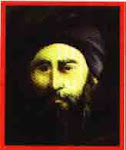


POLITICAL SOCIETY
Man needs the help of his fellowmen to attain the perfection proper to his nature. Unlike the brute, man is not equipped by nature with all that is necessary for the preservation and development of his being. It is only through society that he finds a complete satisfaction of his physical, intellectual and moral needs. Hence, it follows, that society is natural to man.
These are Alfarabi's words. And according to him society is either perfect or imperfect. Perfect society is of three kinds: the highest, the intermediate and the lowest. The highest is the whole inhabited earth coming under one political organization. The intermediate is a nation occupying a specific place of the inhabited earth. The lowest is a city which represents a fraction of the territory of a nation.
Imperfect society is of three kinds: the village, the suburb of a city and the home. These are merely steps leading to the organization of the state. 111
DESCRIPTION OF THE MODEL STATE
Alfarabi describes the organization of a model state in these words:
Just as the world is one harmonious whole ruled by the highest authority of God; just as the stars and the sub-lunar world are linked up and follow one another; just as the human soul is one in different powers; just as the human body is an organized whole moved by the heart; in like manner the state is to be regulated and patterned after these noble models.
In the model state there must be a hierarchy of rulers coming under the control of a supreme head or prince. This prince, head of the model state or of the whole
p. 51
earth, must possess certain traits: great intelligence, excellent memory, eloquence, firmness without weakness, firmness in the achievement of good, love for justice, love for study, love for truth, aversion to falsehood, temperance in food, drink and enjoyments, and contempt for wealth.
All these traits must be found in one man alone placed in charge of directing the complicated machinery of the state. In case all these traits cannot be found in one man alone, then inquiry should be made to determine whether there are two or more who possess the required traits jointly. If there are two, they should both rule the model state. If there are three, then these three should rule. If more are needed, more should rule. 112
Thus the government by one man alone winds up in an aristocratic republic.
He continues:
Opposed to the model state are: the ignorant state, the perverted state and the mistaken state. The ignorant state is the state that has no knowledge of true happiness, and very often exchanges it for health, wealth and pleasure. Thus, it is the ignorant state which has for its end the acquisition of things, such as food, clothing and shelter; it is the ignorant state which has for its end the enjoyment of eating and drinking, sensual pleasures, amusements and games; it is the ignorant state which has for its end the seeking of praise and the making of a name; it is the ignorant state which believes in false liberty, by which everyone can do as he pleases; it is the ignorant state which pursues imperial-ism as a national policy, namely, the will of conquering people and nations by fire and sword.
The perverted state is the state that maintains a conduct similar to that of the ignorant state, even though it knows what is true happiness and perfection.
The mistaken state is the state that has wrong ideas about God and happiness. 113
Alfarabi, in his conception of the state, shows a mystico-philosophical belief in the absorption of the human spirit into the world spirit, and finally into God. In fact, he says:
The goal of the model state is not only to procure the
p. 52
material prosperity of its citizens, but also their future destiny. The souls of the citizens of the ignorant state are devoid of reason, and will return to the material elements as sensible forms in order to be united again to other beings, animals or plants.
In both the perverted and mistaken states, the ruler alone is to be held responsible, and he will be punished accordingly in the world hereafter; and the souls which have been led into error share the fate of the citizens of the ignorant state. On the other hand, the good souls will enter the world of pure spirits, and the higher their knowledge in this life, the higher their position after death. 114
I cannot help quoting the following passage where Alfarabi shows these good souls in possession of their supreme good:
When a great number of men have passed away, and their bodies are annihilated, and their souls made happy, other men will follow them. When these have also passed away and attained the happiness they longed for, each of them joins the one he is similar to in kind and degree. These souls join one another as an intelligible joins an intelligible. In proportion as the souls in-crease in number and are united to one another, in the same proportion their happiness increases, for, each one, thinking of his substance, thinks of a great many similar substances, and the object of such thinking goes on increasing indefinitely with the arrival of new souls. 115
The political theory of Alfarabi is a mixture of Platonic and Aristotelian elements. The main Platonic element is to put all humanity in one universal state. For him, the state as it exists now, is not the model state. The model state, not yet realized, is organized humanity which is not circumscribed by national boundaries. It is likened to a family which has in heaven the same Creator and Father, and on earth the same forebears. In such a family there can be no wars, simply because the vision now of each and everyone is not a particular nation, but humanity; not a particular king, but God.
Such a political conception on the part of Alfarabi might surprise the reader, for, we are wont to think that no one could
p. 53
ever dream of putting the whole world under one political organization, unless that came as a result of the progress of civilization. But it is not so. Just as the idea of political universality was contained in the imperialism of Alexander the Great, and later in the Roman imperialism, in like manner it was contained in the theocratic Moslem conception. And history bears this out.
Furthermore, Alfarabi tempers the ideal state of Plato with some Aristotelian elements, such as private property and the monarchic form of government. This, however, could be easily changed to an aristocratic republic if the required intellectual and moral traits of the chief executive cannot be found but in a few persons.
In one word, our philosopher envisaged the many nations of the world as welded together into one political organization under a wise ruler.
Footnotes
50:111 Alfarabi, Political Regime, op. cit. pp. 77-80.
51:112 Alfarabi, Political Regime, op. cit. pp. 80-89.
51:113 Alfarabi, Political Regime, op. cit., pp. 90-95.
52:114 Alfarabi, Political Regime, op. cit. pp. 93-101.
52:115 Alfarabi, Political Regime, op. cit., pp. 95-96.
Showing posts with label Politik. Show all posts
Showing posts with label Politik. Show all posts
Friday, June 12, 2009

Islamic political philosophy: Al-Farabi, Avicenna, Averroes
Islam is based on the Koran (a revelation from God to the prophet Muhammad) supplemented by the sunnah (a set of traditions about Muhammad's words and deeds). Muslims recognise Judaism and Christianity as revelations from God (just as Christianity recognises Judaism), but hold that the revelation made to Muhammad completes and supersedes earlier revelations. Muslims reject the Christian doctrines that Jesus was God and that God is in three persons (Father, Son, Holy Spirit); they believe that Jesus was a prophet and that God is one.
Islam spread rapidly from its birthplace in Arabia. In part its spread was due to jihad ('holy war' - see Encyclopaedia of Islam (ref/DS37.E523), vol. 2, pp. 538-40, art. 'Djihad'); non-Muslims defeated in battle were offered the choice of conversion or death. An exception was made for Jews and Christians, who were allowed to continue their religious observances provided they acknowledged Muslim political authority and paid a tax. In this way there came to be in Muslim lands many communities of Christians and Jews, who sometimes acted as intermediaries in cultural exchange between Muslims and the Greeks and the Latins. Thus Arab Christians were among the translators who (about A.D. 800) translated the works of Plato and Aristotle into Arabic, and Arabic-speaking Jews were among the translators who (in the 12th century) translated Greek and Arabic works of science and philosophy from Arabic into Latin. The bulk of Aristotle's works became known in Europe first in translations of Arabic translations from Greek (though translations were soon made direct into Latin from Greek) and were accompanied by translations of the Arabic writings of Muslim philosophers. Abu Nasr Muhammad al-Farabi, Abu 'Ali al-Husayn Ibn Sina and Abu al-Walid Muhammad Ibn Ahmad Ibn Rushd were well known in the universities of medieval Europe under the Latinised forms of their names, Alfarabi, Avicenna and Averroes.
The works on politics written by the Islamic philosophers were based especially on Plato, with influence also from Aristotle's Ethics; Aristotle's Politics was not well-known, though Aristotle's other works were. Greek Neo-Platonists (Plotinus, Porphyry, Proclus and others) had tried to combine the philosophies of Plato and Aristotle; they held that these philosophies were fundamentally in harmony. This view was passed on to the Islamic philosophers, who expounded a more or less Platonized Aristotelianism.
Al-Farabi (ca. 870-950 A.D.)
The following is based on extracts in R. Lerner and M. Mahdi, Medieval Political Philosophy (JA82.L4) from Al-Farabi's 'Book of Agreement between the ideas of the two philosophers, the divine Plato and Aristotle'. Two key ideas: (1) Aristotle's idea of Nature as a source of development toward a mature state; (2) Aristotle's distinction between demonstrative argument and merely persuasive argument - i.e. between argument that gives genuine knowledge and understanding and argument that induces the hearer to believe a conclusion without understanding the fundamental reason why it is so (see Aristotle, Analytica Posteriora, 71 b19-23).
According to Al-Farabi, human beings, like any natural species, have a perfect state toward which their actions tend.
[H]e cannot labour toward this perfection except by exploiting a large number of natural beings and until he manipulates them to render them useful... [A]n isolated individual cannot achieve all the perfections by himself and without the aid of many other individuals. It is the innate disposition of every man to join another human being or other men in the labour he ought to perform... Therefore, to achieve what he can of that perfection, every man needs to stay in the neighborhood of others and associate with them... which is why he is called the social and political animal (p. 60).
Compare Plato, Protagoras, 322. Republic 369-371, Aristotle, Politics, I.2.
[P]olitical association and the totality that results from the association of citizens in cities correspond to the association of the bodies that constitute the totality of the world... Just as in the world there is a first principle, then other principles subordinate to it, beings that proceed from these principles, other beings subordinate to these beings, until they terminate in the beings with the lowest rank in the order of being, the nation or the city includes a supreme commander, followed by other commanders, followed by other citizens, who in turn are followed by other citizens, until they terminate in the citizens with the lowest rank as citizens and as human beings. Thus the city includes the likenesses of the things included in the total world (p. 61).
Hierarchy, order, is a characteristic neo-Platonic theme; cf. Augustine.
Human beings differ in their natural capacity to acquire the virtues required in a ruler. Therefore
not every chance human being will possess art, moral virtue, and deliberative virtue with great power. Therefore the prince occupies his place by nature and not merely by will. Similarly, a subordinate occupies his place primarily by nature... This being the case, the theoretical virtue, the highest deliberative virtue, the highest moral virtue, and the highest practical art [politics] are realised only in those equipped for them by nature: that is, in those who possess superior natures with very great potentialities (p. 69).
Cf. Aristotle, Politics, I.5; Plato, Republic, 415a.
The person with the most superior natural capacity and acquired virtue must realise these perfections in nations and cities. There are two primary methods: verbal instruction, and the formation of character by making certain modes of action habitual.
Instruction in the theoretical science should be given either to the imams and princes, or else to those who should preserve the theoretical sciences... [T]hey should be made to pursue a course of study and form the habits of character from their childhood until each of them reaches maturity, in accordance with the plan described by Plato [in the sections of the Republic on the education of the guardians]. Then the princes [leaders] among them will be placed in subordinate offices and promoted gradually through the ranks until they are fifty years old. Then they will be placed in the office with the highest authority... [T]hey are the elect who should not be confined to what is in conformity with unexamined common opinion. [For all of this cf. Plato's Republic.] In the earlier stages they should be instructed by means of persuasive arguments and similitudes [as contrasted with demonstrative arguments and knowledge of the thing itself] (p. 70).
The virtue or art of the prince is exercised by directing those who have the lower virtues or arts, whom he uses to instruct and form the character of the various categories of citizens - some by persuasion, some by compulsion (including holy war - the prince needs 'the faculty that enables him to excel in organising and leading armies and utilising war implements and warlike people to conquer the nations and cities that do not submit to doing what will procure them that happiness for whose acquisition man is made', p. 71). In using persuasion, the prince should go back to the things he studied demonstratively and look for persuasive arguments and similitudes and devise methods of political oratory. [Cf. Plato, Statesman, 303e-304a, 309cd; Phaedrus, 271b, d; Laws, 719e-720e, 722d-723d]. Since it aims at the perfection of all mankind, philosophy seeks political power. 'To be a truly perfect philosopher one has to possess both the theoretical sciences and the faculty for exploiting them for the benefit of all others according to their capacity. Were one to consider the case of the true philosopher, he would find no difference between him and the supreme ruler' (p. 76). [Cf. Plato, Republic, 473cd.]
Now when one... receives instruction.., if he perceives their ideas themselves with his intellect, and his assent to them is by means of certain demonstration, then the science that comprises these cognitions is philosophy. But if they are known by imagining them through similitudes that imitate them, and assent to what is imagined of them is caused by persuasive methods, then the ancients call what comprises these cognitions religion... Therefore, according to the ancients, religion is an imitation of philosophy. Both comprise the same subjects and both give an account of the ultimate principles of the beings. For both supply knowledge about the first principle and cause of the beings, and both give an account of the ultimate end for the sake of which man is made - that is, supreme happiness - and the ultimate end of every one of the other beings. In everything of which philosophy gives an account based on intellectual perception or conception, religion gives an account based on imagination. In everything demonstrated by philosophy, religion employs persuasion - (p. 77).
'It follows, then, that the idea of Imam, Philosopher and Legislator is a single idea' (p. 78).
It will be noticed that the implication is that Muhammad is the philosopher-king, but that the philosophers are superior to those who are merely religious.
Avicenna (980-1037 A.D.)
The extracts in the Readings come from Avicenna, The Healing, 'Metaphysics', Book X (translated M.E. Marmura, in Lerner and Mahdi, p. 99 ff).
Read Chapter 2 (pp. 99-101).
Compare Plato, Protagoras, 322. Republic 369-371.
'The First Principle': God.
'xvi, 102' and the like are references to the Koran.
'He ought not to involve them': religious knowledge does not include everything that philosophers should know.
'Nor is it proper... vulgar': This explains why Muhammad never indicated that parts of the Koran were to be interpreted allegorically.
Read chapter 3, pp. 101-3.
Thus Avicenna finds philosophical reasons for the practices of religion.
Read chapter 5, pp. 107-110
'Caliph' means 'successor', i.e. of Muhammad. 'Imam' means 'leader'.
'If a city other than his has praiseworthy laws': This and the rest of the paragraph seem to be intended to explain why Jews and Christians are to be treated more leniently.
'Acts that harm the individual himself': Avicenna, like J.S. Mill much later, thought that people should not be legally compelled for their own good.
Averroes, 1126-1198 A.D.
Al-Farabi and Avicenna lived in the eastern part of the Islamic world; Averroes lived in Spain, at that time partly under Muslim control. He was a judge in the city of Cordova. He wrote a series of commentaries on the works of Aristotle, which were translated into Latin and were very influential in the universities of medieval Europe.
In Islamic culture 'philosophy' (in the sense of a continuation Greek philosophy) was somewhat suspect. It never gained a foothold in publically supported educational institutions, it was never well connected with any profession (in contrast with western Europe after the 12th century, where philosophy was the main subject in Arts faculties of the universities). The subject best established in medieval Islamic education was the study of the law (i.e. of the religious law). The extracts from Averroes in the Readings are from The Decisive Treatise Determining the Nature of the Connection between Religion and Philosophy, in which Averroes tries to show (with a readership of lawyers primarily in mind) that philosophy is a legitmate study for Muslims - indeed, that it is the highest form of religion. Like Alfarabi, and like Plato, Averroes envisages a state in which philosophers are the elite. The extracts are from the translation by G.F. Hourani in A. Hyman and J.J. Walsh, Philosophy in the Middle Ages (B721.P48), p. 287 ff)
Read chapter 1, pp. 287-291.
The headings in small print (e.g. 'What is the attitude of the Law to philosophy?', 'If teleological study... then the Law commands philosophy') are not part of the original text but have been supplied by editor or translator.
'teleological': in terms of purpose or end (Greek telos, 'end').
'The Artisan': God, the maker of the world.
'LIX, 2' and the like: references to the Koran.
'Demonstrative', 'dialectical' and 'rhetorical' reasoning: According to Aristotle 'demonstrative' reasoning gives certainty and understanding by showing the reasons why the thing is and must be so. 'Dialectical' reasoning shows that it is probably so by reasons that give no understanding or certainty (e.g. arguments from what is commonly believed, or analogies). 'Rhetorical' arguments induce the listener (perhaps by some emotional appeal) to believe that the thing is so. (Plato used 'dialectic' for the highest form of reasoning; Aristotle gave the word a less favourable meaning.)
'The lawyer': i.e. the student of the religious law of Isalm.
'Syllogisms': arguments.
'regardless... shares our religion': Averroes' great antagonist, Al-Ghazali, held similarly liberal views on this topic. 'If we adopt the attitude of abstaining from every truth that the mind of a heretic has apprehended before us, we should be obliged to abstain from much that is true' (Al-Ghazali, in Hyman and Walsh, p. 273).
'Those ancients who studied these matters before Islam': that is, the Greek philosophers.
'For the natures of men are on different levels': This was also the view of Al-Farabi and Avicenna, who also inferred that philosophy was for the elite and religion for the masses.
Read chapter 2, pp. 292-4
Note the argument that on theoretical matters it can never be shown that there has been unanimity, since some of the experts may have believed that they should not communicate their knowledge to the public.
The next few pages are omitted, since they go into controversies on technical questions of philosophy.
Read Chapter 3, pp. 301-6.
'Abu Hamid': Al-Ghazali, whose book The Incoherence of the Philosophers was an attack on philosophy.
'Accidentally certain': i.e. 'happen to be certain'. A dialectical argument uses as premisses common beliefs, and there is no guarantee that commonly held beliefs are true; but it may happen in some instance that they are true.
The rest of the chapter is clear enough.
Like Al-Farabi, Averroes holds that philosophy and Islam are in harmony, that superior intellects ought to philosophise but not in public, that ordinary people should be taught by means of the Koran and the traditions without trying to turn them into philosophers. (Compare Plato's city, where ordinary people are ruled by philosophers who know what is good for them better than they do themselves.) Note that these Muslim philosophers do not suggest (and presumably did not believe) that the Koran and the traditions are in any way false: by a miracle, God has provided a book that is both perfectly accessible to ordinary people and a true guide.
Further Reading
Encyclopaedia of Philosophy (ref/B41.E5), art. 'Islamic philosophy'; R. Lerner and M. Mahdi, Medieval Political Philosophy (JA82.L4).
Islam spread rapidly from its birthplace in Arabia. In part its spread was due to jihad ('holy war' - see Encyclopaedia of Islam (ref/DS37.E523), vol. 2, pp. 538-40, art. 'Djihad'); non-Muslims defeated in battle were offered the choice of conversion or death. An exception was made for Jews and Christians, who were allowed to continue their religious observances provided they acknowledged Muslim political authority and paid a tax. In this way there came to be in Muslim lands many communities of Christians and Jews, who sometimes acted as intermediaries in cultural exchange between Muslims and the Greeks and the Latins. Thus Arab Christians were among the translators who (about A.D. 800) translated the works of Plato and Aristotle into Arabic, and Arabic-speaking Jews were among the translators who (in the 12th century) translated Greek and Arabic works of science and philosophy from Arabic into Latin. The bulk of Aristotle's works became known in Europe first in translations of Arabic translations from Greek (though translations were soon made direct into Latin from Greek) and were accompanied by translations of the Arabic writings of Muslim philosophers. Abu Nasr Muhammad al-Farabi, Abu 'Ali al-Husayn Ibn Sina and Abu al-Walid Muhammad Ibn Ahmad Ibn Rushd were well known in the universities of medieval Europe under the Latinised forms of their names, Alfarabi, Avicenna and Averroes.
The works on politics written by the Islamic philosophers were based especially on Plato, with influence also from Aristotle's Ethics; Aristotle's Politics was not well-known, though Aristotle's other works were. Greek Neo-Platonists (Plotinus, Porphyry, Proclus and others) had tried to combine the philosophies of Plato and Aristotle; they held that these philosophies were fundamentally in harmony. This view was passed on to the Islamic philosophers, who expounded a more or less Platonized Aristotelianism.
Al-Farabi (ca. 870-950 A.D.)
The following is based on extracts in R. Lerner and M. Mahdi, Medieval Political Philosophy (JA82.L4) from Al-Farabi's 'Book of Agreement between the ideas of the two philosophers, the divine Plato and Aristotle'. Two key ideas: (1) Aristotle's idea of Nature as a source of development toward a mature state; (2) Aristotle's distinction between demonstrative argument and merely persuasive argument - i.e. between argument that gives genuine knowledge and understanding and argument that induces the hearer to believe a conclusion without understanding the fundamental reason why it is so (see Aristotle, Analytica Posteriora, 71 b19-23).
According to Al-Farabi, human beings, like any natural species, have a perfect state toward which their actions tend.
[H]e cannot labour toward this perfection except by exploiting a large number of natural beings and until he manipulates them to render them useful... [A]n isolated individual cannot achieve all the perfections by himself and without the aid of many other individuals. It is the innate disposition of every man to join another human being or other men in the labour he ought to perform... Therefore, to achieve what he can of that perfection, every man needs to stay in the neighborhood of others and associate with them... which is why he is called the social and political animal (p. 60).
Compare Plato, Protagoras, 322. Republic 369-371, Aristotle, Politics, I.2.
[P]olitical association and the totality that results from the association of citizens in cities correspond to the association of the bodies that constitute the totality of the world... Just as in the world there is a first principle, then other principles subordinate to it, beings that proceed from these principles, other beings subordinate to these beings, until they terminate in the beings with the lowest rank in the order of being, the nation or the city includes a supreme commander, followed by other commanders, followed by other citizens, who in turn are followed by other citizens, until they terminate in the citizens with the lowest rank as citizens and as human beings. Thus the city includes the likenesses of the things included in the total world (p. 61).
Hierarchy, order, is a characteristic neo-Platonic theme; cf. Augustine.
Human beings differ in their natural capacity to acquire the virtues required in a ruler. Therefore
not every chance human being will possess art, moral virtue, and deliberative virtue with great power. Therefore the prince occupies his place by nature and not merely by will. Similarly, a subordinate occupies his place primarily by nature... This being the case, the theoretical virtue, the highest deliberative virtue, the highest moral virtue, and the highest practical art [politics] are realised only in those equipped for them by nature: that is, in those who possess superior natures with very great potentialities (p. 69).
Cf. Aristotle, Politics, I.5; Plato, Republic, 415a.
The person with the most superior natural capacity and acquired virtue must realise these perfections in nations and cities. There are two primary methods: verbal instruction, and the formation of character by making certain modes of action habitual.
Instruction in the theoretical science should be given either to the imams and princes, or else to those who should preserve the theoretical sciences... [T]hey should be made to pursue a course of study and form the habits of character from their childhood until each of them reaches maturity, in accordance with the plan described by Plato [in the sections of the Republic on the education of the guardians]. Then the princes [leaders] among them will be placed in subordinate offices and promoted gradually through the ranks until they are fifty years old. Then they will be placed in the office with the highest authority... [T]hey are the elect who should not be confined to what is in conformity with unexamined common opinion. [For all of this cf. Plato's Republic.] In the earlier stages they should be instructed by means of persuasive arguments and similitudes [as contrasted with demonstrative arguments and knowledge of the thing itself] (p. 70).
The virtue or art of the prince is exercised by directing those who have the lower virtues or arts, whom he uses to instruct and form the character of the various categories of citizens - some by persuasion, some by compulsion (including holy war - the prince needs 'the faculty that enables him to excel in organising and leading armies and utilising war implements and warlike people to conquer the nations and cities that do not submit to doing what will procure them that happiness for whose acquisition man is made', p. 71). In using persuasion, the prince should go back to the things he studied demonstratively and look for persuasive arguments and similitudes and devise methods of political oratory. [Cf. Plato, Statesman, 303e-304a, 309cd; Phaedrus, 271b, d; Laws, 719e-720e, 722d-723d]. Since it aims at the perfection of all mankind, philosophy seeks political power. 'To be a truly perfect philosopher one has to possess both the theoretical sciences and the faculty for exploiting them for the benefit of all others according to their capacity. Were one to consider the case of the true philosopher, he would find no difference between him and the supreme ruler' (p. 76). [Cf. Plato, Republic, 473cd.]
Now when one... receives instruction.., if he perceives their ideas themselves with his intellect, and his assent to them is by means of certain demonstration, then the science that comprises these cognitions is philosophy. But if they are known by imagining them through similitudes that imitate them, and assent to what is imagined of them is caused by persuasive methods, then the ancients call what comprises these cognitions religion... Therefore, according to the ancients, religion is an imitation of philosophy. Both comprise the same subjects and both give an account of the ultimate principles of the beings. For both supply knowledge about the first principle and cause of the beings, and both give an account of the ultimate end for the sake of which man is made - that is, supreme happiness - and the ultimate end of every one of the other beings. In everything of which philosophy gives an account based on intellectual perception or conception, religion gives an account based on imagination. In everything demonstrated by philosophy, religion employs persuasion - (p. 77).
'It follows, then, that the idea of Imam, Philosopher and Legislator is a single idea' (p. 78).
It will be noticed that the implication is that Muhammad is the philosopher-king, but that the philosophers are superior to those who are merely religious.
Avicenna (980-1037 A.D.)
The extracts in the Readings come from Avicenna, The Healing, 'Metaphysics', Book X (translated M.E. Marmura, in Lerner and Mahdi, p. 99 ff).
Read Chapter 2 (pp. 99-101).
Compare Plato, Protagoras, 322. Republic 369-371.
'The First Principle': God.
'xvi, 102' and the like are references to the Koran.
'He ought not to involve them': religious knowledge does not include everything that philosophers should know.
'Nor is it proper... vulgar': This explains why Muhammad never indicated that parts of the Koran were to be interpreted allegorically.
Read chapter 3, pp. 101-3.
Thus Avicenna finds philosophical reasons for the practices of religion.
Read chapter 5, pp. 107-110
'Caliph' means 'successor', i.e. of Muhammad. 'Imam' means 'leader'.
'If a city other than his has praiseworthy laws': This and the rest of the paragraph seem to be intended to explain why Jews and Christians are to be treated more leniently.
'Acts that harm the individual himself': Avicenna, like J.S. Mill much later, thought that people should not be legally compelled for their own good.
Averroes, 1126-1198 A.D.
Al-Farabi and Avicenna lived in the eastern part of the Islamic world; Averroes lived in Spain, at that time partly under Muslim control. He was a judge in the city of Cordova. He wrote a series of commentaries on the works of Aristotle, which were translated into Latin and were very influential in the universities of medieval Europe.
In Islamic culture 'philosophy' (in the sense of a continuation Greek philosophy) was somewhat suspect. It never gained a foothold in publically supported educational institutions, it was never well connected with any profession (in contrast with western Europe after the 12th century, where philosophy was the main subject in Arts faculties of the universities). The subject best established in medieval Islamic education was the study of the law (i.e. of the religious law). The extracts from Averroes in the Readings are from The Decisive Treatise Determining the Nature of the Connection between Religion and Philosophy, in which Averroes tries to show (with a readership of lawyers primarily in mind) that philosophy is a legitmate study for Muslims - indeed, that it is the highest form of religion. Like Alfarabi, and like Plato, Averroes envisages a state in which philosophers are the elite. The extracts are from the translation by G.F. Hourani in A. Hyman and J.J. Walsh, Philosophy in the Middle Ages (B721.P48), p. 287 ff)
Read chapter 1, pp. 287-291.
The headings in small print (e.g. 'What is the attitude of the Law to philosophy?', 'If teleological study... then the Law commands philosophy') are not part of the original text but have been supplied by editor or translator.
'teleological': in terms of purpose or end (Greek telos, 'end').
'The Artisan': God, the maker of the world.
'LIX, 2' and the like: references to the Koran.
'Demonstrative', 'dialectical' and 'rhetorical' reasoning: According to Aristotle 'demonstrative' reasoning gives certainty and understanding by showing the reasons why the thing is and must be so. 'Dialectical' reasoning shows that it is probably so by reasons that give no understanding or certainty (e.g. arguments from what is commonly believed, or analogies). 'Rhetorical' arguments induce the listener (perhaps by some emotional appeal) to believe that the thing is so. (Plato used 'dialectic' for the highest form of reasoning; Aristotle gave the word a less favourable meaning.)
'The lawyer': i.e. the student of the religious law of Isalm.
'Syllogisms': arguments.
'regardless... shares our religion': Averroes' great antagonist, Al-Ghazali, held similarly liberal views on this topic. 'If we adopt the attitude of abstaining from every truth that the mind of a heretic has apprehended before us, we should be obliged to abstain from much that is true' (Al-Ghazali, in Hyman and Walsh, p. 273).
'Those ancients who studied these matters before Islam': that is, the Greek philosophers.
'For the natures of men are on different levels': This was also the view of Al-Farabi and Avicenna, who also inferred that philosophy was for the elite and religion for the masses.
Read chapter 2, pp. 292-4
Note the argument that on theoretical matters it can never be shown that there has been unanimity, since some of the experts may have believed that they should not communicate their knowledge to the public.
The next few pages are omitted, since they go into controversies on technical questions of philosophy.
Read Chapter 3, pp. 301-6.
'Abu Hamid': Al-Ghazali, whose book The Incoherence of the Philosophers was an attack on philosophy.
'Accidentally certain': i.e. 'happen to be certain'. A dialectical argument uses as premisses common beliefs, and there is no guarantee that commonly held beliefs are true; but it may happen in some instance that they are true.
The rest of the chapter is clear enough.
Like Al-Farabi, Averroes holds that philosophy and Islam are in harmony, that superior intellects ought to philosophise but not in public, that ordinary people should be taught by means of the Koran and the traditions without trying to turn them into philosophers. (Compare Plato's city, where ordinary people are ruled by philosophers who know what is good for them better than they do themselves.) Note that these Muslim philosophers do not suggest (and presumably did not believe) that the Koran and the traditions are in any way false: by a miracle, God has provided a book that is both perfectly accessible to ordinary people and a true guide.
Further Reading
Encyclopaedia of Philosophy (ref/B41.E5), art. 'Islamic philosophy'; R. Lerner and M. Mahdi, Medieval Political Philosophy (JA82.L4).
Subscribe to:
Posts (Atom)
