


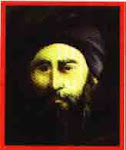


At the beginning of the seventh century Byzantium, the Eastern Empire now completely separate from the disintegrated west, was the most powerful force in the world rivaled by Persia under the Sassanian dynasty. But in a small settlement in south Arabia a man was born who was to change the history of the east forever. In the last chapter I touched briefly on the differences between "inner-directed' and "outer-directed cultures." In an inner directed culture all of the activities allowed by the culture are determined by the members of the culture as they faced its emerging needs. For example, Periclean Athens where all activities were determined by the glory of the state and of the citizens who made up the Democracy. In the harsh environment of the Arabian desert life was determined in response to powers of nature which were seen as divine entities. It is necessarily outer-directed. Life in such an outer-directed culture is simpler. Cultural norms and activities are determined and enforced by the outer agency. In this case the desert. A culture which can come to grips with life in an outer-directed sense can achieve a degree of closeness that is not possible in an inner-directed culture because restrictions on activities are never arbitrary. And their authority is the world itself as represented by undeniable divine entities. The inhabitants of Mecca were Bedouin tribesmen with a long history of nomadic life in the Arabian steppes. They came from a life lived by a strict code developed in response to the harsh environment of the desert. Life in Mecca, on the other hand, was completely different It was developed around its value as an oasis that lay on the crossroads of a number of highly successful trading routes. Success in Mecca was secular. Life was arbitrary. It was suffering the fate of millions of cities throughout the world where secular success becomes a new driving force. When Muhammad developed his new religion his purpose was to bring back the kind of community spirit that existed in the old life on the steppes. But, if there is anything that is consistent with secular success regardless of the culture, it is the loss of community, and more importantly a loss of the energizing spirit that makes community possible. In the nineteenth century Nietzsche called it 'Nihilism', a feeling of nothingness. In either case it is derived from the loss of an outer-derived, and thus objective source of truth. It is in this sense that Islam developed as a community of man in the service of Allah, the one God, the God of Abraham. By the eighth century the Moslem's had conquered Persia, Byzantium, had spread across Africa, and held practically the entire Iberian Peninsula.
As I mentioned before, the writings of Aristotle were lost to the west following the close of the Peripatetic school" (school of walking philosophers) that carried on his work after his death. While Boethius had translated a few of his logical texts, most of his works did not appear until much later. Even then they were in the hands of Islamic and Nestorian Christian Philosophers. To make matters worse some of the works attributed to Aristotle at the time were written by others and were more neoplatonist. Thus, the problem of the Moslem philosophers was to make this somewhat distorted view of Aristotelianism compatible with the Koran.
When the arabs came into contact with Greek science and philosophy in the ninth century there emerged a new breed of Muslim dedicated to an ideal they called the Falsafah. The aim of the Fayllasufs (philosophers) was to live rationally in accordance with the laws that governed the universe. Since they believed the God of the Greek philosophers to be identical with Allah, they turned first to Greek science and then to Greek philosophy. According to Karen Armstrong they came to the conclusion that rationalism represented the most advanced form of religion, and that it had evolved a higher notion of God than what was revealed in the scriptures. They had no intention of abolishing religion, they wanted to purify it. It took a great courage, Armstrong said, to believe that the cosmos, where pain seemed more in evidence than a purposeful order, was really ruled by the principle of reason. They believed it was their duty to translate the Koran into the more advanced idiom developed through the ages by the best and noblest minds in all cultures. God was not a mystery, he was reason itself This is not to suggest even for a moment that the concept of a fully rational universe that dominated Greek thought was compatible with the thought of the Muslims. The Faylasufs simply considered that natural law was a manifestation of Allah. F. E Peters explained the Faylasuf's position in these terms
What falsafah added to the accumulating pieces of the Greek sciences was an epistemological claim. It brought before the Muslim an alternative theory of wisdom that simultaneously exalted itself and set down in an inferior position the channel of revelation opened by the Prophet of Islam.
This turn towards Greek philosophy, however, did not mean that the Muslims had adopted the Greek and western idea of a rational universe. Nor were the Faylasuf's attempting to develop a natural theology. The universe was created by Allah out of nothing. Thus Allah is beyond rationality. They were not searching for a reasoned explanation of the world. They were searching for a reasoned explanation of the truth of the Koran. This explains somewhat the short career of the Falsafah in the Muslim world.
The first of the Faylasuf's, Abu Yusuf Ya'qub ibn Ishaq, called Al-Kindi, maintained that human reason can work out a valid philosophical theology. He was a prolific writer who produced books on science, mathematics and religion, as well as philosophy. His works refer back both to the Profit and to Aristotle and Plato. However, the thought of his day did not see the philosophy of Aristotle and Plato as different. His Aristotle, as was most in his day, was developed at least partially from translations of Neo-platonist works. Thus it is not particularly surprising that he introduced an interpretation of Aristotle's concept of the intellect that was as much Platonic as it was Aristotelian. He regarded the active intellect as a single intelligence which comes from the outside to perform its function in individual human minds. You may recall from our discussion of Aristotle that his idea of the intellect was that it was the power whereby we recognize such things as first principles, or valid syllogisms. He departed from Aristotle too on the creation of the world. Aristotle's first mover was the ultimate cause of the world. The Koran stated that God created the world out of nothing. Some claimed that for these reasons Al-Kindi was not a true Faylasuf.
If so, then the first Faylasuf would be the Turk Faylasuf Abu Nasr Al-Farabi, in the tenth century. He argued that philosophers become aware of the truth through logical demonstrations and their own insight. Non-philosophers know truth and reality by symbols. Thus, philosophy is the highest form of knowledge. Since revealed truth is manifest through symbols, he concluded that one religion could not be suitable for all people and in any case is subordinate to philosophy. He linked the neoplatonist concept of the one with Aristotle's first cause as a self-thinking intellect or mind as well as with Allah. He claimed, in his commentaries on Plato's Republic, that the ideal ruler would be both a philosopher and a prophet. But he maintained that since no such Caliph was likely the philosopher and the politician should work closely together.
There is something outrageous in a culture that is not committed to the idea of a rational universe turning to Aristotle for an answer to the problem of truth. But the Faylasufs were a temporary phenomena of the ninth and tenth centuries. they began their deliberations with the idea that the world was a rational creation of Allah, and that did not require a rational God. If what he created was rational then reasoning was an avenue to its understanding.
Abu-Ibn-Sina, better known as Avicenna, introduced a concept that had important repercussions on later philosophy, the concept of possible being as a mode of being. He began with by showing that there was a clear distinction between essence and existence. For example, we are perfectly at ease discussing dinosaurs which do not exist because we both understand what a dinosaur is and that its nonexistence is irrelevant to our discussion. We also understand what is meant by the statement "the essence of a man can exist even though there were no men anywhere in the universe." Also, we can agree, in a very Aristotelian way, that the essence of a particular man is what it means to be that man. Thus, before he came into existence, his essence would be possible. When he was born, it would become conjoined with his existence. So, if we examine things this way, his essence and his existence can be considered two separate entities. If this were not true, and we were still thinking in these kinds of Aristotelian terms, then he could never cease to exist. He could never die. This means that possible being is a mode of being. It simply needs a cause in order to exist. This cause may be another human being, or it may be a super-natural being. Thus a being may be hypothetically necessary meaning that it must exist if some other being exists. In other words, the essence of a particular man might exist yet the man does not, however, if the man exists then his essence necessarily exists. On the other hand, a being may be absolutely necessary if it must exist in virtue of its essence. In other words, if part of the essence of a being is to exist then it cannot not exist. The point that Avicenna was trying to make was that if possible beings exist then it is necessary that an absolute being exist and that being is God.
The idea of possible being is not really consistent with Aristotle because for him the essence of something would include its cause. Therefore there could not be an essence without a cause. Every essence had to be of something that had been caused. Therefore every essence had to be of something that is. But, the introduction of possible being opened the door for some very important advancements in the idea of being, Notably by Thomas Aquinas and Leibniz.
The absolutely necessary God is the ultimate cause of all other beings. In Moslem thought he is also a personal being who knows all that proceeds from him. Creation by God, Avicenna said, is necessary not because God is coerced into creating but because of what he is, "Whatever proceeds from a necessary being must necessarily exist." He therefore made the relationship between creator and created a logical implication. From God proceeded a whole hierarchy of created intelligences each of which is necessary only through the activity of God. The tenth intelligence is the giver of the forms. Through its activity forms are received in matter, the potential becomes the actual. These things, however, come into being and pass away. This series cannot be different than it is because that would imply that God could not know things by knowing his own essence as the source of all that exists.
The tenth intelligence also has the function of illuminating the human mind. This, of course is reminiscent of Augustine and is taken from the Neoplatonic concept of spirit and world spirit. However, he explained it in Aristotelian terms. Aristotle's remarks on the ontological status of the active intellect, however, are obscure and open to various interpretations. Avicenna claimed the active intellect to be a separate intelligence. This doctrine, he felt, is derived through reason but does not contradict the Koran. He also claimed that Aristotle did not deny personal immortality because the pronoun I pertained to the soul and not the body. The soul could therefore be immortal though the body is not.
A twelfth century Moslem named Ibn-Rushd, known to Christians as Averroes developed a more strictly Aristotelian approach to philosophy. Again, he was influenced by writings attributed to Aristotle that were in fact written by others. Of particular importance is his method of freeing philosophy from its traditional conflicts with revelation. He said there are different ways of understanding the Koran that reflected different kinds of minds. The mass of mankind, hardly capable of conceiving a reality transcending the level of the sensible, can be moved by persuasive arguments and apprehend the truth only when presented in imaginative or pictorial form. The Koran caters to such minds. The next level of minds includes those who can grasp dialectical arguments. They too can grasp truths through the Koran along with Moslem theology. The highest minds are those which seek strict logical demonstrations and are capable of apprehending rational truth. For them the Koran provides material for philosophical penetration. He added an idea that was to have serious repercussions later. That was, that if there is a discrepancy between truths determined by philosophy and revelation then both were true.
This attitude made it possible for Averroes to present a description of the Aristotelian intellect that at least begins as a reasonable explanation of the words of the great philosopher himself. Averroes said that in De Anima book III Aristotle used the word intellect four different ways. The first, was what he called the imaginative power or passive intellect. Second, was the active intellect which abstracts the intelligible forms from images in the imaginative power. Third, is the material intellect, a potential principle which receives intelligible forms from the active intellect. Fourth was all of these concepts as conceived in a single entity. He went on to say that the material intellects could not be distinguished apart from the others since it was pure form. The active element, then would be the unity of all of the intellects and this must be eternal because the human race is eternal. The problem this made for western religious philosophers, Moslem, Jewish, or Christian, was that it did not provide for personal immortality.
Science and western philosophy both begin with the same assumption, that the universe is a rational place. But Greek philosophy has always aimed at the unchanging, the pure forms of the divine. Even Aristotle in his role as a biologist was searching for what is universal and consistent in individual entities. Thus Plato's contribution to geometry dealt with pure forms of geometric figures and not those found in nature. Consider the two greatest mathematicians of the period, Eudoxus and Euclid. Though friends of Plato and former students at the Academy, they made their greatest contributions outside the Academy. Aristotle would call what most scientists do in their study of the phenomena of the changing world art (techne), or production. He would consider it something different from philosophy. Later Archimedes and Ptolemy would stop short of explaining the cause of the phenomena that they found in the practical use of mathematics in such fields as mechanics or astronomy. In this totally rational world that grew out of natural forces everything came to be for a reason, a final cause or purpose. These were the purview of the philosopher. The manifestations themselves and explanations concerning them as they were found, that was the purview of the scientist. In the west they have always been separate fields. Not so in Islam. The world was created by Allah. That meant that the study of anything within it was a study of the actions of Allah. During the early middle ages science in the west could not flourish. Scientific activity in Islam developed under the Faylasuf's in their search for an understanding of Allah's world. The scientific works that had the greatest impact on Western thought were those that dealt with mathematics and astronomy. While astronomical developments throughout most of the ninth century centered around developing astrological forcasts, some important Muslim astronomers concentrated instead on developing detailed mathematically exact star charts. Abu'l Wafa' al-Buzjsni, an Iranian, wrote a complete textbook on mathematical astronomy. Another Iranian, al-Quhi, observed the summer and winter solstices and the movements of the planets and was considered to have developed the greatest mathematical accuracy obtained during the tenth century. With this added accuracy the Ptolemaic description of the planetary revolutions began to be suspect. He had developed his description around the assumption that originated in Plato's Timaeus and was backed up by Aristotle, that the stars and planets, being divine, traveled of necessity in perfect circles. The apparent wandering movements were explained by Ptolemy through the use of Homocentric spheres, an idea developed originally by Eudoxus. But even with this added assumption the results of precise measurements did not confirm the assumptions. No Muslim philosopher questioned this idea, however, it was not to be questioned until the sixteenth century and even then it was by European and not Muslim astronomers. But, to a very great extent these European developments when they did occur did so based on these accurate Muslim observations. Undoubtedly the most lasting contribution to western thought of the Muslims was the introduction of the Arabic (which they adapted from India) numeral system that we use today.
During the medieval period Jewish philosophers generally had more freedom in Moslem countries than in Christian. The most famous was Moses Ben Maimon, better known as Moses Maimonides. Born in Cordoba, he was driven from his home town by the emergence of a powerful anti-Jewish Moslem sect. He moved to Africa and finally settled in Egypt. He indicated considerable admiration for the Moslem philosopher Al Farabi and like him made Philosophical inquiry a higher standard for judging religious truths than pictorial or mythical thought. However, unlike Al Farabi, he made prophetic illumination superior to philosophical reasoning. His intent seems to be to produce a set of philosophical commentaries which would explain doctrinal concepts in philosophical terms. However, they were presented in a way that would be inexplicable to the average person.
The ideas of Maimonedes that had their greatest influence on western thought were those that dealt with God and his existence. The problem is one that occurs in all western religions. That is, how can we understand the infinity of God given the comments on him in scripture. For example, the statement, "let us make man in our own image and likeness" from Genesis is not meant to mean that God is corporeal. Maimonedes explained that God is simple. When we predicate to God a variety of attributes we are referring not to God, but to the multiplicity of Gods effects. When we make positive statements about God, such as that he is wise, we do not know what they mean to God except that they deny something of him. In this case it is that there is no wisdom that he does not possess. If we say that he is powerful what we are really saying is that he is not powerless. But most important when we said that he did not exist we would be saying that the world is self-sufficient, that there is no divine reality. That would be a statement that is false. We therefore must say that God exists but, though that statement is true, God's existence is not the same as the notion of existence as it is applied to us. We know of God by what he is not rather than what he is. When we are thinking of god we are thinking of a divine reality of which we can have no direct knowledge. It is beyond human comprehension.
An interesting highlight concerning his attempt to prove the existence of God begins with a statement concerning the perennial philosophical problem of time. While he believed that time had a beginning, philosophy had never been able to show that the world did not exist from eternity. For him this meant that a philosophical proof of the existence of God must begin with the assumption that the world did exist from eternity. In this way the more difficult case would have been proven and if it should be shown through scripture that the world had a beginning, then the argument would prove to be even stronger. He made use of Aristotle's argument for a first or supreme mover by presenting the argument several ways. He followed this by turning to Avicenna's argument that the existence of possible things (that is the essences of things that are possible even if they have never actually existed) implies the existence of a being which cannot not exist. His conclusion is that a being which is a necessarily existing being, which cannot not exist, is impled by the existence of possible beings. On the other hand, if the world had a beginning then it must have been created by God. For what has been created, existence is an accident. For God existence is part of his essence.
This has been an excerpt from God Science and Reason by Wallace Provost
Showing posts with label Islam. Show all posts
Showing posts with label Islam. Show all posts
Friday, June 12, 2009

Monday, February 9, 2009
Memahami pemikiran Imam Syafie
Oleh Idris Musa
idris@hmetro.com.my
RAMAI mengenali Imam Syafie sebagai seorang guru besar dalam fekah dan usul fekah, malah dengan kehadiran kitabnya ar-Risalah (usul fekah) dan al-Um (fekah), ada pula pihak yang menidakkan kepakaran beliau dalam aspek lain, sedangkan ia tidak sedemikian.
Dekan Fakulti Agama Islam Universitas Muhammadiyah Yogyakarta, Indonesia, Dr H Yunahar lyas, berkata Imam Syafie juga terkenal sebagai seorang ahli hadis dan sastera Arab.
“Bahkan sejak usia kanak-kanak, beliau sudah menghafal ribuan syair. Satu karya sasteranya yang terkenal ialah kumpulan syair, Diwan as-Syafie.
“Keahlian Imam Syafie dalam bidang akidah juga tidak kurang pentingnya, tetapi tidak ramai yang mengetahuinya,” katanya di Seminar Pemikiran Tajdid Imam Syafie di Masjid Wilayah Persekutuan, Kuala Lumpur, baru-baru ini.
Seminar anjuran Kerajaan Negeri Perlis itu turut dihadiri Menteri Besar Perlis, Datuk Seri Shahidan Kassim.
Imam Syafie adalah seorang ulama salaf yang secara murni mengikuti al-Quran dan sunnah tanpa dipengaruhi oleh ahli falsafah (kalam), malah banyak mengkritik ahli kalam yang membahas persoalan akidah dengan pendekatan falsafah.
Yunahar berkata, tajdid pemikiran Islam dilakukan Imam Syafie dalam dua bentuk.
“Pertama, pemurnian tauhid dari segala bentuk kemusyrikan, tahyul dan khurafat, memurnikan ibadat dari segala bentuk bidaah dan akhlak dari nilai bertentangan dalam Islam.
“Kedua, reformasi iaitu menterjemahkan dan mengembangkan ajaran Islam dalam aspek muamalat atau ibadat secara umum sehingga dapat menjawab persoalan dihadapi umat manusia sepanjang zaman,” katanya.
Imam Syafie menjadikan al-Quran dan sunnah sumber kepada ajaran Islam, yang mampu menjawab semua persoalan, sama ada berkaitan fekah atau akidah.
“Dalam menetapkan masalah akidah, Imam Syafie memulainya dengan menyebut nas al-Quran dan sunnah termasuk ketika berhujah menghadapi penentang.
“Kita tidak menemui Imam Syafie melakukan takwil terhadap nas terbabit dan tidak pula menemui beliau merujuk nas itu kepada pendapat ahli ilmu kalam,” katanya.
Dalam kes pelaku dosa besar misalnya, Imam Syafie mempunyai pendapat yang jelas terutama pendekatan bersifat falsafah.
“Imam Syafie berpendapat pelaku dosa besar tetap menjadi seorang Muslim. Jika bertaubat, Allah akan menerima taubatnya. Jika mati dalam berbuat dosa, urusannya diserahkan kepada Allah, sama ada diampuni atau diseksa. Yang jelas tidak kekal di dalam neraka.
“Kelompok Khawarij mengatakan orang Islam yang melakukan dosa besar menjadi kafir, jika tidak bertaubat kekal di dalam neraka.
“Muktazilah mengatakan, si pelaku dosa besar di dunia berada di antara dua posisi, tidak kafir dan tidak mukmin.
“Bagi Murjiah, orang yang mengucapkan La ilaha illallah adalah mukmin yang sempurna imannya dan setiap mukmin pasti masuk syurga. Mereka mengatakan dosa tidak mempengaruhi iman.”
Menurutnya, tajdid yang dilakukan Imam Syafie masih relevan dilakukan dalam zaman sekarang, kerana sampai hari ini akidah umat Islam belum lagi bersih dari unsur kemusyrikan.
idris@hmetro.com.my
RAMAI mengenali Imam Syafie sebagai seorang guru besar dalam fekah dan usul fekah, malah dengan kehadiran kitabnya ar-Risalah (usul fekah) dan al-Um (fekah), ada pula pihak yang menidakkan kepakaran beliau dalam aspek lain, sedangkan ia tidak sedemikian.
Dekan Fakulti Agama Islam Universitas Muhammadiyah Yogyakarta, Indonesia, Dr H Yunahar lyas, berkata Imam Syafie juga terkenal sebagai seorang ahli hadis dan sastera Arab.
“Bahkan sejak usia kanak-kanak, beliau sudah menghafal ribuan syair. Satu karya sasteranya yang terkenal ialah kumpulan syair, Diwan as-Syafie.
“Keahlian Imam Syafie dalam bidang akidah juga tidak kurang pentingnya, tetapi tidak ramai yang mengetahuinya,” katanya di Seminar Pemikiran Tajdid Imam Syafie di Masjid Wilayah Persekutuan, Kuala Lumpur, baru-baru ini.
Seminar anjuran Kerajaan Negeri Perlis itu turut dihadiri Menteri Besar Perlis, Datuk Seri Shahidan Kassim.
Imam Syafie adalah seorang ulama salaf yang secara murni mengikuti al-Quran dan sunnah tanpa dipengaruhi oleh ahli falsafah (kalam), malah banyak mengkritik ahli kalam yang membahas persoalan akidah dengan pendekatan falsafah.
Yunahar berkata, tajdid pemikiran Islam dilakukan Imam Syafie dalam dua bentuk.
“Pertama, pemurnian tauhid dari segala bentuk kemusyrikan, tahyul dan khurafat, memurnikan ibadat dari segala bentuk bidaah dan akhlak dari nilai bertentangan dalam Islam.
“Kedua, reformasi iaitu menterjemahkan dan mengembangkan ajaran Islam dalam aspek muamalat atau ibadat secara umum sehingga dapat menjawab persoalan dihadapi umat manusia sepanjang zaman,” katanya.
Imam Syafie menjadikan al-Quran dan sunnah sumber kepada ajaran Islam, yang mampu menjawab semua persoalan, sama ada berkaitan fekah atau akidah.
“Dalam menetapkan masalah akidah, Imam Syafie memulainya dengan menyebut nas al-Quran dan sunnah termasuk ketika berhujah menghadapi penentang.
“Kita tidak menemui Imam Syafie melakukan takwil terhadap nas terbabit dan tidak pula menemui beliau merujuk nas itu kepada pendapat ahli ilmu kalam,” katanya.
Dalam kes pelaku dosa besar misalnya, Imam Syafie mempunyai pendapat yang jelas terutama pendekatan bersifat falsafah.
“Imam Syafie berpendapat pelaku dosa besar tetap menjadi seorang Muslim. Jika bertaubat, Allah akan menerima taubatnya. Jika mati dalam berbuat dosa, urusannya diserahkan kepada Allah, sama ada diampuni atau diseksa. Yang jelas tidak kekal di dalam neraka.
“Kelompok Khawarij mengatakan orang Islam yang melakukan dosa besar menjadi kafir, jika tidak bertaubat kekal di dalam neraka.
“Muktazilah mengatakan, si pelaku dosa besar di dunia berada di antara dua posisi, tidak kafir dan tidak mukmin.
“Bagi Murjiah, orang yang mengucapkan La ilaha illallah adalah mukmin yang sempurna imannya dan setiap mukmin pasti masuk syurga. Mereka mengatakan dosa tidak mempengaruhi iman.”
Menurutnya, tajdid yang dilakukan Imam Syafie masih relevan dilakukan dalam zaman sekarang, kerana sampai hari ini akidah umat Islam belum lagi bersih dari unsur kemusyrikan.
Sinopsis bermulanya ERA ISLAM yang disampaikan oleh Rasulullah Muhammad ibn Abdillah s.a.w
Rasulullah s.a.w berkata,"Bermulanya Islam ini gharib (yakni pelik, asing dan sedikit pengikutnya), dan akan kembalinya Islam ini dalam keadaan gharib." Menurut tafsiran ulama', di akhir zaman, akan ada ramai orang Islam tapi tak ramai yang mengamalkan Islam secara sepenuhnya. Yang mengamalkannya sungguh sungguh akan kelihatan pelik dan asing yakni gharib.
Sejarah Islam
Islam bermula pada tahun 622 apabila wahyu pertama diturunkan kepada rasul yang terakhir iaitu Muhammad bin Abdullah di Gua Hira', Arab Saudi. Islam muncul di Semenanjung Arab pada kurun ke-7 masihi apabila Nabi Muhammad s.a.w. mendapat wahyu daripada Allah s.w.t. Selepas wafatnya Rasullullah s.a.w. kerajaan Islam berkembang sejauh Lautan Atlantik di Barat dan Asia Tengah di Timur. Lama-kelamaan umat Islam berpecah dan terdapat banyak kerajaan-kerajaan Islam lain yang muncul.
Walau bagaimanapun, kemunculan kerajaan-kerajaan Islam seperti kerajaan Umaiyyah, kerajaan Abbasiyyah, kerajaan Seljuk Turki Seljuk, kerajaan Uthmaniyyah Turki Uthmaniyyah, Empayar Moghul India, dan Kesultanan Melaka telah menjadi antara empayar yang terkuat dan terbesar di dunia. Tempat pembelajaran ilmu yang hebat telah mewujudkan satu Tamadun Islam yang agung. Banyak ahli-ahli sains, ahli-ahli falsafah dan sebagainya muncul dari negeri-negeri Islam terutamanya pada Zaman Keemasan Islam.
Pada kurun ke-18 dan ke-19 masihi, banyak kawasan-kawasan Islam jatuh ke tangan penjajah Eropah. Selepas Perang Dunia I, Empayar Turki Uthmaniyyah iaitu empayar Islam terakhir tumbang menyembah bumi.
Nabi Muhammad s.a.w.
Semenanjung Arab sebelum kedatangan Islam merupakan sebuah kawasan yang tidak maju. Kebanyakkan orang Arab merupakan penyembah berhala dan ada sesetengahnya merupakan pengikut agama Kristian dan Yahudi. Mekah ialah tempat suci bagi bangsa Arab ketika itu kerana di situ terdapatnya berhala-berhala agama mereka dan juga terdapat Telaga Zamzam dan yang paling penting sekali Kaabah.
Nabi Muhammad s.a.w. dilahirkan di Mekah dalam Tahun Gajah (570 atau 571 masihi). Baginda merupakan seorang anak yatim lagi selepas ayahnya Abdullah dan emaknya Aminah meninggal dunia. Baginda dibesarkan oleh pakciknya iaitu Abu Talib. Baginda kemudiannya berkahwin dengan Siti Khadijah dan menjalani kehidupan yang selesa dan aman.
Namun demikian, ketika Nabi Muhammad s.a.w. berusia lebih kurang 40 tahun, baginda didatangi oleh Malaikat Jibril a.s. Selepas beberapa ketika baginda mengajar ajaran Islam secara tertutup kepada rakan-rakan terdekatnya dan seterusnya secara terbuka kepada seluruh penduduk Mekah.
Pada tahun 622 masihi, baginda dan pengikutnya berhijrah ke Madinah. Peristiwa ini dipanggil Hijrah. Semenjak daripada peristiwa itu bermulalah Kalendar Islam.
Mekah dan Madinah kemudiannya berperang. Nabi Muhammad s.a.w. memenangi banyak pertempuran walaupun ada di antaranya tentera Islam tewas. Lama kelamaan orang-orang Islam menjadi kuat dan berjaya membuka Kota Mekah. Selepas kewafatan Nabi Muhammad s.a.w., seluruh Semenanjung Arab di bawah penguasaan orang Islam.
Perkembangan Islam
Secara umumnya Sejarah Islam selepas kewafatan Nabi Muhammad s.a.w. telah berkembang secara serius diseluruh dunia. Kerajaan Bani Ummaiyyah, Kerajaan Bani Abbasiyyah, dan Empayar Turki Uthmaniyyah boleh dikatakan penyambung kekuatan Islam selepas pemerintahan Khulafa al-Rasyidin.
Khulafa al-Rasyidin
* 632M- Kewafatan Nabi Muhammad s.a.w. Saidina Abu Bakar dilantik menjadi khalifah. Usamah ibn Zaid mengetuai ekspedisi ke Syria. Kempen menentang kumpulan Murtad iaitu Bani Tamim dan Musailamah al-Kazzab.
* 633M- Pengumpulan Al Quran bermula.
* 634M- Kewafatan Saidina Abu Bakar. Saidina Umar Al-Khatab dilantik menjadi khalifah. Penaklukan Damsyik dan seterusnya kempen meluaskan jajahan Islam di Tanah Parsi
* 635M- Penawanan Madain, ibukota Empayar Parsi Sassanid.
* 636M- Penaklukan Syria, Mesopotamia, dan Palestin.
* 637M- Mesir ditawan.
* 638M- Penawanan Baitulmuqaddis oleh tentera Islam.
* 640M- Kerajaan Islam Madinah mula membuat duit syiling Islam.
* 644M- Saidina Umar mati syahid akibat dibunuh. Saidina Uthman Affan menjadi khalifah.
* 645M- Kempen di Afrika Utara. Cyprus ditakluk.
* 646M- Kempen menentang Byzantine.
* 647M- Angkatan Tentera Laut Islam ditubuhkan & diketuai oleh Muawiyah Abu Sufyan. Perang di laut menentang angkatan laut Byzantine. Empayar Parsi Sassanid ditumpaskan.
* 648M- Pemberontakan menentang pemerintahan Saidina Uthman.
* 656M- Saidina Uthman wafat akibat dibunuh. Saidina Ali Abi Talib dilantik menjadi khalifah. Terjadinya Perang Jamal.
* 657M- Saidina Ali memindahkan pusat pemerintahan daripada Madinah ke Kufah. Perang Siffin meletus.
* 659M- Saidina Ali menawan kembali Hijaz dan Yaman daripada Muawiyah. Muawiyah mengisytiharkan dirinya sebagai khalifah Damsyik.
* 661M- Saidina Ali wafat dibunuh. Tamatnya pemerintahan Khulafa al-Rasyidin. Muawiyah mengasaskan Kerajaan Bani Ummaiyyah.
Kerajaan Bani Ummaiyyah
* 661M- Muawiyah menjadi khalifah dan mengasaskan Kerajaan Bani Ummaiyyah.
* 670M- Mara ke Afrika Utara. Penaklukan Kabul.
* 677M- Penawanan Samarkand dan Tirmiz. Serangan ke atas Constantinople.
* 680M- Kematian Muawiyah. Yazid I menaiki takhta. Peristiwa pembunuhan Saidina Hussein.
* 685M- Khalifah Abdul Malik menjadikan Bahasa Arab sebagai bahasa rasmi kerajaan.
* 700M- Kempen menentang kaum Barbar di Afrika Utara.
* 711M- Penaklukan Sepanyol, Sind, dan Transoxiana.
* 712M- Tentera Ummaiyyah mara ke Sepanyol, Sind, dan Transoxiana.
* 713M- Penaklukan Multan.
* 716M- Serangan ke atas Constantinople.
* 717M- Umar bin Abdul Aziz menjadi khalifah. Pembaharuan yang hebat dijalankan.
* 725M- Tentera Islam menawan Nimes di Perancis.
* 749M- Kekalahan tentera Ummaiyyah di Kufah, Iraq ditangan tentera Abbasiyyah.
* 750M- Damsyik ditawan oleh tentera Abbasiyyah. Kejatuhan Kerajaan Bani Ummaiyyah.
Kerajaan Bani Abbasiyyah
* 752M- Bermulanya Kerajaan Bani Abbasiyyah.
* 755M- Pemberontakan Abdullah bin Ali. Pembunuhan Abu Muslim.
* 756M- Abd ar-Rahman I mengasaskan Kerajaan Bani [[Ummaiyyah Sepanyol.
* 763M- Penubuhan kota Baghdad. Kekalahan tentera Abbasiyyah di Sepanyol.
* 786M- Harun al-Rashid menjadi Khalifah.
* 792M- Serangan ke atas selatan Perancis.
* 800M- Kaedah sainstifik dicipta. Algebra dicipta oleh Al-Khawarizmi.
* 805M- Kempen menentang Byzantine. Penawanan Pulau Rhodes dan Cyprus.
* 809M- Kewafatan Harun al-Rashid. Al-Amin dilantik menjadi khalifah.
* 814M- Perang saudara di antara Al-Amin dan Al-Ma'mun. Al-Amin terbunuh dan Al-Ma'mun menjadi khalifah.
* 1000M- Masjid Besar Cordoba siap dibina.
* 1005M- Multan dan Ghur ditawan.
* 1055M- Baghdad ditawan oleh tentera Turki Seljuk. Pemerintahan Abbasiyyah-Seljuk bermula, yang kekal sehingga tahun 1258 apabila tentera Mongol memusnahkan Baghdad.
* 1085M- Tentera Kristian tawan Toledo (di Sepanyol).
* 1091M- Bangsa Norman tawan Sicily, pemerintahan Muslim di sana tamat.
* 1095M- Perang Salib pertama berlaku.
* 1099M- Tentera Salib tawan Baitulmuqaddis. Mereka membunuh semua penduduknya.
* 1144M- Nuruddin Zengi tawan Edessa daripada tentera Kristian. Perang Salib kedua berlaku.
* 1187M- Salahuddin Al-Ayubbi tawan Baitulmuqaddis daripada tentera Salib. Perang Salib ketiga berlaku.
* 1194M- Tentera Muslim menawan Delhi, India.
* 1236M- Tentera Kristian tawan Cordoba (di Sepanyol).
* 1258M- Tentera Mongol menyerang dan memusnahkan Baghdad. Ribuan penduduk terbunuh.Kejatuhan Baghdad. Tamatnya pemerintahan Kerajaan Bani Abbasiyyah-Seljuk.
* 1260M- Kebangkitan Islam. Kerajaan Bani Mamluk di Mesir (merupakan pertahanan Islam yang ketiga terakhir selepas Makkah & Madinah) pimpinan Sultan Saifuddin Muzaffar Al-Qutuz menewaskan tentera Mongol di dalam pertempuran di Ain Jalut.
Empayar Turki Uthmaniyyah
* 1243M- Bangsa Turki yang hidup secara nomad menetap secara tetap di Asia Kecil.
* 1299M- Sebuah wilayah pemerintahan kecil Turki di bawah Turki Seljuk ditubuhkan di barat Anatolia.
* 1301M- Osman I mengisytiharkan dirinya sebagai sultan. Tertubuhnya Empayar Turki Uthmaniyyah.
* 1345M- Turki Seljuk menyeberangi Selat Bosporus.
* 1389M- Tentera Uthmaniyyah menewaskan tentera Serb di Kosovo.
* 1402M- Timurlane, Raja Tartar (Mongol) menumpaskan tentera Uthmaniyyah di Ankara.
* 1451M- Sultan Muhammad al-Fatih menjadi pemerintah.
* 1453M- Constantinople ditawan oleh tentera Islam pimpinan Sultan Muhammad al-Fatih. Berakhirnya Empayar Byzantine.
* 1520M- Sultan Sulaiman al-Qanuni dilantik menjadi sultan.
* 1526M- Perang Mohacs
* 1529M- Serangan dan kepungan ke atas Vienna.
* 1571M- Perang Lepanto berlaku.
* 1641M- Pemerintahan Sultan Muhammad IV
* 1683M- Serangan dan kepungan ke atas Vienna buat kali kedua.
* 1687M- Sultan Muhammad IV meninggal dunia.
* 1703M- Pembaharuan kebudayaan di bawah Sultan Ahmed III.
* 1774M- Perjanjian Kucuk Kaynarca.
* 1792M- Perjanjian Jassy.
* 1793M- Sultan Selim III mengumumkan "Pentadbiran Baru".
* 1798M- Napoleon cuba untuk menawan Mesir.
* 1804M- Pemberontakan dan kebangkitan bangsa Serbia pertama.
* 1815M- Pemberontakan dan kebangkitan bangsa Serbia kedua.
* 1822M- Bermulanya perang kemerdekaan Greece.
* 1826M- Pembunuhan beramai-ramai tentera elit Janissari. Kekalahan tentera laut Uthmaniyyah di Navarino.
* 1829M- Perjanjian Adrianople.
* 1830M- Berakhirnya perang kemerdekaan Greece.
* 1841M- Konvensyen Selat.
* 1853M- Bermulanya Perang Crimea.
* 1856M- Berakhirnya Perang Crimea.
* 1876M- Perlembagaan Uthmaniyyah diluluskan.
* 1878M- Kongres Berlin. Serbia dan Montenegro diberi kemerdekaan. Bulgaria diberi kuasa autonomi.
* 1908M- Jawatankuasa Perpaduan dan Kemajuan atau lebih dikenali sebagai Turki Muda ditubuhkan. Perlembagaan Uthmaniyyah dikembalikan. Austria menyerang Bosnia dan Herzegovina.
* 1912M- Perang Balkan pertama.
* 1913M- Perang Balkan kedua.
* 1914M- Empayar Uthmaniyyah memasuki Perang Dunia I sebagai sekutu kuasa tengah.
* 1919M- Mustafa Kemal Atatürk mendarat di Samsun.
* 1923M- Sistem kesultanan dihapuskan. Turki diisytiharkan sebagai sebuah Republik.
* 1924M- Pejabat khalifah dihapuskan. Tamatnya pemerintahan Empayar Turki Uthmaniyyah.
Sejarah Hidup Nabi Muhammad s.a.w: sila rujuk http://media.isnet.org/islam/Haekal/Muhammad/index.html
Wallahu a'lam
IA
Sejarah Islam
Islam bermula pada tahun 622 apabila wahyu pertama diturunkan kepada rasul yang terakhir iaitu Muhammad bin Abdullah di Gua Hira', Arab Saudi. Islam muncul di Semenanjung Arab pada kurun ke-7 masihi apabila Nabi Muhammad s.a.w. mendapat wahyu daripada Allah s.w.t. Selepas wafatnya Rasullullah s.a.w. kerajaan Islam berkembang sejauh Lautan Atlantik di Barat dan Asia Tengah di Timur. Lama-kelamaan umat Islam berpecah dan terdapat banyak kerajaan-kerajaan Islam lain yang muncul.
Walau bagaimanapun, kemunculan kerajaan-kerajaan Islam seperti kerajaan Umaiyyah, kerajaan Abbasiyyah, kerajaan Seljuk Turki Seljuk, kerajaan Uthmaniyyah Turki Uthmaniyyah, Empayar Moghul India, dan Kesultanan Melaka telah menjadi antara empayar yang terkuat dan terbesar di dunia. Tempat pembelajaran ilmu yang hebat telah mewujudkan satu Tamadun Islam yang agung. Banyak ahli-ahli sains, ahli-ahli falsafah dan sebagainya muncul dari negeri-negeri Islam terutamanya pada Zaman Keemasan Islam.
Pada kurun ke-18 dan ke-19 masihi, banyak kawasan-kawasan Islam jatuh ke tangan penjajah Eropah. Selepas Perang Dunia I, Empayar Turki Uthmaniyyah iaitu empayar Islam terakhir tumbang menyembah bumi.
Nabi Muhammad s.a.w.
Semenanjung Arab sebelum kedatangan Islam merupakan sebuah kawasan yang tidak maju. Kebanyakkan orang Arab merupakan penyembah berhala dan ada sesetengahnya merupakan pengikut agama Kristian dan Yahudi. Mekah ialah tempat suci bagi bangsa Arab ketika itu kerana di situ terdapatnya berhala-berhala agama mereka dan juga terdapat Telaga Zamzam dan yang paling penting sekali Kaabah.
Nabi Muhammad s.a.w. dilahirkan di Mekah dalam Tahun Gajah (570 atau 571 masihi). Baginda merupakan seorang anak yatim lagi selepas ayahnya Abdullah dan emaknya Aminah meninggal dunia. Baginda dibesarkan oleh pakciknya iaitu Abu Talib. Baginda kemudiannya berkahwin dengan Siti Khadijah dan menjalani kehidupan yang selesa dan aman.
Namun demikian, ketika Nabi Muhammad s.a.w. berusia lebih kurang 40 tahun, baginda didatangi oleh Malaikat Jibril a.s. Selepas beberapa ketika baginda mengajar ajaran Islam secara tertutup kepada rakan-rakan terdekatnya dan seterusnya secara terbuka kepada seluruh penduduk Mekah.
Pada tahun 622 masihi, baginda dan pengikutnya berhijrah ke Madinah. Peristiwa ini dipanggil Hijrah. Semenjak daripada peristiwa itu bermulalah Kalendar Islam.
Mekah dan Madinah kemudiannya berperang. Nabi Muhammad s.a.w. memenangi banyak pertempuran walaupun ada di antaranya tentera Islam tewas. Lama kelamaan orang-orang Islam menjadi kuat dan berjaya membuka Kota Mekah. Selepas kewafatan Nabi Muhammad s.a.w., seluruh Semenanjung Arab di bawah penguasaan orang Islam.
Perkembangan Islam
Secara umumnya Sejarah Islam selepas kewafatan Nabi Muhammad s.a.w. telah berkembang secara serius diseluruh dunia. Kerajaan Bani Ummaiyyah, Kerajaan Bani Abbasiyyah, dan Empayar Turki Uthmaniyyah boleh dikatakan penyambung kekuatan Islam selepas pemerintahan Khulafa al-Rasyidin.
Khulafa al-Rasyidin
* 632M- Kewafatan Nabi Muhammad s.a.w. Saidina Abu Bakar dilantik menjadi khalifah. Usamah ibn Zaid mengetuai ekspedisi ke Syria. Kempen menentang kumpulan Murtad iaitu Bani Tamim dan Musailamah al-Kazzab.
* 633M- Pengumpulan Al Quran bermula.
* 634M- Kewafatan Saidina Abu Bakar. Saidina Umar Al-Khatab dilantik menjadi khalifah. Penaklukan Damsyik dan seterusnya kempen meluaskan jajahan Islam di Tanah Parsi
* 635M- Penawanan Madain, ibukota Empayar Parsi Sassanid.
* 636M- Penaklukan Syria, Mesopotamia, dan Palestin.
* 637M- Mesir ditawan.
* 638M- Penawanan Baitulmuqaddis oleh tentera Islam.
* 640M- Kerajaan Islam Madinah mula membuat duit syiling Islam.
* 644M- Saidina Umar mati syahid akibat dibunuh. Saidina Uthman Affan menjadi khalifah.
* 645M- Kempen di Afrika Utara. Cyprus ditakluk.
* 646M- Kempen menentang Byzantine.
* 647M- Angkatan Tentera Laut Islam ditubuhkan & diketuai oleh Muawiyah Abu Sufyan. Perang di laut menentang angkatan laut Byzantine. Empayar Parsi Sassanid ditumpaskan.
* 648M- Pemberontakan menentang pemerintahan Saidina Uthman.
* 656M- Saidina Uthman wafat akibat dibunuh. Saidina Ali Abi Talib dilantik menjadi khalifah. Terjadinya Perang Jamal.
* 657M- Saidina Ali memindahkan pusat pemerintahan daripada Madinah ke Kufah. Perang Siffin meletus.
* 659M- Saidina Ali menawan kembali Hijaz dan Yaman daripada Muawiyah. Muawiyah mengisytiharkan dirinya sebagai khalifah Damsyik.
* 661M- Saidina Ali wafat dibunuh. Tamatnya pemerintahan Khulafa al-Rasyidin. Muawiyah mengasaskan Kerajaan Bani Ummaiyyah.
Kerajaan Bani Ummaiyyah
* 661M- Muawiyah menjadi khalifah dan mengasaskan Kerajaan Bani Ummaiyyah.
* 670M- Mara ke Afrika Utara. Penaklukan Kabul.
* 677M- Penawanan Samarkand dan Tirmiz. Serangan ke atas Constantinople.
* 680M- Kematian Muawiyah. Yazid I menaiki takhta. Peristiwa pembunuhan Saidina Hussein.
* 685M- Khalifah Abdul Malik menjadikan Bahasa Arab sebagai bahasa rasmi kerajaan.
* 700M- Kempen menentang kaum Barbar di Afrika Utara.
* 711M- Penaklukan Sepanyol, Sind, dan Transoxiana.
* 712M- Tentera Ummaiyyah mara ke Sepanyol, Sind, dan Transoxiana.
* 713M- Penaklukan Multan.
* 716M- Serangan ke atas Constantinople.
* 717M- Umar bin Abdul Aziz menjadi khalifah. Pembaharuan yang hebat dijalankan.
* 725M- Tentera Islam menawan Nimes di Perancis.
* 749M- Kekalahan tentera Ummaiyyah di Kufah, Iraq ditangan tentera Abbasiyyah.
* 750M- Damsyik ditawan oleh tentera Abbasiyyah. Kejatuhan Kerajaan Bani Ummaiyyah.
Kerajaan Bani Abbasiyyah
* 752M- Bermulanya Kerajaan Bani Abbasiyyah.
* 755M- Pemberontakan Abdullah bin Ali. Pembunuhan Abu Muslim.
* 756M- Abd ar-Rahman I mengasaskan Kerajaan Bani [[Ummaiyyah Sepanyol.
* 763M- Penubuhan kota Baghdad. Kekalahan tentera Abbasiyyah di Sepanyol.
* 786M- Harun al-Rashid menjadi Khalifah.
* 792M- Serangan ke atas selatan Perancis.
* 800M- Kaedah sainstifik dicipta. Algebra dicipta oleh Al-Khawarizmi.
* 805M- Kempen menentang Byzantine. Penawanan Pulau Rhodes dan Cyprus.
* 809M- Kewafatan Harun al-Rashid. Al-Amin dilantik menjadi khalifah.
* 814M- Perang saudara di antara Al-Amin dan Al-Ma'mun. Al-Amin terbunuh dan Al-Ma'mun menjadi khalifah.
* 1000M- Masjid Besar Cordoba siap dibina.
* 1005M- Multan dan Ghur ditawan.
* 1055M- Baghdad ditawan oleh tentera Turki Seljuk. Pemerintahan Abbasiyyah-Seljuk bermula, yang kekal sehingga tahun 1258 apabila tentera Mongol memusnahkan Baghdad.
* 1085M- Tentera Kristian tawan Toledo (di Sepanyol).
* 1091M- Bangsa Norman tawan Sicily, pemerintahan Muslim di sana tamat.
* 1095M- Perang Salib pertama berlaku.
* 1099M- Tentera Salib tawan Baitulmuqaddis. Mereka membunuh semua penduduknya.
* 1144M- Nuruddin Zengi tawan Edessa daripada tentera Kristian. Perang Salib kedua berlaku.
* 1187M- Salahuddin Al-Ayubbi tawan Baitulmuqaddis daripada tentera Salib. Perang Salib ketiga berlaku.
* 1194M- Tentera Muslim menawan Delhi, India.
* 1236M- Tentera Kristian tawan Cordoba (di Sepanyol).
* 1258M- Tentera Mongol menyerang dan memusnahkan Baghdad. Ribuan penduduk terbunuh.Kejatuhan Baghdad. Tamatnya pemerintahan Kerajaan Bani Abbasiyyah-Seljuk.
* 1260M- Kebangkitan Islam. Kerajaan Bani Mamluk di Mesir (merupakan pertahanan Islam yang ketiga terakhir selepas Makkah & Madinah) pimpinan Sultan Saifuddin Muzaffar Al-Qutuz menewaskan tentera Mongol di dalam pertempuran di Ain Jalut.
Empayar Turki Uthmaniyyah
* 1243M- Bangsa Turki yang hidup secara nomad menetap secara tetap di Asia Kecil.
* 1299M- Sebuah wilayah pemerintahan kecil Turki di bawah Turki Seljuk ditubuhkan di barat Anatolia.
* 1301M- Osman I mengisytiharkan dirinya sebagai sultan. Tertubuhnya Empayar Turki Uthmaniyyah.
* 1345M- Turki Seljuk menyeberangi Selat Bosporus.
* 1389M- Tentera Uthmaniyyah menewaskan tentera Serb di Kosovo.
* 1402M- Timurlane, Raja Tartar (Mongol) menumpaskan tentera Uthmaniyyah di Ankara.
* 1451M- Sultan Muhammad al-Fatih menjadi pemerintah.
* 1453M- Constantinople ditawan oleh tentera Islam pimpinan Sultan Muhammad al-Fatih. Berakhirnya Empayar Byzantine.
* 1520M- Sultan Sulaiman al-Qanuni dilantik menjadi sultan.
* 1526M- Perang Mohacs
* 1529M- Serangan dan kepungan ke atas Vienna.
* 1571M- Perang Lepanto berlaku.
* 1641M- Pemerintahan Sultan Muhammad IV
* 1683M- Serangan dan kepungan ke atas Vienna buat kali kedua.
* 1687M- Sultan Muhammad IV meninggal dunia.
* 1703M- Pembaharuan kebudayaan di bawah Sultan Ahmed III.
* 1774M- Perjanjian Kucuk Kaynarca.
* 1792M- Perjanjian Jassy.
* 1793M- Sultan Selim III mengumumkan "Pentadbiran Baru".
* 1798M- Napoleon cuba untuk menawan Mesir.
* 1804M- Pemberontakan dan kebangkitan bangsa Serbia pertama.
* 1815M- Pemberontakan dan kebangkitan bangsa Serbia kedua.
* 1822M- Bermulanya perang kemerdekaan Greece.
* 1826M- Pembunuhan beramai-ramai tentera elit Janissari. Kekalahan tentera laut Uthmaniyyah di Navarino.
* 1829M- Perjanjian Adrianople.
* 1830M- Berakhirnya perang kemerdekaan Greece.
* 1841M- Konvensyen Selat.
* 1853M- Bermulanya Perang Crimea.
* 1856M- Berakhirnya Perang Crimea.
* 1876M- Perlembagaan Uthmaniyyah diluluskan.
* 1878M- Kongres Berlin. Serbia dan Montenegro diberi kemerdekaan. Bulgaria diberi kuasa autonomi.
* 1908M- Jawatankuasa Perpaduan dan Kemajuan atau lebih dikenali sebagai Turki Muda ditubuhkan. Perlembagaan Uthmaniyyah dikembalikan. Austria menyerang Bosnia dan Herzegovina.
* 1912M- Perang Balkan pertama.
* 1913M- Perang Balkan kedua.
* 1914M- Empayar Uthmaniyyah memasuki Perang Dunia I sebagai sekutu kuasa tengah.
* 1919M- Mustafa Kemal Atatürk mendarat di Samsun.
* 1923M- Sistem kesultanan dihapuskan. Turki diisytiharkan sebagai sebuah Republik.
* 1924M- Pejabat khalifah dihapuskan. Tamatnya pemerintahan Empayar Turki Uthmaniyyah.
Sejarah Hidup Nabi Muhammad s.a.w: sila rujuk http://media.isnet.org/islam/Haekal/Muhammad/index.html
Wallahu a'lam
IA
Subscribe to:
Posts (Atom)
