


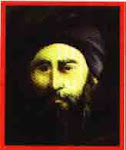


Muslim philosopher
in full Muḥammad ibn Muḥammad ibn Ṭarkhān ibn Uzalagh al-Fārābī, also called Abū Naṣr al-Fārābī, Latin name Alpharabius (also spelled Alfarabius), or Avennasar
born c. 878, Turkistan
died c. 950, Damascus?
Main
Muslim philosopher, one of the preeminent thinkers of medieval Islām. He was regarded in the Arab world as the greatest philosophical authority after Aristotle.
Very little is known of al-Fārābī’s life. He was of Turkic origin and is thought to have been brought to Baghdad as a child by his father, who was probably in the Turkish bodyguard of the Caliph (the titular leader of the Islāmic community). Al-Fārābī was not a member of the court society, and neither did he work in the administration of the central government. In 942 he took up residence at the court of the prince Sayf ad-Dawlah, where he remained, mostly in Ḥalab (modern Aleppo), until the time of his death.
Al-Fārābī’s philosophical thinking was nourished in the heritage of the Arabic Aristotelian teachings of 10th-century Baghdad. His great service to Islām was to take the Greek heritage, as it had become known to the Arabs, and show how it could be used to answer questions with which Muslims were struggling. To al-Fārābī, philosophy had come to an end in other parts of the world, but had a chance for new life in Islām. Islām as a religion, however, was of itself not sufficient for the needs of a philosopher. He saw human reason as being superior to revelation. Religion provided truth in a symbolic form to nonphilosophers, who were not able to apprehend it in its more pure forms. The major part of al-Fārābī’s writings were directed to the problem of the correct ordering of the state. Just as God rules the universe, so should the philosopher, as the most perfect kind of man, rule the state; he thus relates the political upheavals of his time to the divorce of the philosopher from government.
Friday, June 12, 2009

Abu Al-Nasr Al-Farabi
Turkistani Muslim Philosopher
870-950
Abu Nasr Mohammad Ibn al-Farakh al-Farabi was born in a small village Wasij, near Farab in Turkistan in 259 A.H. (870 A.D.). His parents were originally of Persian descent, but his ancestors had migrated to Turkistan. Known as al-Phrarabius in Europe, Farabi was the son of a general. He completed his earlier education at Farab and Bukhara but, later on, he went to Baghdad for higher studies, where he studied and worked for a long time viz., from 901 A.D. to 942 A.D. During this period he acquired mastery over several languages as well as various branches of knowledge and technology. He lived through the reign of six Abbasid Caliphs. As a philosopher and scientist, he acquired great proficiency in various branches of learning and is reported to have been an expert in different languages.
Farabi travelled to many distant lands and studied for some time in Damascus and Egypt, but repeatedly came back to Baghdad, until he visited Saif al-Daula's court in Halab (Allepo). He became one of the constant companions of the King, and it was here at Halab that his fame spread far and wide. During his early years he was a Qadi (Judge), but later on the took up teaching as his profession. During the course of his career, he had suffered great hardships and at one time was the caretaker of a garden. He died a bachelor in Damascus in 339 A.H./950 A.D. at the age of 80 years.
Farabi contributed considerably to science, philosophy, logic, sociology, medicine, mathematics and music. His major contributions seem to be in philosophy, logic and sociology and, of course, stands out as an Encyclopedist. As a philosopher, he may be classed as a Neoplatonist who tried to synthesize Platonism and Aristotelism with theology and he wrote such rich commentaries on Aristotle's physics, meteorology, logic, etc., in addition to a large number of books on several other subjects embodying his original contribution, that he came to be known as the 'Second Teacher' (al-Mou'allim al-Thani) Aristotle being the First. One of the important contribu- tions of Farabi was to make the study of logic more easy by dividing it into two categories viz., Takhayyul (idea) and Thubut (proof).
In sociology he wrote several books out of which Ara Ahl al-Madina al-Fadila became famous. His books on psychology and metaphysics were largely based on his own work. He also wrote a book on music, captioned Kitab al-Musiqa. He was a great expert in the art and science of music and invented several musical instru- ments, besides contributing to the knowledge of musical notes. It has been reported that he could play his instrument so well as to make people laugh or weep at will. In physics he demonstrated the existence of void.
Although many of his books have been lost, 117 are known, out of which 43 are on logic, 11 on metaphysics, 7 on ethics, 7 on political science, 17 on music, medicine and sociology, while 11 are commentaries. Some of his more famous books include the book Fusus al-Hikam, which remained a text book of philosophy for several centuries at various centres of learning and is still taught at some of the institutions in the East. The book Kitab al-lhsa al 'Ulum discusses classification and fundamental principles of science in a unique and useful manner. The book Ara Ahl al-Madina al- Fadila 'The Model City' is a significant early contribution to socio- logy snd political science.
Farabi exercised great influence on science and knowledge for several centuries. Unfortunately, the book Theology of Aristotle, as was available to him at that time was regarded by him as genuine, although later on it turned out to be the work of some Neoplatonic writer. Despite this, he was regarded the Second Teacher in philosophy for centuries and his work, aimed at synthesis of philosophy and sufism, paved the way for Ibn Sina's work.
870-950
Abu Nasr Mohammad Ibn al-Farakh al-Farabi was born in a small village Wasij, near Farab in Turkistan in 259 A.H. (870 A.D.). His parents were originally of Persian descent, but his ancestors had migrated to Turkistan. Known as al-Phrarabius in Europe, Farabi was the son of a general. He completed his earlier education at Farab and Bukhara but, later on, he went to Baghdad for higher studies, where he studied and worked for a long time viz., from 901 A.D. to 942 A.D. During this period he acquired mastery over several languages as well as various branches of knowledge and technology. He lived through the reign of six Abbasid Caliphs. As a philosopher and scientist, he acquired great proficiency in various branches of learning and is reported to have been an expert in different languages.
Farabi travelled to many distant lands and studied for some time in Damascus and Egypt, but repeatedly came back to Baghdad, until he visited Saif al-Daula's court in Halab (Allepo). He became one of the constant companions of the King, and it was here at Halab that his fame spread far and wide. During his early years he was a Qadi (Judge), but later on the took up teaching as his profession. During the course of his career, he had suffered great hardships and at one time was the caretaker of a garden. He died a bachelor in Damascus in 339 A.H./950 A.D. at the age of 80 years.
Farabi contributed considerably to science, philosophy, logic, sociology, medicine, mathematics and music. His major contributions seem to be in philosophy, logic and sociology and, of course, stands out as an Encyclopedist. As a philosopher, he may be classed as a Neoplatonist who tried to synthesize Platonism and Aristotelism with theology and he wrote such rich commentaries on Aristotle's physics, meteorology, logic, etc., in addition to a large number of books on several other subjects embodying his original contribution, that he came to be known as the 'Second Teacher' (al-Mou'allim al-Thani) Aristotle being the First. One of the important contribu- tions of Farabi was to make the study of logic more easy by dividing it into two categories viz., Takhayyul (idea) and Thubut (proof).
In sociology he wrote several books out of which Ara Ahl al-Madina al-Fadila became famous. His books on psychology and metaphysics were largely based on his own work. He also wrote a book on music, captioned Kitab al-Musiqa. He was a great expert in the art and science of music and invented several musical instru- ments, besides contributing to the knowledge of musical notes. It has been reported that he could play his instrument so well as to make people laugh or weep at will. In physics he demonstrated the existence of void.
Although many of his books have been lost, 117 are known, out of which 43 are on logic, 11 on metaphysics, 7 on ethics, 7 on political science, 17 on music, medicine and sociology, while 11 are commentaries. Some of his more famous books include the book Fusus al-Hikam, which remained a text book of philosophy for several centuries at various centres of learning and is still taught at some of the institutions in the East. The book Kitab al-lhsa al 'Ulum discusses classification and fundamental principles of science in a unique and useful manner. The book Ara Ahl al-Madina al- Fadila 'The Model City' is a significant early contribution to socio- logy snd political science.
Farabi exercised great influence on science and knowledge for several centuries. Unfortunately, the book Theology of Aristotle, as was available to him at that time was regarded by him as genuine, although later on it turned out to be the work of some Neoplatonic writer. Despite this, he was regarded the Second Teacher in philosophy for centuries and his work, aimed at synthesis of philosophy and sufism, paved the way for Ibn Sina's work.
Subscribe to:
Posts (Atom)
